How to Find the Best Toys for Your Dog’s Play Style
The secret to keeping your dog active, engaged and out of trouble isn’t more toys. It’s choosing the right ones.
Story by Bailey Gilliam
Your dog has a basket overflowing with toys and is currently entertaining himself with your shoe. Before buying another squeaky animal, consider what he’s actually looking for. Something to chew? Something to chase? A challenge? A chance to play with you?
According to the American Society for the Prevention of Cruelty to Animals (ASPCA), toys and other forms of enrichment allow dogs to express natural behaviors, including sniffing, chewing, chasing and scavenging. These activities provide physical and mental stimulation and can help prevent boredom-related behavior problems.
Know your player
Your dog’s breed can offer clues about what makes play satisfying. Retrievers often enjoy carrying and fetching. Herding dogs may love controlling moving objects. Terriers tend to enjoy grabbing and shaking, while scent hounds prefer following their noses.
But breed is only a starting point. Watch what your dog does naturally. Does she parade around with a slipper, dismantle stuffed animals or investigate every shopping bag? Does she chase a ball but refuse to bring it back? Those preferences reveal more than any breed description.
A dog that carries slippers might enjoy a soft retrieving toy. One that investigates every shopping bag may prefer a snuffle mat or food puzzle. And a dog that loves chasing but not retrieving might be happier with a flirt pole than a tennis ball.
Age, size and chewing habits matter, too. A small dog can be a powerful chewer, while a large dog may gently carry a plush toy. Puppies need toys suited to developing mouths, while older dogs may prefer softer materials and gentler activities. Choose toys appropriate for your dog’s strength, physical abilities and personality.
Match the toy to the activity
For chasing and fetching
Balls, soft flying discs and retrieving bumpers encourage movement and satisfy the urge to pursue. Floating toys add variety for dogs comfortable in the water. Herding balls give dogs something to push and control, while flirt poles, which feature a lure attached to a line, turn chasing into an interactive game. Keep sessions manageable, avoid sharp turns and excessive jumping, and match the activity to your dog’s fitness.
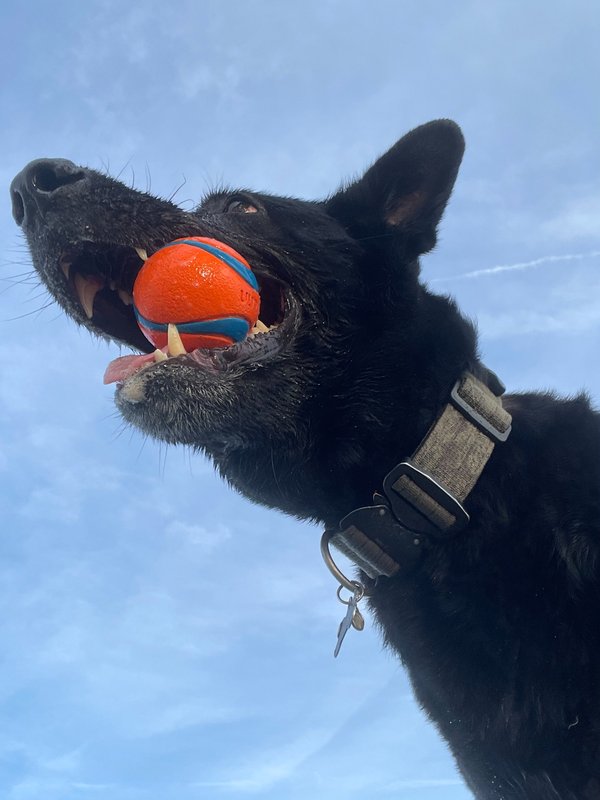
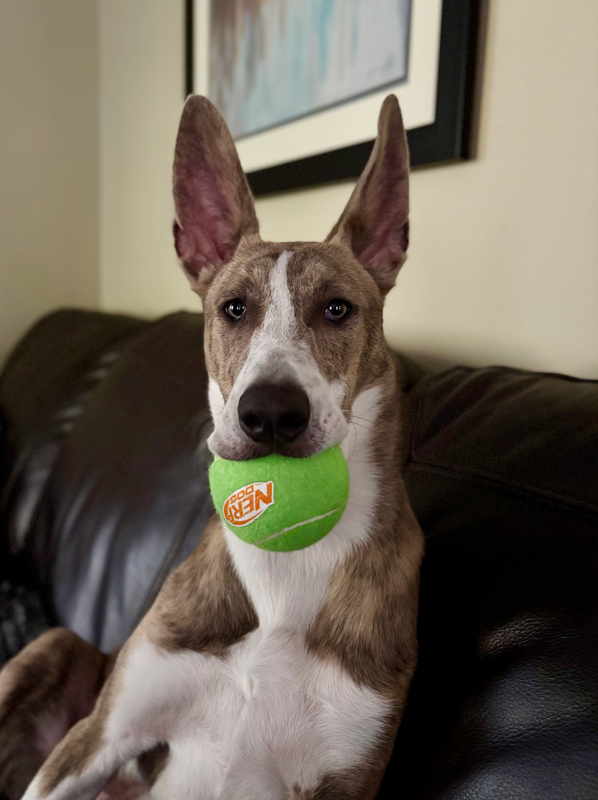
For dogs that love to chase, catch and carry, a favorite ball is more than just a toy. It’s an outlet for natural instincts, a source of exercise and an invitation to play.
 Truly Grace
 Smokey “Terry” Swartz
For tugging and chewing
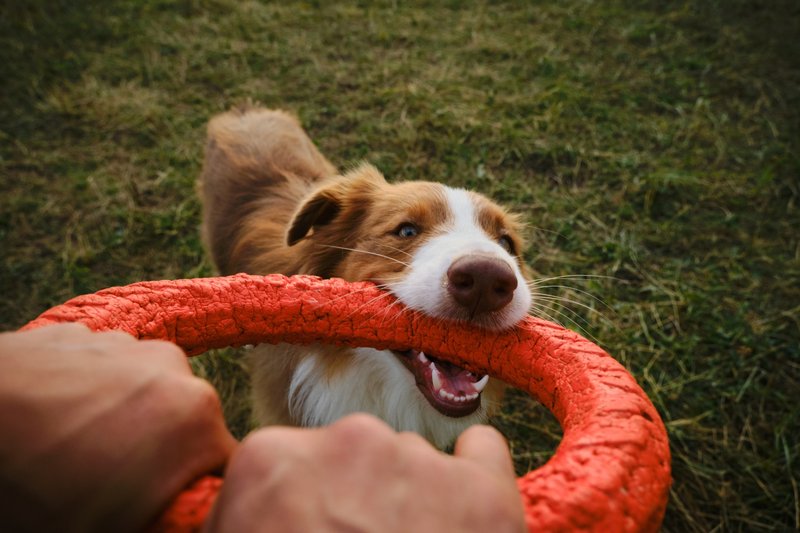
Fleece braids, rubber rings and sturdy tug toys make playtime a shared activity. Keep movements gentle, paws on the ground and hands away from teeth. Teach your dog to release the toy in exchange for a reward. For independent chewing, look for durable toys with some give. The American Animal Hospital Association warns that extremely hard chews can fracture teeth. As a general screening test, a chew should yield to pressure from your thumbnail or have some flexibility. Antlers, bones and other rigid chews deserve particular caution because of the risk of dental injuries.
A good game of tug provides physical exercise and an opportunity to strengthen the bond between dogs and their owners. Use a sturdy toy, and teach cues such as “take it” and “drop it.”
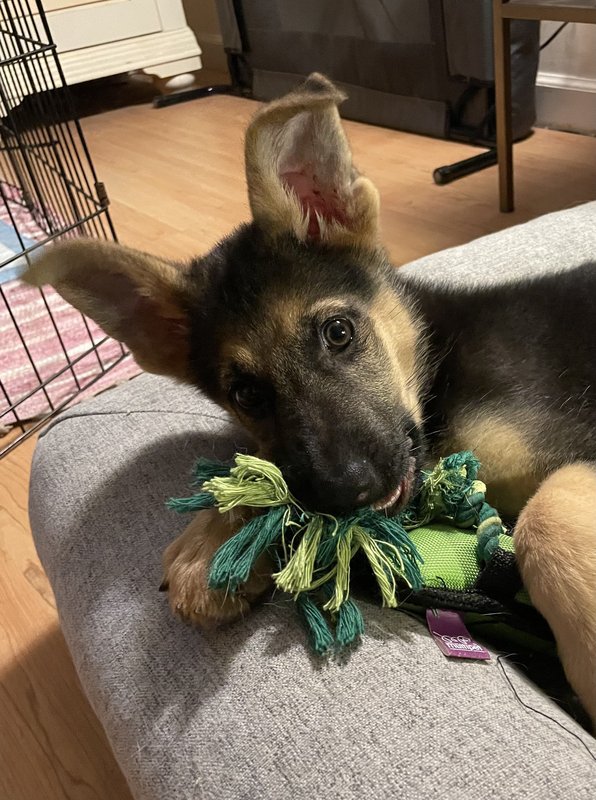
Puppies explore the world with their mouths, making appropriate chew and tug toys especially important. Choose durable materials that suit their size and developing teeth.
 Perdita Grace
For sniffing and problem-solving
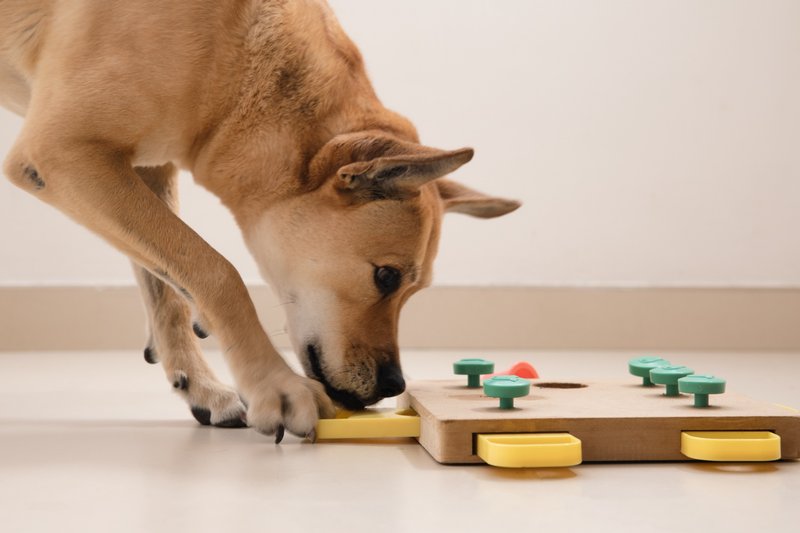
For a dog who considers every walk a sniffing expedition, a snuffle mat or food puzzle can turn an ordinary handful of kibble into a treasure hunt. Rolling treat dispensers and stuffable rubber toys add another challenge, while lick mats encourage slower licking, and hide-and-seek toys reward curious noses. Start with an easy puzzle, then increase the difficulty as your dog learns. You also can hide kibble around the house or yard to encourage natural searching behavior. Use part of your dog’s regular food allowance for rewards and supervise play to prevent frustration or unsafe chewing.
Interactive puzzle toys encourage dogs to think, sniff and experiment to uncover hidden rewards. Start with simple challenges and increase the difficulty as their skills improve.
For carrying and cuddling
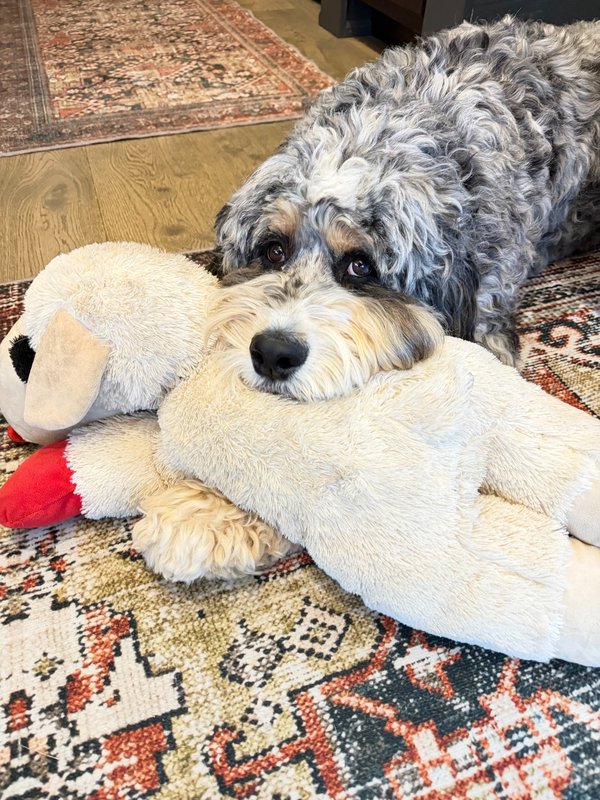
Some dogs want nothing more than a soft companion. Plush animals, fleece toys, crinkly toys and squeakers satisfy the urge to carry, cuddle or shake something. Others see stuffed animals as demolition projects. If your dog tears open toys or tries to swallow stuffing or squeakers, choose a safer alternative. What makes one dog happy might be completely wrong for another.
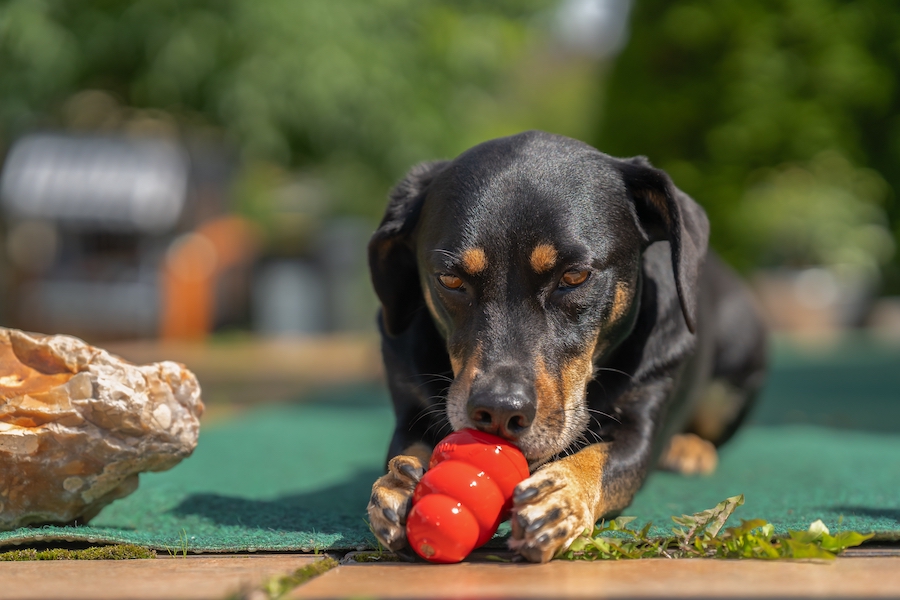
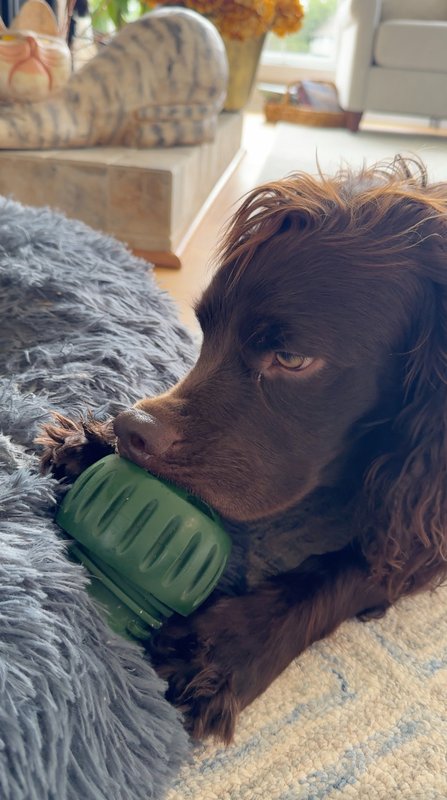
Stuffable toys can satisfy a dog’s urge to chew while turning treats into a longer- lasting activity. Choose the right size and durability for your dog.
Keep the fun going
Even a favorite toy can lose its appeal when it’s always available. The ASPCA suggests rotating toys to maintain interest. As a starting point, try keeping three or four available and swapping them every few days. Leave a beloved comfort toy out if your dog prefers it. Sometimes an old favorite feels brand-new after a short break. Inspect toys regularly, discard damaged items, and clean food toys after use. If your dog swallows part of a toy, contact your veterinarian promptly. Most important, pay attention to what makes your dog happy. Some want to chase a ball. Others would rather spend 20 minutes finding dinner in a snuffle mat. And some just want you on the other end of a tug toy. The best toy isn’t necessarily the newest, loudest or most expensive. It’s the one that gives your dog something satisfying to do. With a little observation and variety, you might even convince him to leave your shoes alone.
The ultimate dog toy basket
Five types of toys worth keeping on hand and what to look for before you buy.
1. Something to chew
Look for: Flexible, durable rubber toys sized appropriately for your dog’s mouth and chewing strength.
Avoid: Extremely hard materials, swallowable toys and anything that cracks or breaks into pieces.
2. Something to chase
Look for: Balls, soft flying discs or retrieving toys that are easy to carry and suited to your dog’s size and fitness.
Avoid: Toys small enough to become choking hazards or activities that encourage excessive jumping and sharp turns.
 More than just a treat, a Pupsicle keeps dogs happily occupied while providing mental stimulation and an outlet for natural licking instincts. Its reusable design encourages longer-lasting play and helps ease boredom.
Camo Cribb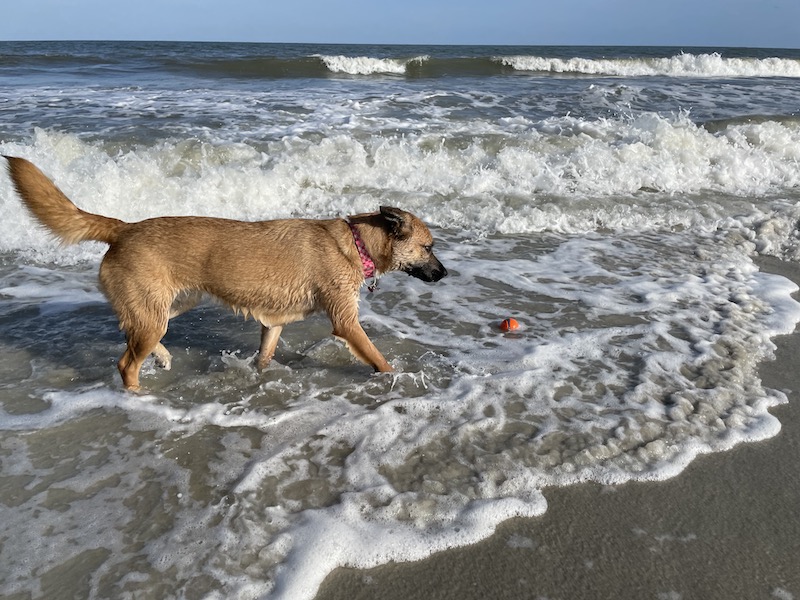 Floating toys add another dimension to fetch for dogs comfortable in the water. Choose safe, dog-friendly swimming areas, supervise play, and avoid waters where alligators may be present.
Jeannie Gilliam
3. Something to solve
Look for: Snuffle mats, treat puzzles or food dispensers that offer an achievable challenge. Start easy, and increase the difficulty as your dog learns.
Avoid: Puzzles with loose parts your dog might swallow or challenges so difficult they cause frustration.
4. Something to share
Look for: Sturdy tug toys, fleece braids or rubber rings that allow you to play together while keeping your hands away from teeth.
Avoid: Fraying ropes, loose fibers and rough tugging that could cause injury.
5. Something to love
Look for: Soft plush or fleece toys for dogs that enjoy carrying, cuddling or keeping a favorite companion nearby.
Avoid: Stuffed toys with easily removed squeakers, loose decorations or stuffing your dog is likely to swallow.