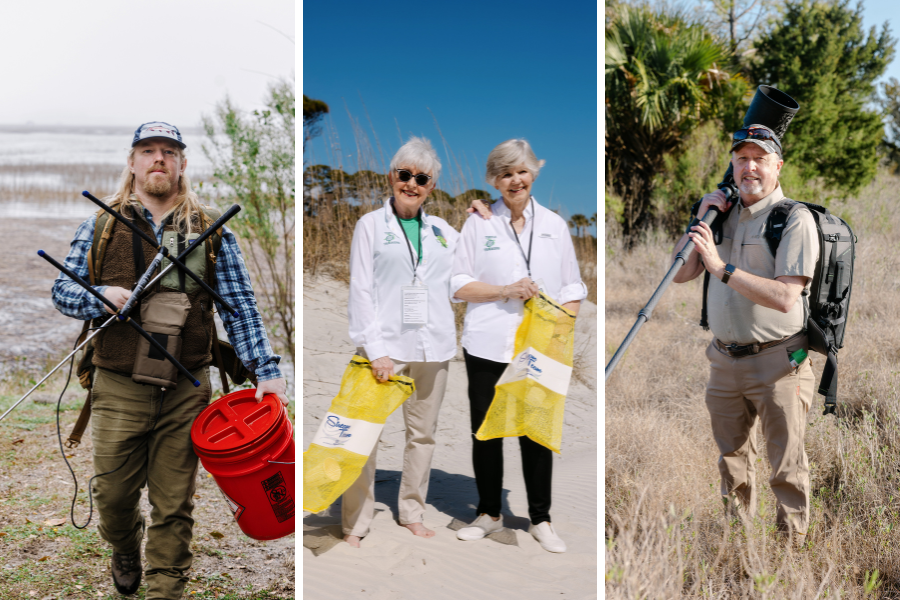
From Sea Turtles to Snakes, These Lowcountry Locals Live Where Nature Leads
Meet a snake researcher, sea turtle conservationists and a wildlife photographer who are guided by their passion for the natural world.
Story by Barry Kaufman
Photography by Lisa Staff
Some of us grew up in the vast suburban sprawl of the North, where a vast ribbon of pavement gets you where you need to be, and everything else serves as mere scenery during the drive. Some of us grew up in a more concrete jungle, where a single tree growing between slabs of pavement was the only reminder of the natural world.
But one way or another, we transplants found ourselves drawn by the call of the wild to the Lowcountry, to a place where nature isn’t just relegated to scenery or manufactured green space. We all answered that call to live our lives at the edge of the map, where rivers still run as wild as they did when the glaciers first carved them, and forests preserve populations of native creatures that were here long before humans.
To some locals this wild isn’t just what drew them here; it has come to define their lives. From the creatures that soar in the sky to those that ply the mysterious depths, this wild Lowcountry has become their own.
Dr. Ryan J. Hanscom
Taking an academic view toward the Lowcountry’s most misunderstood denizens
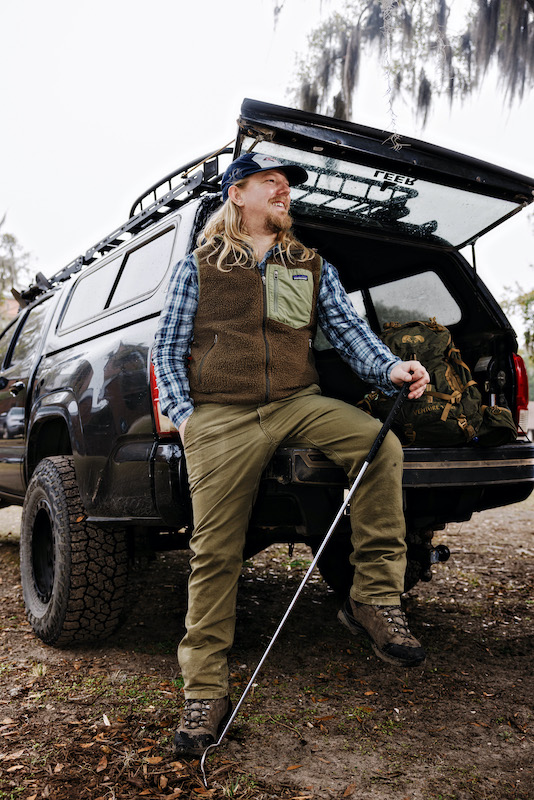
Among the first aspects of anyone’s orientation to Lowcountry living is learning how to deal with snakes. Or, more accurately, how to stay as far away from them as possible. We learn fairly quickly never to trust a pile of wood or pine straw in spring, to watch our step in fallen leaves that could camouflage copperheads, and to make tracks when red touches yellow.
Dr. Ryan J. Hanscom, on the other hand, offers a slightly different form of education. As an assistant professor of ecology and evolutionary biology at the University of South Carolina Beaufort, he has made a career of finding all the places these snakes call home and getting uncomfortably close in the name of science.
“I spent a lot of my childhood out in the woods looking for turtles, snakes and salamanders,” said the Massachusetts native. “As I got older and started figuring out a career path, I didn’t really know that becoming a professor and doing research was a possibility.”
The snake lab at Framingham State University opened that door for him, allowing him to continue his childhood fascination in a more clinical environment, as well as out in the field on the Outer Banks, where he began his studies with freshwater turtles. It was while working toward his master’s degree at Tennessee State University that he found himself drawn back to snakes.
“I’d never really left the Northeast, so having the opportunity to go to North Carolina, the first thing I wanted to do was find a cottonmouth,” he said. “I found one in a few days and ended up finding all the venomous snakes in both North Carolina and Tennessee.”
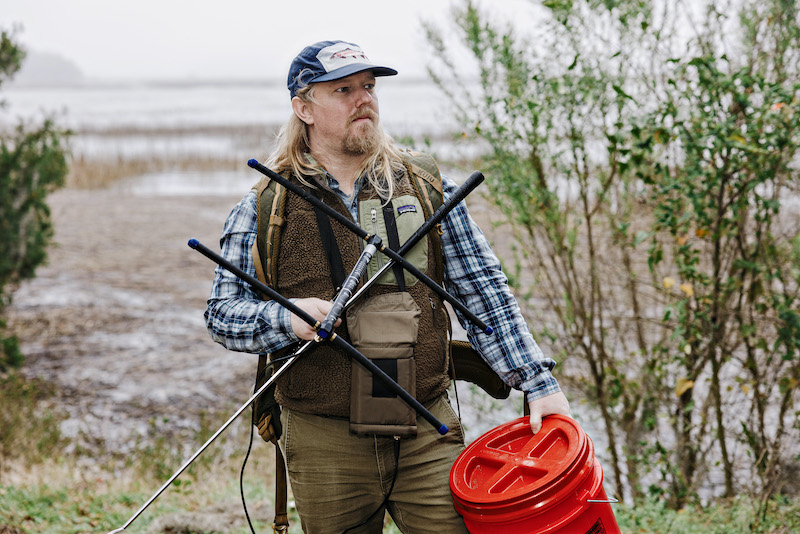
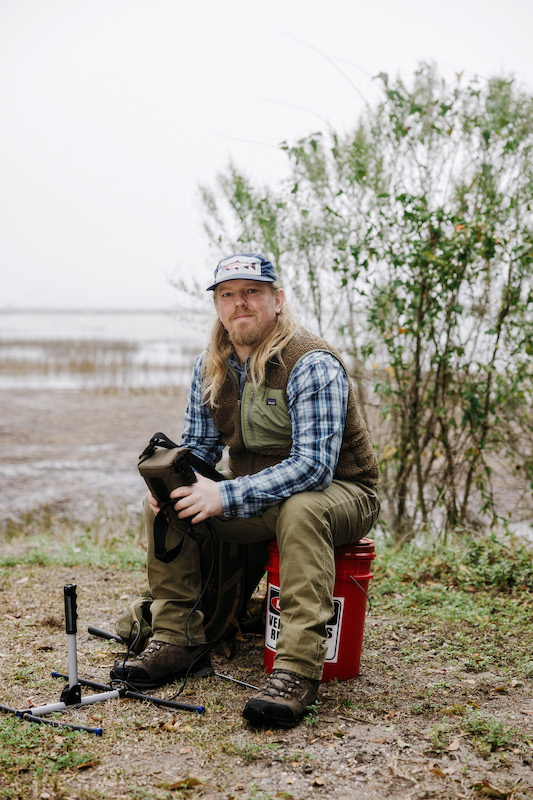
And that’s how he found himself in the South Carolina Lowcountry, where copperheads, cottonmouths and rattlesnakes are just another part of daily life. Surrounded by his herpetological subjects, he has made a name for himself as the snake professor at USCB, taking students into the field to get up close and personal.
“What we do is find snakes, take them in and implant them with a bio-logger, which allows us to track the animals through radio telemetry. We’re also using new technology to log internal temperatures and measure different physiological parameters,” he said. “People have been doing this across other taxa, but not in snakes yet.”
For those not as well versed in the syntax of science, this technology essentially allows Dr. Hanscom to watch snakes’ movements from afar. This is obviously safer than hanging around a potentially lethal animal all day, and it paints a clear picture of their behavior when humans aren’t around. When they hunt, how far they travel and their movement patterns all deepen our understanding of snakes.
“For local snake populations, we actually have a project with cottonmouths now,” he said. “We’ve uncovered some really interesting patterns in how environmental conditions shape prey activity and snake behavior, driving different behavioral strategies. We’re able to observe what would otherwise be unwatchable.”
The truth about local snakes
We’re all very aware that we share the Lowcountry with an untold number of snakes. Or at least we should be. This is still an area largely unclaimed by humans, and it provides hospitable territory for the slithering serpents who were here long before us. Even those of us in the more developed areas of the Lowcountry know better than to go digging around in pine straw in spring. And while we’ve begrudgingly accepted them as neighbors, we may not always give snakes the respect they deserve. Dr. Ryan J. Hanscom aims to change that.
“A lot of the animals they eat are vectors for diseases and ticks. They help maintain the balance of the ecosystem through their predator-prey interactions,” he said. “And they’re not going to chase you.”
These snakes want to save their venom for something that can eventually fill their bellies. As such, they don’t think you’re worth the effort unless you force the issue.
“The only time they’re actually going to defend themselves is if you’re trying to hurt them or accidentally step on them,” he said. “Most snake bites in the U.S. happen to males in their early 20s with alcohol involved.”
So while they don’t necessarily want to bite you any more than you want to be bitten, there are several ways to keep snakes far enough away to avoid an encounter. The simplest way is to keep your yard clear of debris where they can hide. And if a bite does happen, ignore almost every urban legend you’ve ever heard.
“If a person or a dog were to get bitten, there’s no such thing as a snake bite kit. You’re not going to suck the venom out, you can’t sleep it off, and you’re not going to help things by wrapping a tourniquet around it,” he said. “You just need to remain calm to keep your heart rate down and go right to the hospital, or get your pet to the vet.”
And while we’re busting myths, copperheads don’t smell like cucumbers, and cottonmouths won’t chase you. If you see a snake, don’t attempt to kill or handle it. Instead, follow the doctor’s advice: “If you do see one, relish that moment.”
Lowcountry snake species
The Lowcountry’s marshes, forests and lagoons are home to many snakes. Most are harmless, though a few are venomous. Knowing where they live and how to react if you encounter one helps make time outdoors safer.
Venomous
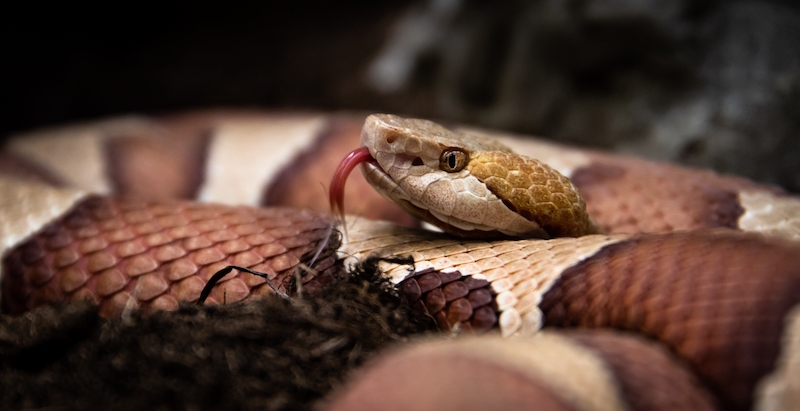
Copperhead
Copperheads blend perfectly into leaf litter and are easy to overlook along wooded trails or in landscaping under pine straw and brush. They are most active on warm evenings in spring and fall. Watch your step, wear closed-toed shoes, and avoid reaching into debris piles. Bites require prompt medical evaluation and sometimes anti-venom.
Eastern diamondback rattlesnake
The largest venomous snake in North America, the Eastern diamondback once dominated the coastal plain but is now rarely seen due to development. It still lives in remote maritime forests and pine flatwoods in Beaufort County. Sightings happen mostly from spring through early fall when snakes bask near sandy paths or palmetto thickets. Stay on trails, and keep your distance. If bitten, call 911 and seek hospital treatment for anti-venom.
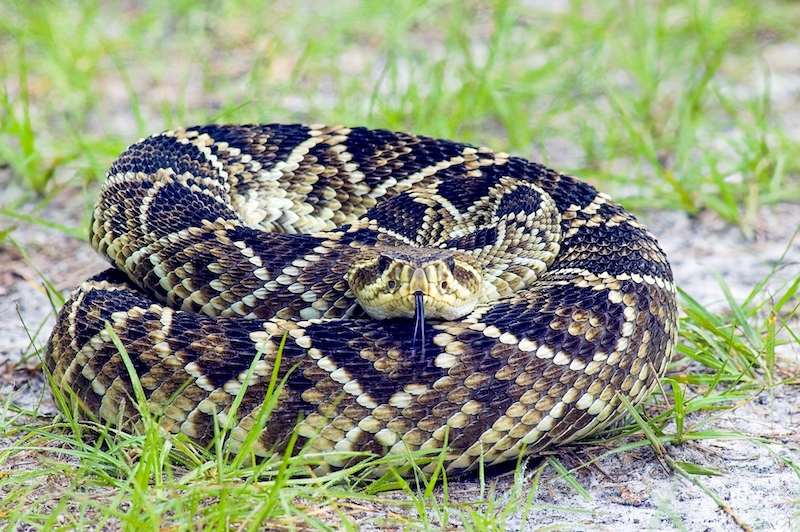

Cottonmouth (water moccasin)
The Lowcountry’s only semi-aquatic venomous snake, the cottonmouth lives around freshwater ponds, lagoons and slow creeks. Around Hilton Head and Bluffton they are often seen near neighborhood lagoons and golf course water hazards. Active from late spring through early fall, they may open their white mouths as a warning. Give them space near water. If bitten, seek emergency medical care immediately.
Non-Venomous
Eastern rat snake
Also called the black rat snake, this large constrictor thrives around wooded neighborhoods, barns and sheds where rodents gather. Excellent climbers, they are often seen in trees or on fences. When threatened, they may vibrate their tails in leaves. Bites are rare and harmless.
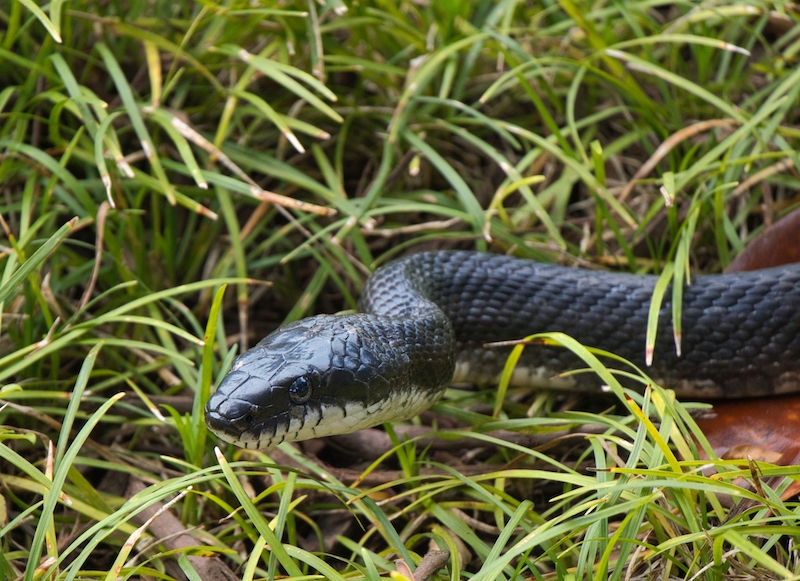

Black racer
The snake most often seen in local yards. Slim, glossy and fast, racers prefer sunny areas such as gardens, golf courses and roadsides. Active during the day from spring through early fall, they help control rodents and insects. They usually flee when approached. Bites are harmless.
Corn snake
A colorful, gentle snake found in pine forests and rural areas, its reddish pattern sometimes causes it to be mistaken for a copperhead. Active from spring through fall, it hunts rodents at dusk. Non-venomous and beneficial.
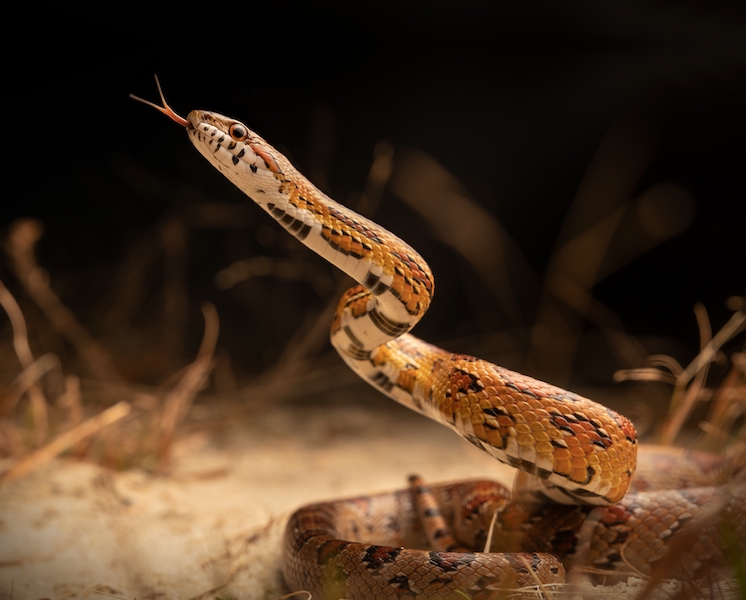
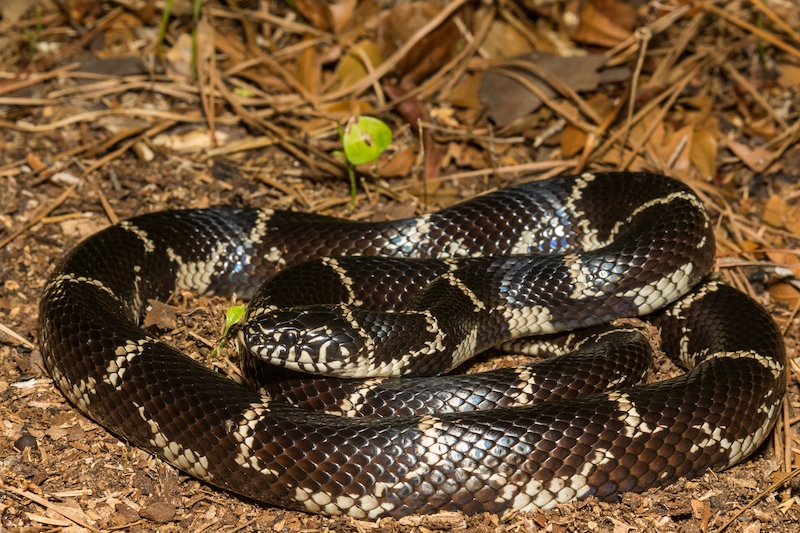
Eastern kingsnake
One of the Lowcountry’s most helpful snakes, the kingsnake eats rodents and even venomous snakes. Recognized by its black body with a white chain pattern, it prefers pine forests and sandy roads. Non-venomous and rarely aggressive.
Banded water snake
Common around lagoons, ponds and tidal creeks, they are often mistaken for cottonmouths. These snakes bask on logs or docks and quickly slide into the water when disturbed. Harmless but defensive if handled.
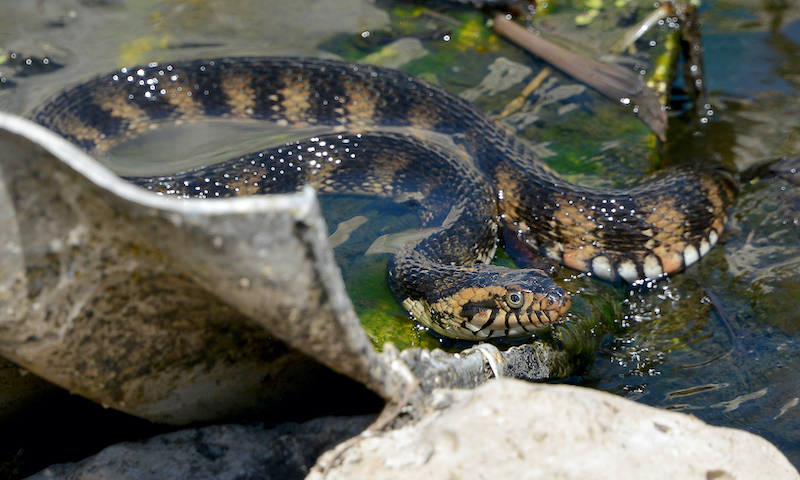

Dekay’s brown snake
A small garden snake often found under mulch, logs and flower beds, it feeds on slugs and earthworms and is frequently seen after rain. Completely harmless.
Rough green snake
A slender, bright green tree snake that blends into shrubs and branches near water and is active in warm months. It feeds on insects and is shy and harmless.

Jackie Rosswurm and Karen Kindermann
Creating a safer beach for sea turtles, one stretch at a time
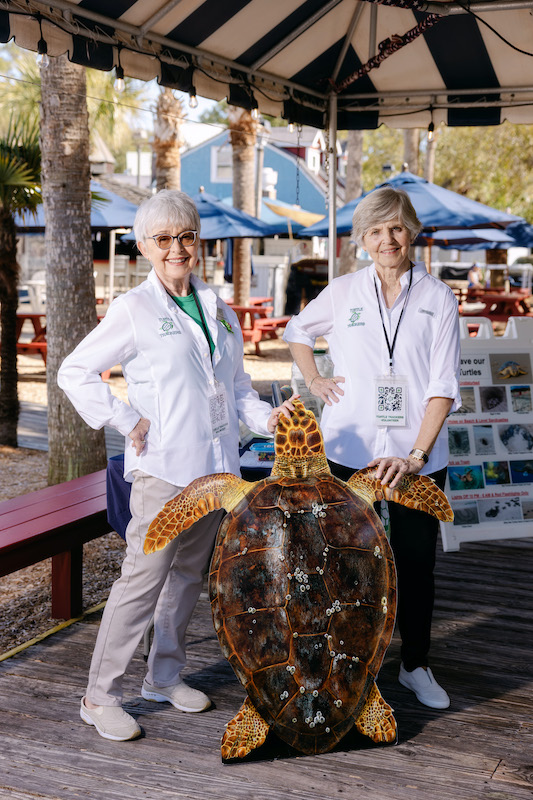
There’s a Mark Twain quote that Karen Kindermann is reminded of when she thinks back on the last 10 years: “The two most important days in your life are the day you are born and the day you find out why.”
For her, perhaps that day came when she was taking an early morning walk along the beach and came across a woman pulling what Kindermann thought were ping-pong balls from a hole in the sand. Those ping-pong balls were actually sea turtle eggs, and the woman handling them was Sea Turtle Patrol HHI’s marine biologist, Amber Kuehn.
“I literally didn’t know what a sea turtle was. Amber was nice enough to pause what she was doing and answer my kindergarten questions, and I was fascinated.”
Kindermann didn’t just learn about sea turtles. She learned that Sea Turtle Patrol HHI was, at that time, having difficulty making inroads into Sea Pines. As a Sea Pines resident, Kindermann saw an opportunity to do more. She rallied a few members of the Sea Pines Women’s Club, includ- ing Mary Ryan and Melissa Krauss, plus her friend Jackie Rosswurm, and they decided to arrange for Amber to give one of her entertaining turtle talks to get Sea Pines residents “turtle-excited.”
That team was able to secure a spot on the top floor of the Sea Pines Beach Club, which entailed, according to Kindermann, “persistent contacts with management, and finally, we succeeded with a ‘yes’ from Rob Bender for the use of the upstairs room that held 135 people.” Plastering fliers island-wide on their own dime and time, the group was pleasantly surprised when 155 people showed up, even if one of the attendees was the fire marshal.
That single, one-off event to create “turtle excitement” in Sea Pines took place June 8, 2016.

Interest flared after the event, accelerated by an Island Packet front-page article by David Lauder- dale. Subsequently, a generous donation from Salty Dog’s Bob Gossett of $5 from the sale of each “Be Cool, Keep the Turtles in the Dark” T-shirt, along with a donation from Endangered Arts Gallery, sealed the deal for Turtle Trackers to become a fund of the Community Foundation of the Lowcountry. That led to Turtle Trackers becoming a full-fledged nonprofit organization, a 501(c)(3).
“We went from eight of us to 20, and today there are 180 members in Sea Pines,” said Rosswurm. “That’s on top of hundreds of members in the greater Hilton Head Island area.”
You’ll find those Turtle Trackers up and down our beaches during nesting season, helping to “put the beach to bed,” making the beach turtle- safe by filling in holes and clearing debris. Off
the beach you will find them at learning stations island-wide, developing sea turtle awareness and motivating protection of this endangered species.
With 10 years in, their cause is more important than ever. While Kindermann, now emeritus, limits her beach heavy lifting, like Rosswurm she is still an active participant helping to grow Turtle Trackers.
“Because we’ve grown so large, and because we have funds, one of the things we work very hard on is making sure that we are the organization people have allowed us to become,” said Rosswurm. “It’s a matter of allowing us to continue with the same sort of enthusiasm we’ve always had. People who come here are just so enthralled with the sea turtles, and I think that really rejuvenates all of us.”

Digging deep with Turtle Trackers
While Sea Turtle Patrol HHI holds the permits and monitors nests to ensure the safety of nesting mama turtles and the thousands of baby sea turtles born on our beaches each year, the role of Turtle Trackers is broader. As a group, they helped with the adoption of the Beach Lighting Ordinance and the effort to ban plastic bags in Beaufort County, hoping to reduce garbage that can prove lethal to sea turtles, as well as limit the size of shovels used on the beach.
Their informative signs, scattered up and down the island’s beaches, help create greater awareness of the impact we have on sea-turtle nesting patterns. And through their learning stations, volunteers help provide context to curious tourists about the fascinating creatures that lay their eggs on our beaches.
“The whole island has really embraced the desire to protect these turtles and get on board with the idea of ‘putting the beach to bed,’” said founder Karen Kindermann. “It’s become kind of a town mantra.”
But the fun part? That would be getting out every day during nesting season and making sure the beach is safe and clean for nesting mamas and baby turtles making their way to the sea.
“You’ll see us out there every day during turtle nesting season (May through October) cleaning up and flattening out the beach,” added charter member and former vice president Jackie Rosswurm. “The biggest thing we usually see is people who have dug holes. We’ve had many that were waist-deep. And a lot of people just do not understand why the holes need to be filled in.”
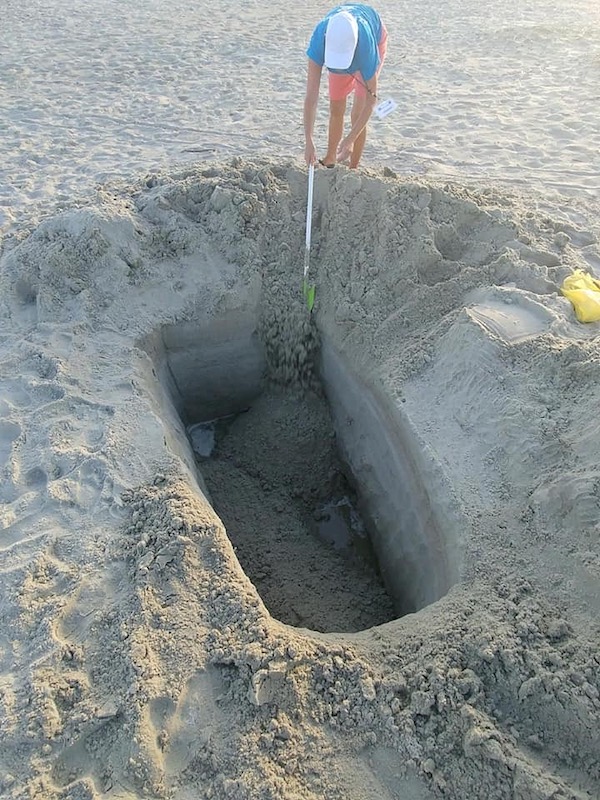
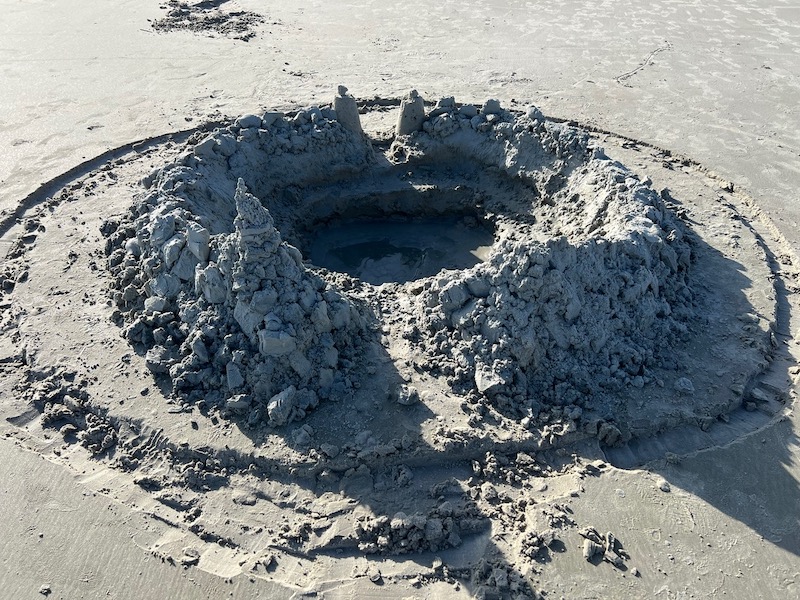
The answer, obvious to many of us but perhaps not to tourists, is that these holes trap nesting mamas and hatchlings, stranding them as they try to reach the water. Local ordinances limiting the size of shovels on the beach have made a huge difference, but sometimes it’s not the size of the shovel that creates the problem.
“There was a person who created amazing sand sculptures and then dug a huge moat around them to keep the waves out,” said Rosswurm. “We did have to ask it all to be dismantled, and that was a challenge.”
Then, of course, there is the debris that careless beach visitors leave behind, including when celebrating our independence.
“Beach cleanups after July 4 in particular are always a big deal because of the fireworks debris,” said Kindermann. “Other times it’s a lot of cigarette butts, drink containers, bottle caps, paper wrappings, etc., but the disallowed fireworks are interesting.”


Join the team
Turtle Trackers gather from May through October to help protect the loggerhead sea turtles that nest along Hilton Head Island’s 12 miles of shoreline. Beach ambassadors patrol the shoreline each day, sharing vital information about protecting turtle nests, nesting mothers and emerging hatchlings. Each evening during nesting season, volunteers also “put the beach to bed.” They flatten sandcastles, fill in holes, remove litter and smooth the sand to create a safe, unobstructed path for turtles heading to and from the ocean. To learn more about joining the team, visit turtletrackershhi.org.
Dr. Jeff Kramer
Finding the beauty in the wild side of nature
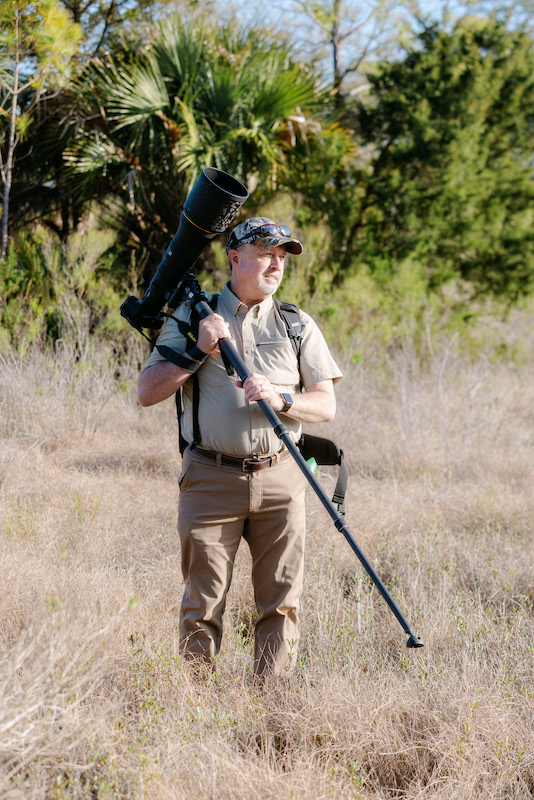
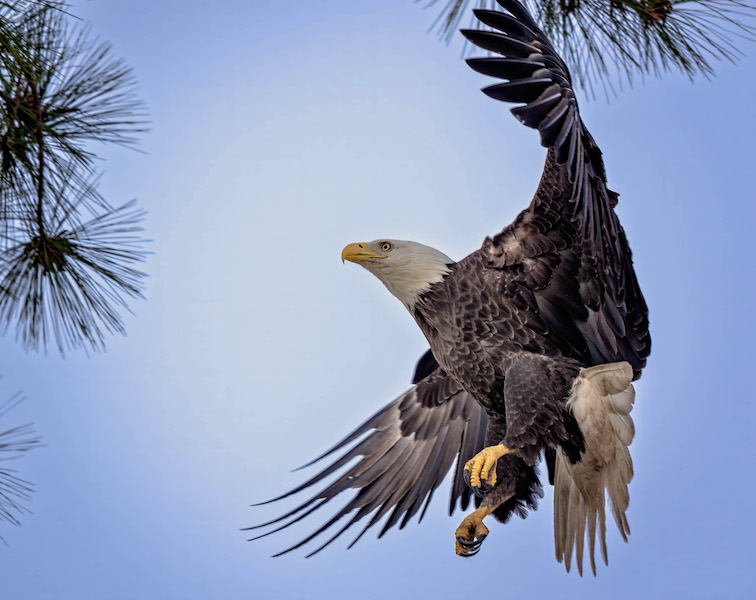
Each of Jeff Kramer’s numerous photos of wildlife carries an undercurrent of passion. Not just for the graceful form
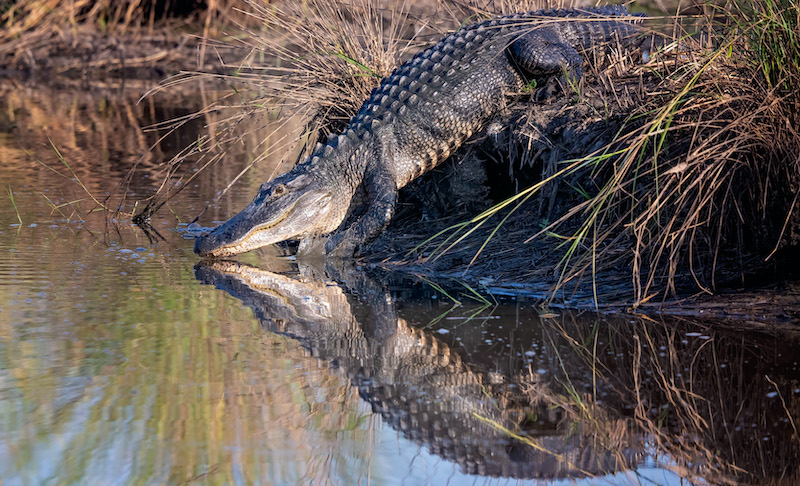
of a bird in flight, the silent power of a bear’s brawny stance or the prehistoric mystique of an alligator emerging from floating duckweed. His is a studied eye for these creatures, borne as much from his skill with a camera as from his wealth of knowledge about their biology.
“I always wanted to be in the medical profession, but I knew getting into med school can be hard sometimes. I needed a good fallback, and since I love wildlife, I figured I’d major in wildlife biology. That way if things didn’t work out, I’d be happy being a wildlife biologist.”
That love of wildlife came from his upbringing in Hampton, South Carolina, where Lake George Warren served as a favorite fishing spot as well as a place to see native species. Interestingly enough, he found a passion for photography around the same time, although it would be years before he brought the two together.
“During high school, my future wife, Rachel, and I were on the annual staff as photographers. I had a camera in my hand long before I was taking pictures of wildlife,” he said.
The merging of his enthusiasm for wildlife and his skill with the camera was put on hold for a time as he secured a spot at the Medical University of South Carolina College of Medicine. That’s not to say he didn’t try.
“I didn’t have a lot of time in med school to go out, but I still enjoyed it,” he said. “I had a darkroom set up at school where I’d develop and print my own pictures.”
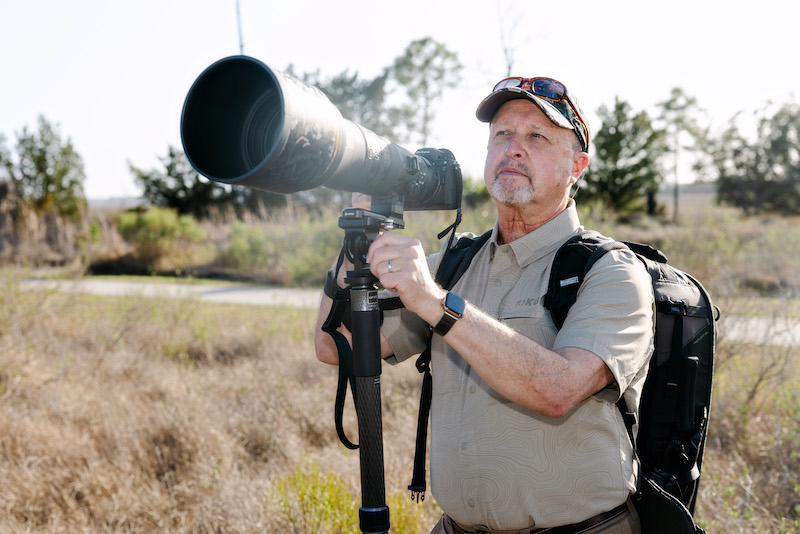
Once graduation was behind him and his successful career as a physician allowed him to afford the kind of lenses and cameras he had long dreamed of, he finally began aiming his shutter at the animals that had always fascinated him. Having a wife who not only supported his hobby but also loves to travel didn’t hurt either.
“I give Rachel a lot of credit for keeping the honey-do list short, allowing me the time to do the things I like to do,” he said. “My wife loves to cruise, and wherever we end up, my camera’s in the bag.”
These excursions have let him photograph everything from whales in Alaska to sloths in Costa Rica, from migratory birds in Europe to reptiles in the Caribbean.
“My favorite trip was probably Yellowstone,” he said. “When we were there they had what they call a bear jam. Someone sees a bear and everyone for miles around runs up to try and get a picture, which is dangerous. People just kept coming, and the bears were going this way and that while the rangers were trying to direct people to stay away. Finally the bear just turned around and walked straight toward us. I could have reached out and petted it when it walked by.”
But some of his favorite places to capture wildlife are right around the corner.
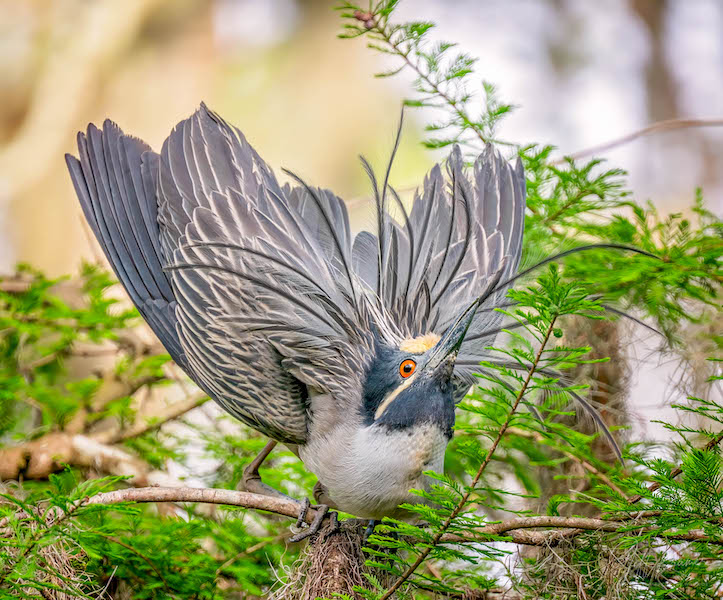
“I go to the Cypress Wetlands a lot this time of year when the rookery is in full swing. They’re starting to compete for nesting sites, and it’s always fun to hear the birds,” he said. “The snowy egrets really put on a show.”
Just get out there
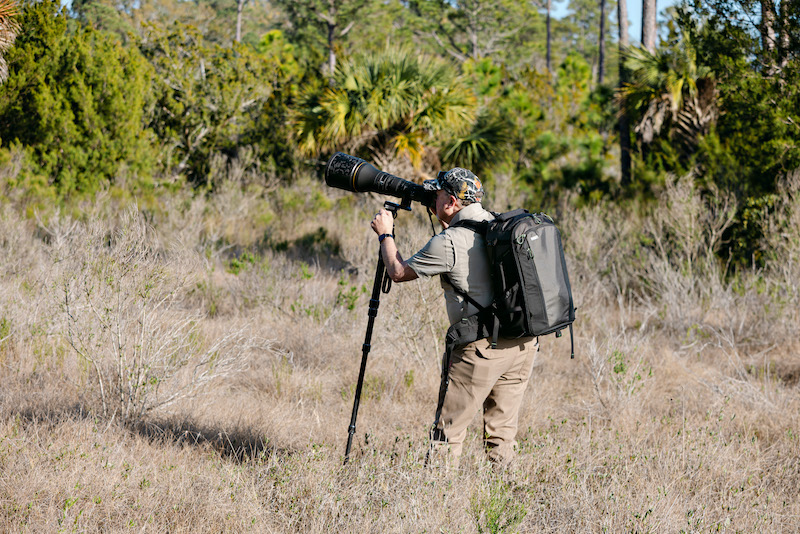
Jeff Kramer has spent nearly his entire lifetime honing his craft as a wildlife photographer, both learning the art of the camera and majoring in wildlife biology at Clemson. But for those looking to join him in the hobby, he insists that level of preparation is secondary to simply putting yourself out in nature.
“Even if you don’t have anything but a cell phone, just get out there. You don’t need a fancy camera,” he said. “If you go to the Cypress Wetlands, the birds are not at all shy.”
That’s not just his advice as a photographer. It’s also his advice as a practicing internal medicine doctor.
“Everyone spends too much time inside,” he said. “As a physician, I like seeing people get out and get some exercise. And the more you’re out there, the better chance you’re going to see something to photograph.”
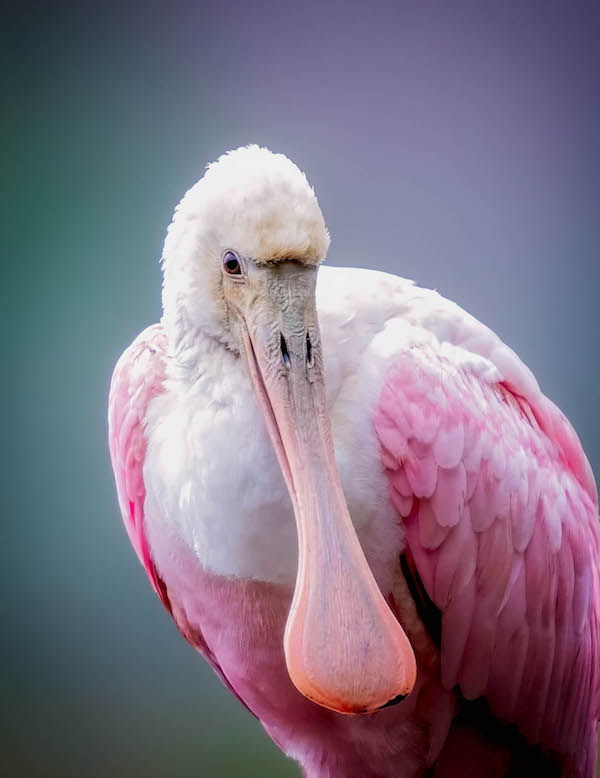
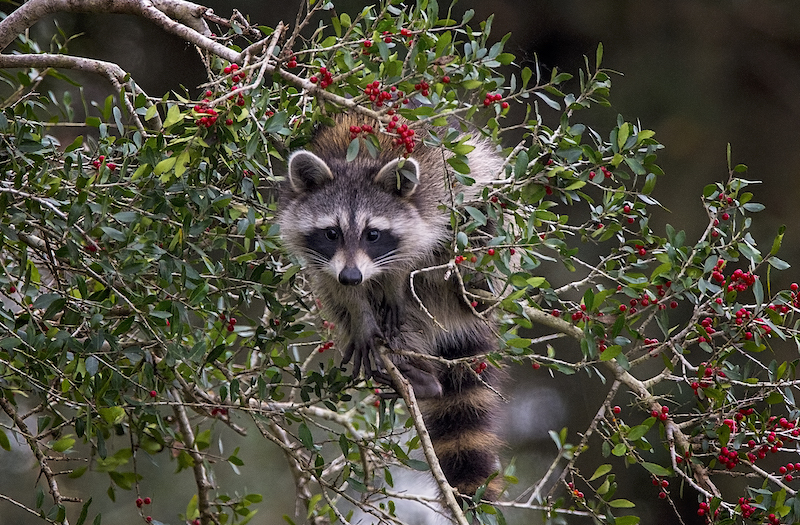
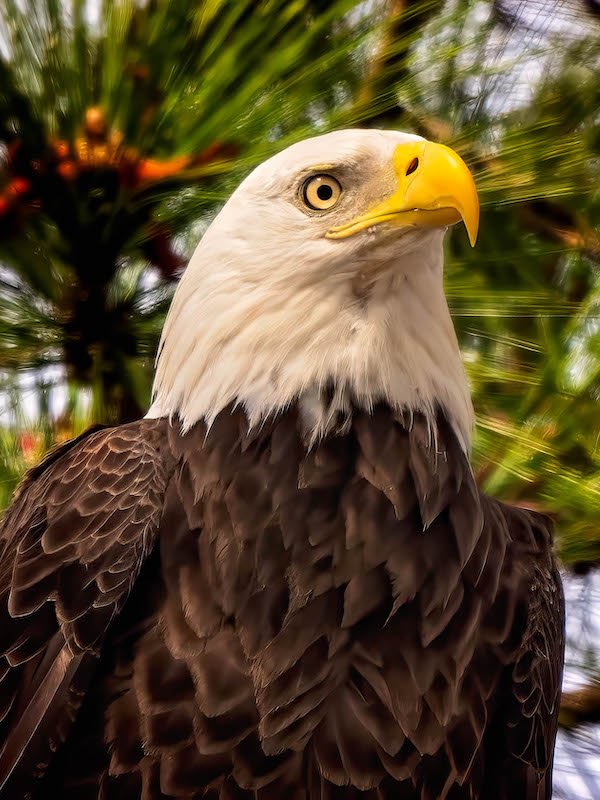
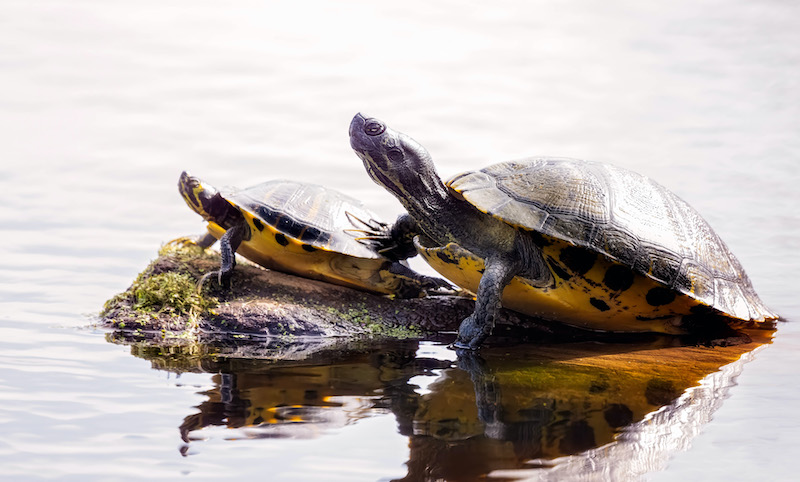
Here is a collection of local wildlife images Kramer has captured at Pinckney Island National Wildlife Refuge, Jarvis Creek Park, Hunting Island, Cypress Wetlands and Widgeon Point Preserve.