Why river otters thrive in the Lowcountry’s tidal world
Discover how these coastal critters are built for the marsh with insights from the Savannah Wildlife Rescue Center.
Story by Bailey Gilliam
Photography by Jeanne Paddison
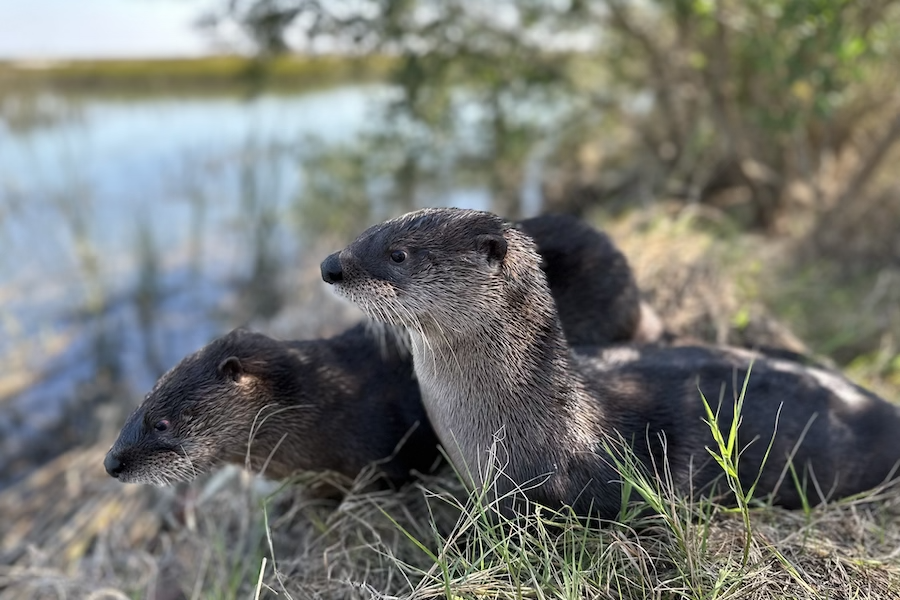
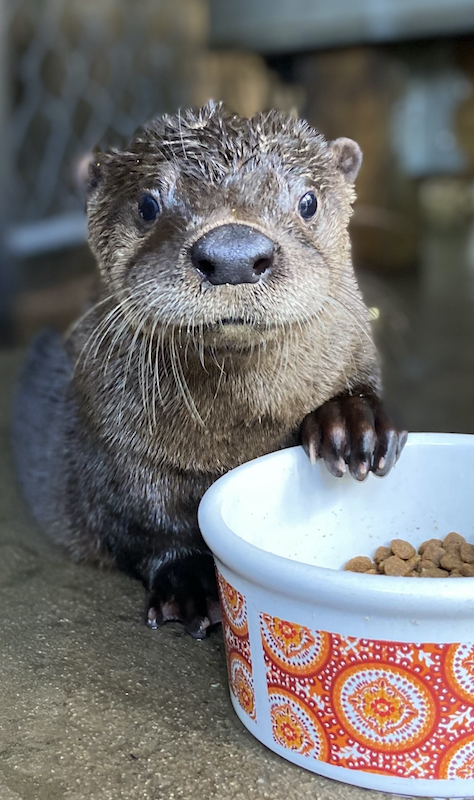
If you’ve ever spotted a slick brown shape cutting through a tidal creek or watched a creature belly-slide down a muddy bank, you know the feeling. River otters have a way of stopping you in your tracks. In the Lowcountry they’re some of our most entertaining wild neighbors, popping up along riverbanks, marsh edges and winding waterways, with equal parts grace and mischief.
As playful as they are to watch, otters play a serious role in the ecosystem. These semi-aquatic mammals are predators that help keep populations of fish, crustaceans and amphibians in balance. Their presence is often a sign of clean water and a healthy habitat, something worth paying attention to in a place defined by its creeks and marshes.
Jeanne Paddison knows otters well. As executive director and lead wildlife rehabilitator at Savannah Wildlife Rescue Center, she has cared for countless orphaned and injured animals over the years, otters included. “Otters are amazing critters,” she says. “They’re wonderful and fun to watch, but unlike beavers,
they do eat fish, so people don’t always like them as much.”
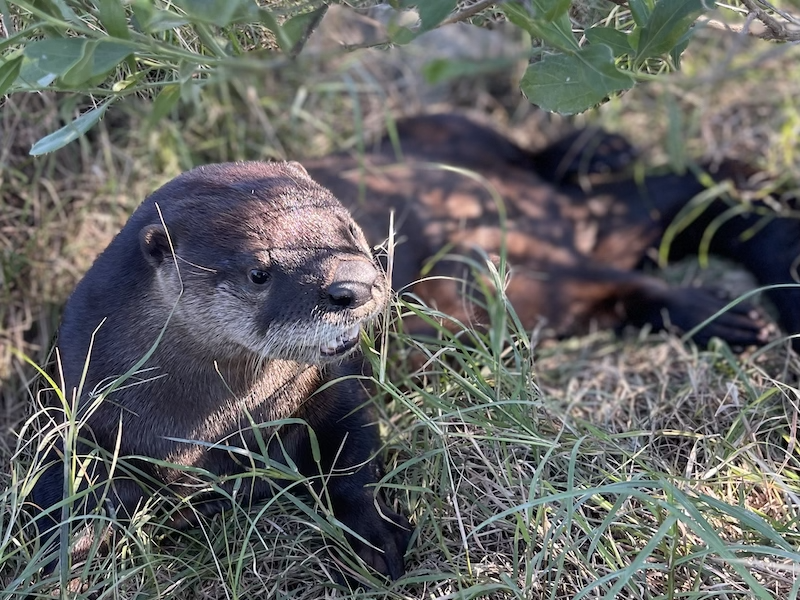
A couple of years ago, the center welcomed a tiny new arrival and named it Jolene. “Orphaned, she was and found seeking shelter in a car engine,” Paddison explains. “She was eventually able to be released back into the wild.” Stories like Jolene’s are the goal. Rescue, rehab and release, whenever possible.
Other otters have taken a longer road. Lucy and Cory, both raised at SWRC, are a reminder that rehabilitation is rarely simple. Lucy was found on Tybee Island at about 10 weeks old and was first believed to be female. Later, that changed. “He wasn’t suited for independence in the wild at that age,” Paddison says. “Eventually, Lucy was released onto a five-acre pond, where he enjoys a great deal of freedom.”
One lesson Paddison stresses is the importance of socialization. “If they don’t encounter another otter, they won’t know they’re an otter or recognize what another otter is supposed to smell like,” she says. After raising Lucy on his own, the center paired him with Cory. “We weren’t sure, with both being males,” she says, “but we tried it, and now they’re best buddies.”
Caring for otters is labor-intensive, to put it mildly. “Our water bill is crazy because we usually have water tanks for otters and beavers,” Paddison says. “They come in around February and stay four to five months, and we refill those tanks every day.” Still, she wouldn’t trade it. Every squeak, splash and wrestling match is part of the process. These animals aren’t just patients. They’re personalities, teachers and daily reminders of how much connection matters.

Otters are also remarkably smart. They use rocks to crack open clams and mussels, sometimes keeping a favorite stone for years. They’ll carry it with them, nap with it and even share it with a mate or a human caretaker. Watching that small ritual unfold, Paddison says, reveals just how clever these animals can be.
Their history hasn’t always been kind. River otters were once heavily hunted for their fur and today face threats from habitat loss, water pollution and conflicts with people. Even so, they’ve proven adaptable. They breed in late winter or early spring, and pups typically learn to swim by about 2 months old. Otters communicate through whistles, yelps and scent marking, and their playful behavior, including sliding, chasing and mock wrestling, helps young otters learn the skills they’ll need to survive.
They’re also great travelers. Otters move easily between freshwater and brackish environments and can cover long distances in search of food. Roads and development, however, remain a serious danger, especially in fast-growing coastal areas.
Seeing an otter in the wild never gets old. It might be a ripple across the water, a quick flash of fur or a head popping up just long enough to check you out before disappearing again. In those moments, they remind us why protecting the Lowcountry’s wild spaces matters. Nature here isn’t just beautiful. It’s curious, clever and very much alive.
How to spot an otter
Seeing a river otter in the Lowcountry is part luck, part timing and part knowing what to look for. Here’s how to improve your odds.
- Think creeks, not open water: Otters favor tidal creeks, marsh edges and quiet rivers over wide, open stretches. Look for narrow waterways with muddy banks, oyster shells or fallen logs where they can climb out to rest.
- Go early or late: Dawn and dusk are prime otter hours. They’re most active when the light is low and the creeks are calm, especially on cooler mornings when fewer boats are moving through.
- Watch for motion, not fur: You’re more likely to notice ripples, bubbles or a quick V-shaped wake than a full-bodied view. Heads pop up briefly, then disappear just as fast.
- Listen carefully: Otters aren’t silent. Soft chirps, whistles or quick squeaks can give them away, especially when young otters are nearby.
- Look for signs left behind: Slide marks on muddy banks, scattered shellfish remains and small piles of droppings, called spraint, often mark favorite hangouts.
- Give them space: If you spot an otter, keep your distance and let it go about its business. Quiet observation keeps both you and the animal safe and increases the chance you’ll see it again.
- Be patient: Otter watching rewards those who linger. Settle in, stay still, and let the marsh do its thing. Sometimes the best sightings happen when you’re not trying too hard.
Who you gonna call?
If you find an injured, orphaned or trapped otter, contact one of these local rehabilitators:
- Savannah Wildlife Rescue Center: 912-596-1237
- Paws Animal Wildlife Sanctuary: 864-683-3190