How Beaufort County’s IB Program Prepares Students for College and Life
Through discussion-based learning and rigorous coursework, IB students gain skills that extend far beyond the classroom.
Story By LL Partner Studio
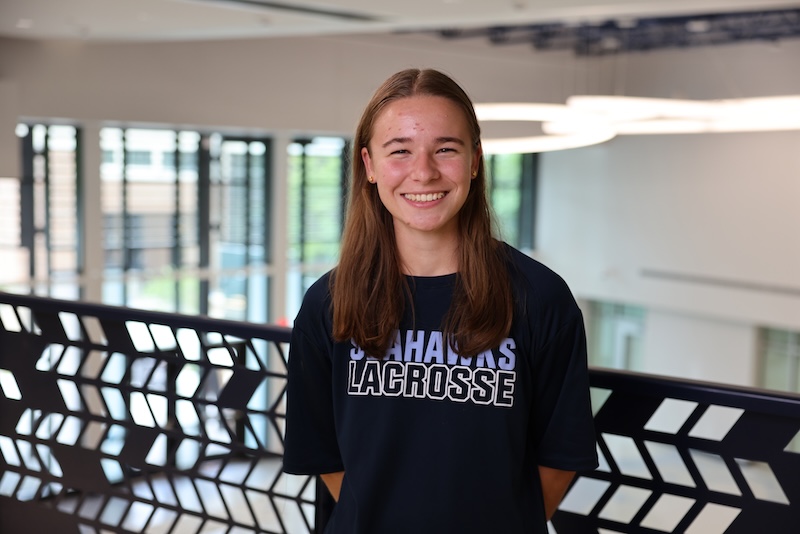
Elizabeth Markowitz never cared much for history.
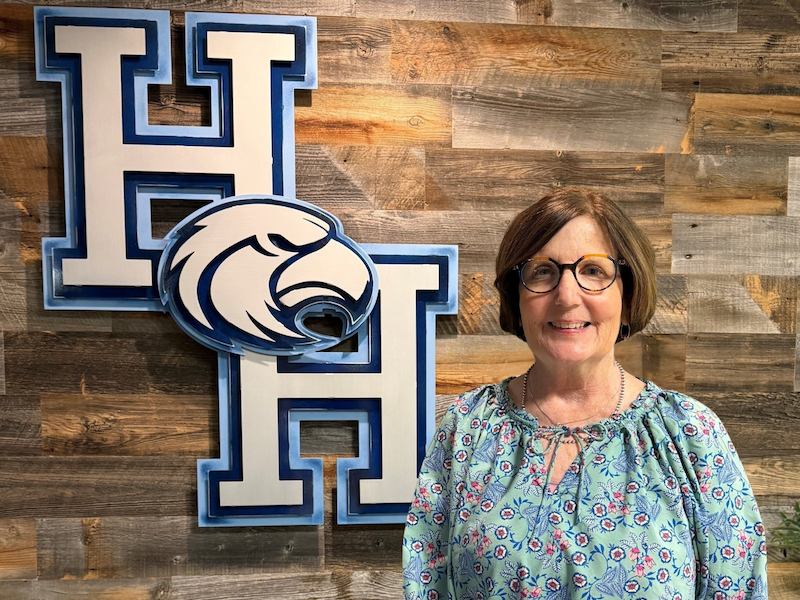
Valedictorian of the Class of 2026 at Hilton Head Island High School, Markowitz always preferred other subjects, but after enrolling in the school’s International Baccalaureate U.S. History course, she reconsidered.
“[Our teacher] has taught us history in a way that’s more of a discussion of all perspectives and doesn’t classify one side as fully wrong and another fully right. Every side has both good and bad aspects,” she says.
Considering alternate viewpoints is a core principle of the International Baccalaureate Diploma Programme (IBDP), an educational pathway supported by Beaufort County School District’s Changemakers initiative. The program prioritizes inquiry, discussion and critical thinking over passive instruction, with a mission to develop active, compassionate lifelong learners.
According to Mary Beth White, IBDP coordinator at Hilton Head Island High School, the curriculum is demanding.
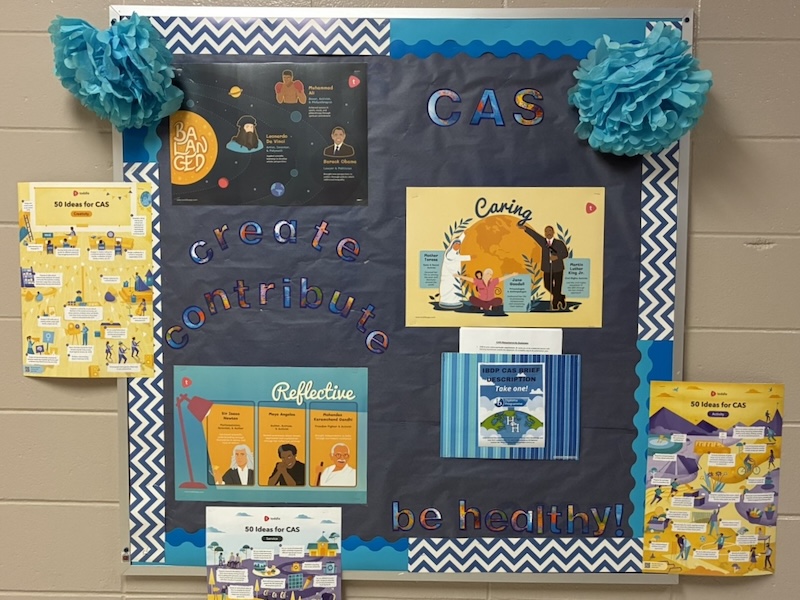
“Without a doubt, the IBDP is the most rigorous course of study we offer,” she says, noting that students complete extracurricular service requirements and an independent research project in addition to traditional coursework.
The challenge, she says, comes with significant rewards.
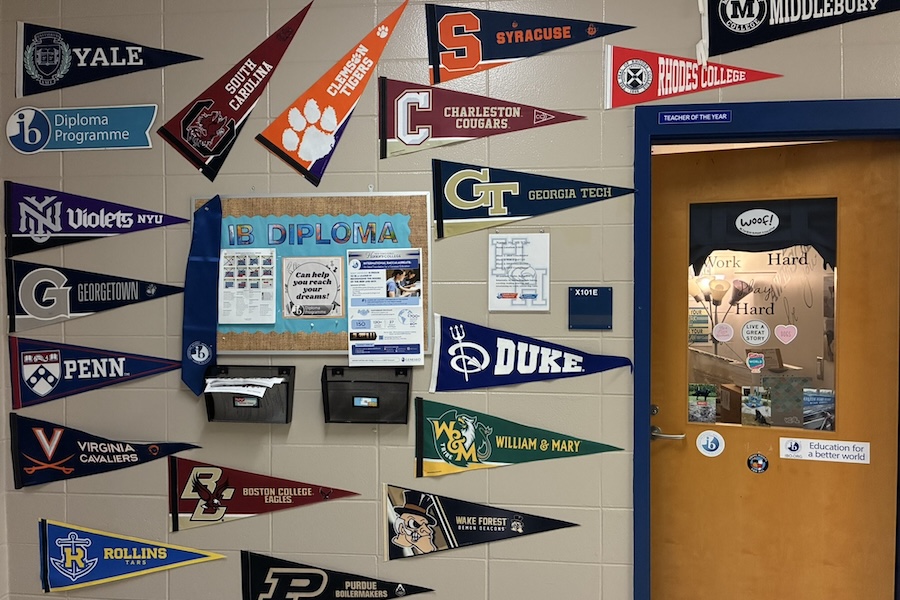
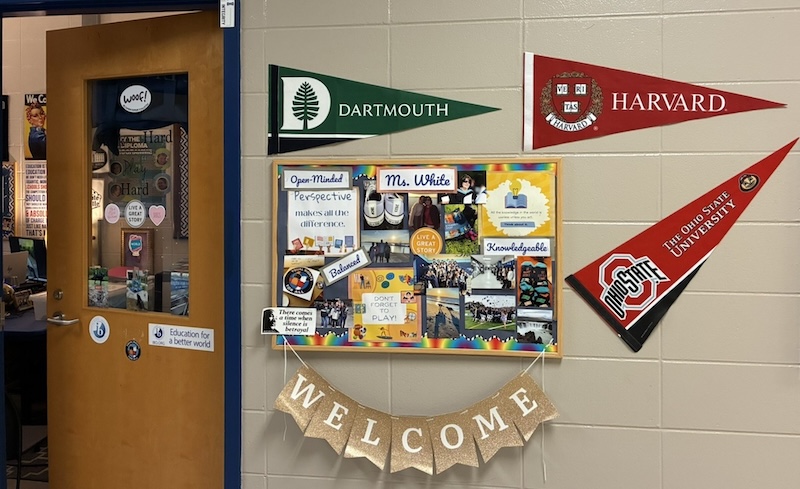
“At our school, it has been the pathway to some of the nation’s most competitive colleges, including Harvard, Dartmouth, Duke, the University of Virginia, New York University and the University of Pennsylvania,” she says.
More importantly, the program encourages students to think beyond memorization and textbook material. By emphasizing responsibility, collaboration and real-world application, the IBDP helps students build skills that extend far beyond high school.
How Discussion-Based Learning Prepares Students for College
Inside an IB classroom, lessons rarely revolve around lectures at the front of the room. Instead, teachers guide conversations while students take the lead, discussing ideas, debating perspectives and learning from one another.
“It requires collaboration and discussion, which can be challenging for the student who is used to the ‘sit and get’ approach to teaching and learning,” White says.
Assessments follow a similar philosophy. Rather than relying solely on final exams, IB courses evaluate students throughout the year, measuring how well they apply what they’ve learned while encouraging reflection and growth. Curtis Ewing, an IB teacher at Hilton Head Island High School, says the structure closely mirrors college academics.
“IB assessments emphasize continuous learning and mirror university evaluation methods such as staggered assignments, semester-long deadlines and scaffolded task completion,” he says. “This alignment ensures a smoother transition to higher education.”
For Hope Dobbelare, a former HHIHS student and IBDP graduate, that transition felt natural. During her freshman year at the Georgia Institute of Technology, she quickly realized the workload felt familiar.
“The [IB] workload mirrored that of my classes, so I was accustomed to this right off the bat,” she wrote in a thank-you letter to White.
Many IB credits are also transferable to colleges and universities. One HHIHS graduate from the Class of 2024 was able to skip introductory math courses at Harvard University because of credits earned through the program.
Still, Ewing says the most rewarding moments often have little to do with test scores or college applications.
“One memorable moment was a student who had previously dreaded English class telling me that IB Language and Literature not only changed her relationship with the subject but made her realize she actually enjoys reading and wanted to find additional texts on the authors we have studied in class,” he says.
Because students take a more active role in the classroom, they often develop a stronger sense of ownership over their education. That confidence can carry well beyond graduation, helping them approach future challenges with curiosity and resilience.
Real-World Skills Beyond the Classroom
While the IBDP is known for preparing students for college, educators say its benefits reach much further. Skills like critical thinking, problem-solving, communication and time management develop naturally through the program’s structure and teaching methods.
“To me, these skills are invaluable in college and professional environments,” Ewing says. “They position IB graduates for success whether they pursue higher education or enter the workforce directly after high school.”
For Rebeka Parent, a 2015 IBDP graduate, those lessons proved especially valuable during her path to becoming a United States Marine Corps officer.
“It taught me how to time manage, organize and think ahead to predict issues that may arise,” she wrote about the program.
The IBDP also places strong emphasis on interpersonal growth. Open-mindedness and communication are central to the program’s learner profile, and coursework regularly explores cultures, perspectives and communities from around the world.
“In Language and Literature, for instance, students engage with authors and texts from diverse countries and backgrounds,” Ewing says. “This transforms the learning experience from simply reading texts to understanding the broader cultures and global events that shape them.”
Markowitz saw that firsthand in her IB U.S. History class. Through discussions that explored multiple perspectives, she says she gained a deeper understanding of people and experiences she may not have encountered in a traditional curriculum.
“Having gone through the IB program, I have become much more aware of the perspectives of people from other cultures, backgrounds and lived experiences,” she says.
Why Beaufort County’s IB Program Matters
By encouraging self-motivation and developing practical life skills, the IBDP prepares students for a wide range of futures. Its approach challenges students not only to succeed academically, but also to become thoughtful, engaged members of their communities.
History may never have been Markowitz’s favorite subject, but the IB program changed the way she sees learning.
“I found subjects that I was really passionate about that I never would have explored,” she says. “IB has made me a more confident person and showed me that I am capable of challenging myself.”
This post was created by LL Partner Studio on behalf of Beaufort County School District. Learn more at www.beaufortschools.net.