Carolina Reaper: From Fort Mill Roots to Record-Breaking Heat
SOUTH CAROLINA’S MOST INFAMOUS PEPPER BUILT A WORLDWIDE REPUTATION ON RECORD-BREAKING HEAT
STORY BY BAILEY GILLIAM
Key Takeaways
Smokin’ Ed’s Carolina Reaper was developed by pepper breeder Ed Currie in Fort Mill, South Carolina.
Guinness World Records crowned it the world’s hottest chili pepper in 2013.
The Carolina Reaper averages around 1.64 million Scoville Heat Units.
Pepper X, another Ed Currie creation, took the record in 2023.
Beyond its extreme heat, the Carolina Reaper has noticeable sweetness and a fruity aroma.
The article includes Raspberry Carolina Reaper Jelly and Carolina Reaper Hot Honey Chicken recipes.
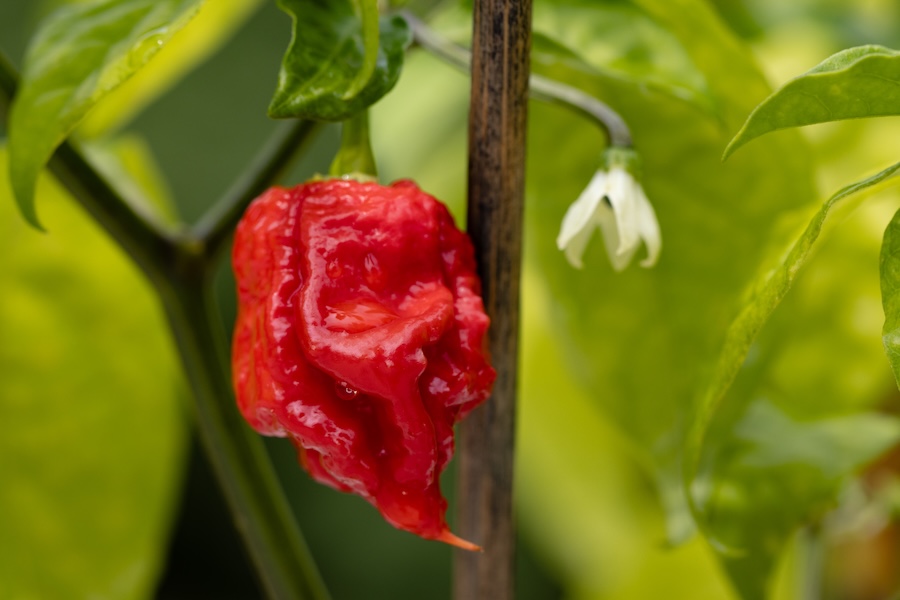
There are hot peppers, and then there is Smokin’ Ed’s Carolina Reaper. Wrinkled, bright red and armed with a tiny scythe-shaped tail, this homegrown fireball spent a decade as the hottest pepper on the planet. Yet behind its fearsome looks and legendary burn is a surprisingly complex pepper with sweet, fruity flavor and a story rooted right here at home. From its record-breaking rise to its starring role in hot sauces, spice blends and daring home kitchens, Smokin’ Ed’s Carolina Reaper has become one of the Palmetto State’s most famous homegrown creations. Some South Carolina legends come with a ghost story. This one comes with a warning label.
How the Carolina Reaper Was Born in South Carolina
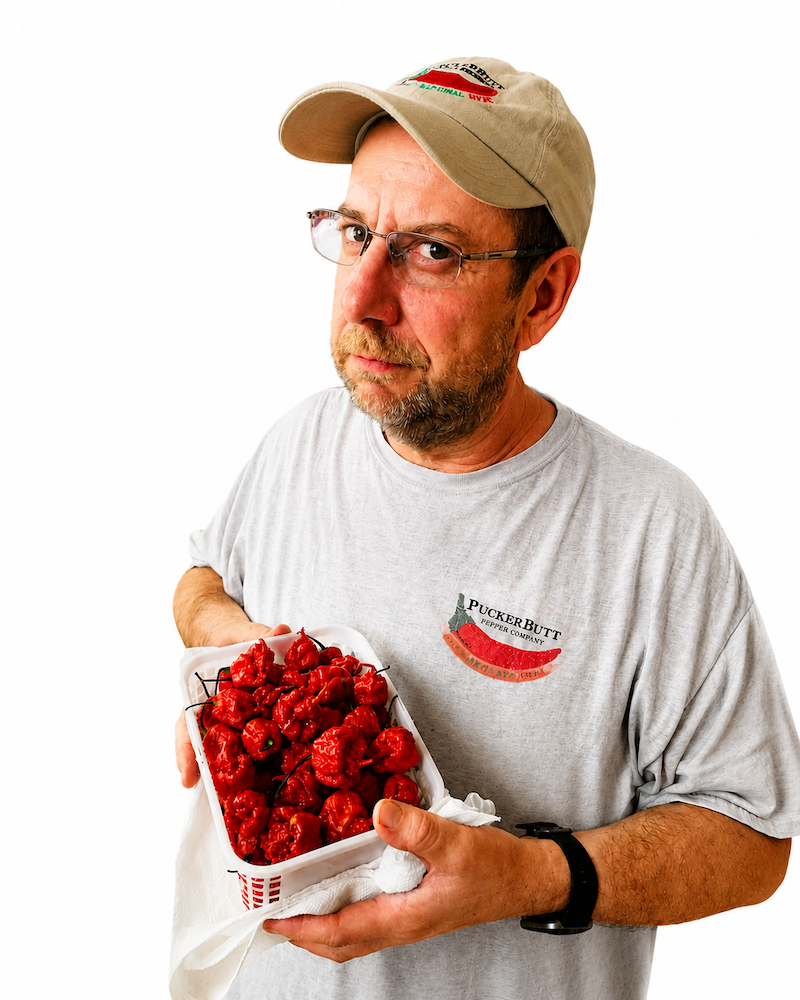
Smokin’ Ed’s Carolina Reaper was born in Fort Mill, where pepper breeder Ed Currie began developing it in the early 2000s. Currie has described crossing an exceptionally hot pepper from the Caribbean island of Saint Vincent with a Naga-type pepper from South Asia, then selectively breeding the offspring for consistent heat and appearance. Originally known as HP22B, the pepper eventually earned a more memorable name: “Carolina” for its South Carolina birthplace and “Reaper” for the curved tail resembling a reaper’s scythe. In 2013 Guinness World Records crowned it the world’s hottest chili pepper, with an average heat of about 1.64 million Scoville Heat Units. It held the title for a decade before being dethroned in 2023 by Pepper X, another creation from Currie.
Why the Carolina Reaper Is So Hot
Like other chili peppers, Smokin’ Ed’s Carolina Reaper contains vitamins and minerals, but its claim to fame is capsaicin, the compound responsible for its extraordinary heat. Capsaicin is also used in topical products designed to relieve certain types of pain. At the concentration found in a Reaper, however, even a small amount can cause intense burning and digestive distress, making careful handling and portioning essential.
How Hot Is a Carolina Reaper?
Smokin’ Ed’s Carolina Reaper doesn’t actually set your mouth on fire, but your brain may beg to differ. Capsaicin activates TRPV1, a receptor involved in detecting heat and pain, essentially sending the nervous system a heat-and-pain warning signal. The result can include intense burning, watery eyes, a runny nose, sweating and flushed skin. Smokin’ Ed’s Carolina Reaper averages around 1.64 million Scoville Heat Units, compared with roughly 10,000 to 23,000 for a serrano pepper and just 2,500 to 8,000 for a jalapeño. That makes the Reaper roughly 200 to 650 times hotter than a jalapeño. In other words, this is heat on an entirely different scale.
How to Grow Carolina Reaper Peppers
Smokin’ Ed’s Carolina Reaper may have a fearsome reputation, but Hilton Head gardener David Cribb says the plants themselves are surprisingly easy to grow. “The best time to plant them is as soon as you know the frost is cleared,” Cribb said. He points to March as a possible starting point locally, once the threat of frost has passed and temperatures have warmed. From there he keeps things simple with consistent water and fertilization and plenty of sunshine. “Full sun,” he said. Reapers are slower producers than familiar peppers such as cayennes or jalapeños, but once established, the plants can continue producing throughout the warm season. Seeds can sometimes be difficult to find, though Cribb said plants are often available at big-box stores and local garden centers. Cribb said he doesn’t typically wear gloves simply to pick the peppers, but he offered one important piece of advice after handling them: Keep your fingers away from your mouth and, especially, your eyes.
What Does a Carolina Reaper Taste Like?
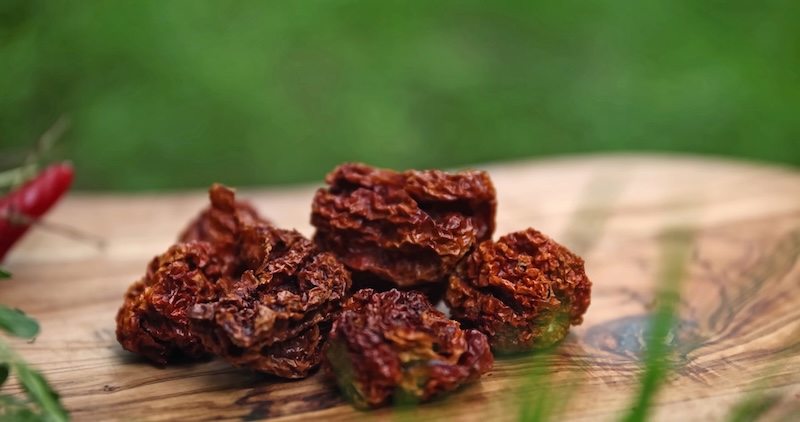
Believe it or not, Smokin Ed’s Carolina Reaper is more than pure pain. Before the heat takes over, the pepper offers noticeable sweetness and a fruity aroma. That complexity makes it particularly well suited for hot sauces, marinades, salsas and spice blends, where a tiny amount can flavor an entire batch. Its fruity character also pairs naturally with ingredients such as mango, peach and berries. Reapers can be fermented into hot sauce, dehydrated into flakes or powder or used sparingly in salsas, chutneys, curries and other chile-forward sauces. The key word is sparingly. With Smokin’ Ed’s Carolina Reaper, a sliver can season an entire pot — and another sliver can make it nearly impossible to eat.
Try it:
• Blend a tiny amount into homemade salsa or hot sauce.
• Pair with mango, peach or other fruit for a sweet-and-fiery sauce.
• Add a pinch of dried Reaper powder to chili, soups or stews.
• Mix a small amount into a dry rub for grilled or smoked meats.
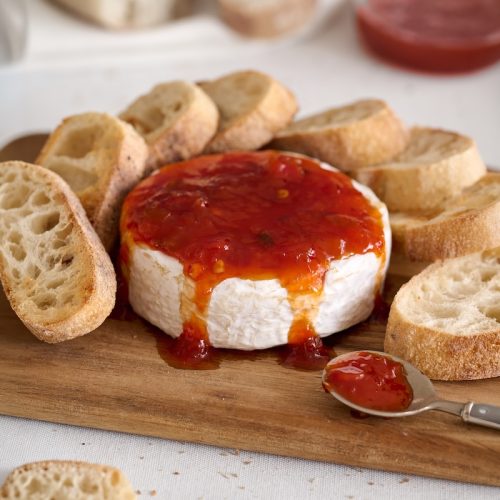
• Use sparingly in pepper jelly for a sweet-and-fiery spread.
Raspberry Carolina Reaper Jelly Recipe
Ingredients
- 5 Carolina Reaper peppers deseeded
- 2 sweet red bell peppers
- 1 sweet green bell pepper
- 12 ounces frozen raspberries defrosted
- 2 1/4 cups water
- 1 cup vinegar
- 1 3/4 ounces powdered dry pectin
- 4 cups sugar
Instructions
- Wearing disposable gloves, finely chop the peppers in a food processor. Avoid breathing directly over the processor when removing the lid. Reserve 1/4 cup of the chopped peppers. Place the remaining peppers in a saucepan with the raspberries and water. Bring to a boil; cover, reduce the heat, and simmer for 15 minutes.
- Press the mixture through a fine-mesh sieve or jelly bag. You should have about 2 cups of prepared juice.
- Return the juice to a clean pot. Add the vinegar and reserved chopped peppers. Let cool for 15 minutes.
- Stir in the pectin, and bring the mixture to a full boil. Add the sugar, return to a full rolling boil, and boil hard for 2 minutes, stirring as needed to prevent scorching. Remove from the heat, and skim away any foam.
- Carefully ladle the hot jelly into clean, heat-safe jars, leaving room at the top. Cool, cover and refrigerate. The jelly may initially appear loose but should continue to set over the next one to two days.
Notes
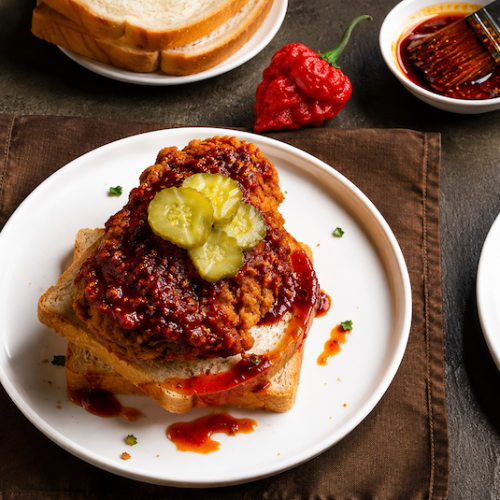
Carolina Reaper Hot Honey Chicken
Ingredients
Ingredients (chicken)
- 4 boneless skinless chicken thighs
- 1 cup buttermilk
- 1 teaspoon kosher salt
- 1/2 teaspoon black pepper
- 1 cup all-purpose flour
- 1 teaspoon paprika
- 1/2 teaspoon garlic powder
- Vegetable or peanut oil for frying
Ingredients (hot honey)
- 1/2 cup honey
- 2 tablespoons unsalted butter
- 1 tablespoon apple cider vinegar
- 1/4 teaspoon smoked paprika
- 1/8 teaspoon garlic powder
- 1/8 teaspoon kosher salt
- 1/16 teaspoon Carolina Reaper pepper minced
Ingredients (for serving)
- 4 slices white bread
- Dill pickle chips
Instructions
- Marinate the chicken. Place the chicken thighs in a bowl with the buttermilk, salt and pepper. Cover and refrigerate for at least 1 hour or up to overnight.
- Make the hot honey. Wearing disposable gloves, combine the honey, butter, vinegar, paprika, garlic powder, salt and minced Carolina Reaper pepper in a small saucepan. Warm over low heat until the butter melts and the ingredients are combined. Do not boil. Taste cautiously, and add more Reaper only if desired. Keep warm.
- Bread the chicken. Combine the flour, paprika and garlic powder in a shallow dish. Remove each thigh from the buttermilk, allowing the excess to drip off, then dredge thoroughly in the seasoned flour.
- Fry. Heat about 1 1/2 inches of oil in a heavy skillet or Dutch oven to 350 degrees. Working in batches, fry the chicken until deeply golden and the thickest part reaches 165 degrees, about 5 to 7 minutes per side, depending on thickness. Transfer to a wire rack.
- Glaze. While the chicken is still hot, generously brush both sides with the warm Carolina Reaper hot honey.
- Serve. Place each piece of glazed chicken over a thick slice of white bread, and top with dill pickle chips. Drizzle with a little extra hot honey for those willing to tempt fate.
Notes
FAQ
Where was the Carolina Reaper developed?
Smokin’ Ed’s Carolina Reaper was developed in Fort Mill, South Carolina, by pepper breeder Ed Currie.
How hot is a Carolina Reaper?
Smokin’ Ed’s Carolina Reaper averages around 1.64 million Scoville Heat Units. The article notes that this makes it roughly 200 to 650 times hotter than a jalapeño.
Was the Carolina Reaper the world’s hottest pepper?
Yes. Guinness World Records crowned it the world’s hottest chili pepper in 2013. It held the title for a decade before Pepper X took the title in 2023.
What does a Carolina Reaper taste like?
Before the intense heat takes over, the pepper offers noticeable sweetness and a fruity aroma.
How do you grow Carolina Reaper peppers?
Hilton Head gardener David Cribb recommends planting after the threat of frost has passed. The article says he uses consistent water and fertilization and gives the plants full sun.