The Strange and Wonderful Games That Defined 1960s Playtime
Who needed a board when a game could balance on a fingertip, explode without warning or glow in the dark? Midcentury toy makers found plenty of ways to keep kids guessing.
Story by Charles Grace
Most of us learned what a “board game” was on the living room floor: a folded cardboard track, a pair of dice and a plastic token inching toward a finish line. Roll, move, repeat. Or was it a “bored game”?
For a stretch of the mid-20th century, toy companies seemed determined to break that formula. They built games you could assemble, balance, shake, touch and even be startled by. Many had no board at all, and the line between game and toy grew blurry.
The timing wasn’t an accident. By the 1960s the game aisle was crowded, and television had become the place to sell toys. A flat board and a spinner didn’t look like much in a 30-second commercial. A plastic contraption snapping shut or a ticking bomb did. Companies such as Milton Bradley, Ideal, Mattel and Transogram started competing on spectacle, and the games got stranger and more wonderful as a result.
Cootie, known for its plastic bug parts, is the classic boardless assembly game. Players roll the “Cootie cube” to earn pieces: a beehive-shaped body, a head, antennae, eyes, a coiled proboscis and six legs. The first player to assemble a complete Cootie wins. Cootie predates the 1960s, but it became a staple of playrooms around the world and made the Toy Industry Association’s list of the 100 most memorable toys of the 20th century.
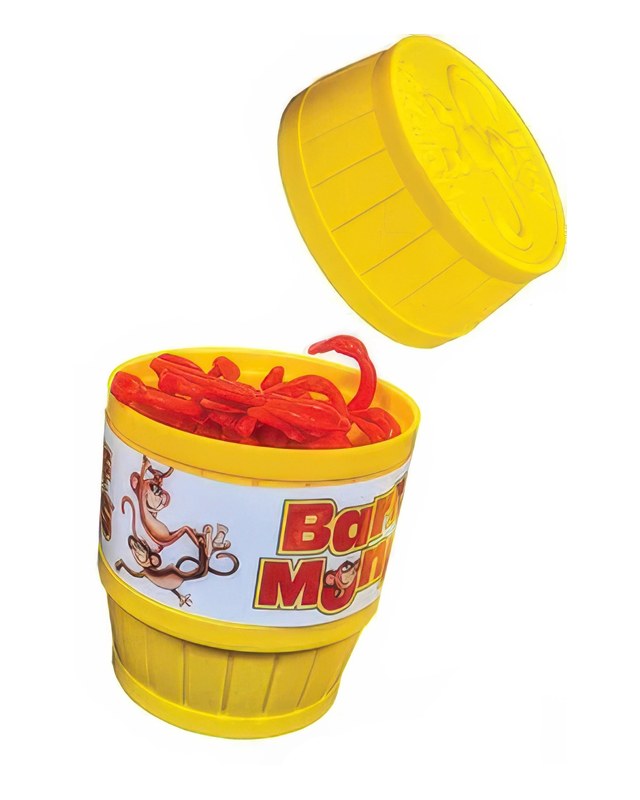
Barrel of Monkeys is another boardless classic. Players hook plastic monkeys together into a chain. Drop one, and you’re done. The longest chain wins. The game went from concept to finished product in 1966 to No. 2 on the National Toy Hit Chart a year later.
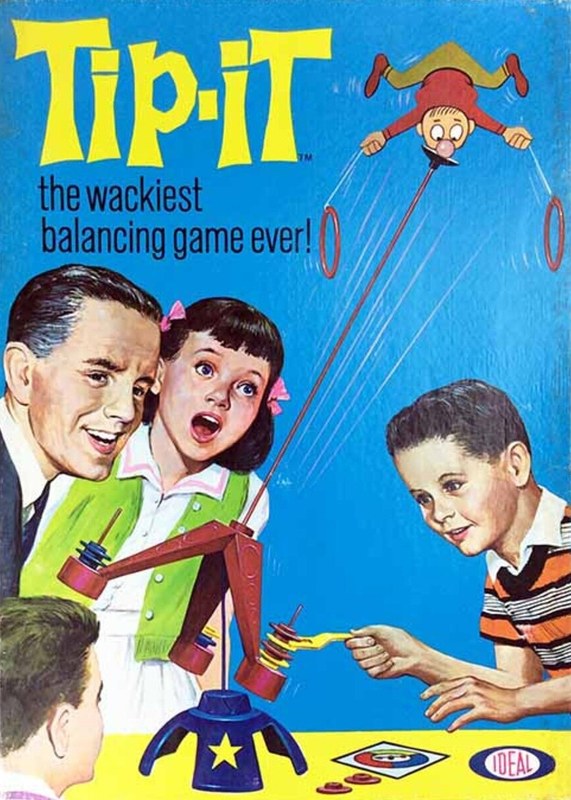
Games That Kept Kids on Their Toes
Building a monkey chain took nimble fingers. Tip-It required balance and a steady hand. Ideal billed it as the “wackiest balancing game ever,” and it was tense from start to finish. A lone acrobat perches high above the base, and players take turns removing colored discs that threaten his balance. If he falls, it’s over.
Milton Bradley’s Time Bomb ran on suspense too. It was essentially an updated version of hot potato: Players stood in a circle, wound up the plastic bomb and tossed it from player to player. At an unpredictable moment, it went off with a loud pop, and whoever was holding it was out. The last player standing won. Simple but suspenseful, it made a great party game, despite (or perhaps because of) its dark theme. Working boxed originals can now sell for a few hundred dollars.
Game makers also carved out a spookier corner of the toy store, creating supernatural games that sold atmosphere as much as gameplay. Transogram went a step further and turned out the lights.
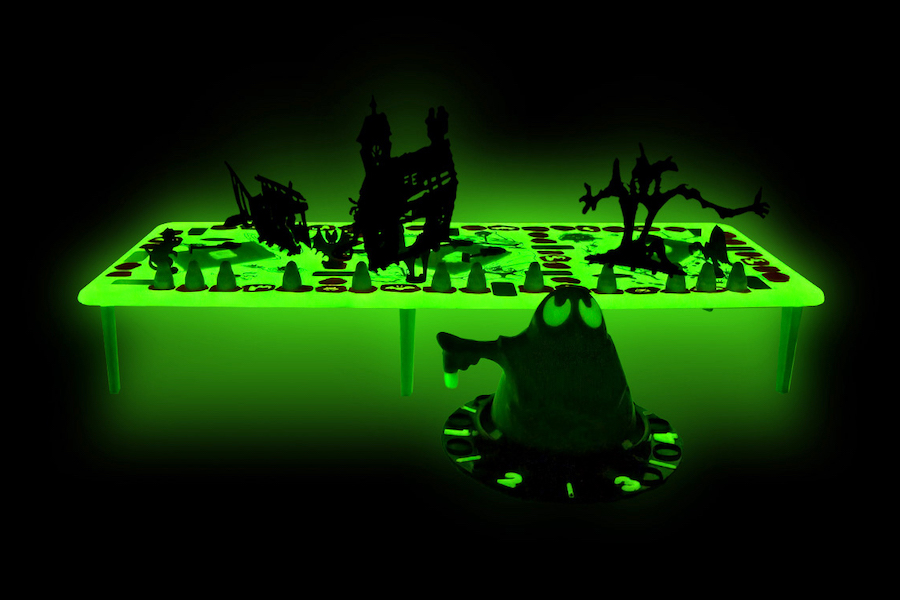
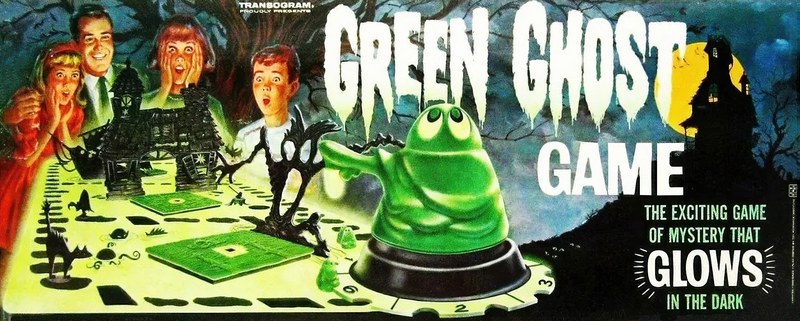
Green Ghost materialized in 1965 and is considered the first game designed to be played in the dark. Its playfield wasn’t a traditional board. It stood on six legs above hidden pits set in graveyard, shipwreck and haunted house scenes. The Green Ghost himself determined how many spaces players could move, but they could travel in any direction.
Players searched for 12 little ghosts, reaching into dark crypts to feel around for bones, rubber snakes or “bat feathers.” The game ended with the Green Ghost reunited with his ghost child, Kelly. Whether you won came down to a spin, and only the Green Ghost knew for sure.
Touch, chance and surprise made these games memorable and they help explain why so many of us can still recall the feel of the pieces decades later.
They occupied a curious space between game and toy. The rules determined the winner, but the objects themselves supplied the fun. Somewhere in between is where these games belong, and perhaps that’s what made them so much fun in the first place.
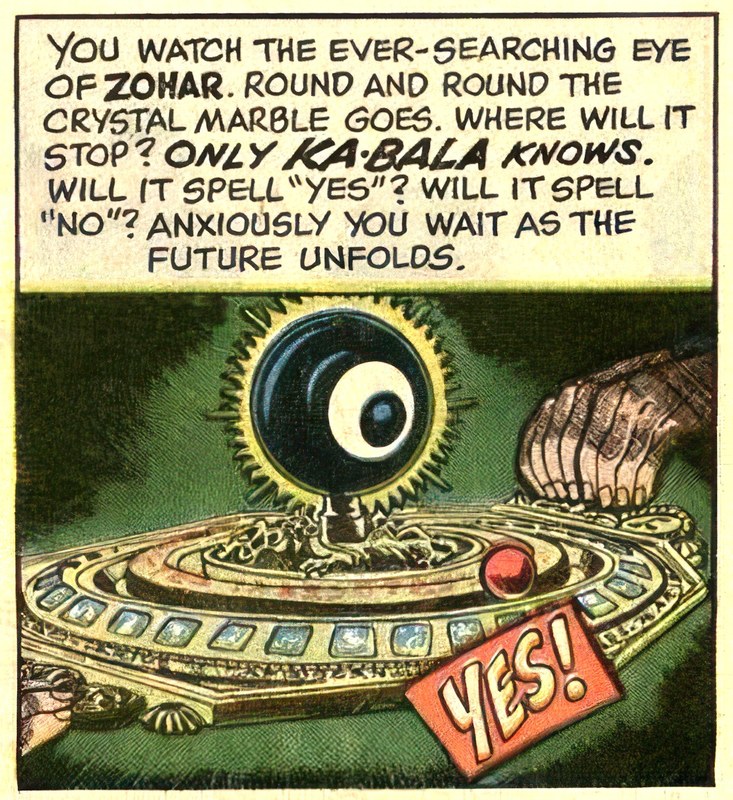
The eye of Zohar
Ka-Bala, released in 1967 by Transogram, went from haunted to mystical. It was molded from green plastic that glowed in the dark, and in place of a planchette, a large black marble rolled around a circular track to deliver answers, watched over by a sculpted, eerie “Eye of Zohar” that supposedly told your future. Players were instructed to chant a nonsense incantation while operating it.