The Gooey, Creepy and Colorful History of Mattel’s Thingmaker
Rubber bugs, colorful goop and a 400-degree hot plate made Mattel’s Thingmaker a childhood favorite unlike any other. The real surprise is what kids could create with it.
Story by Charles Grace
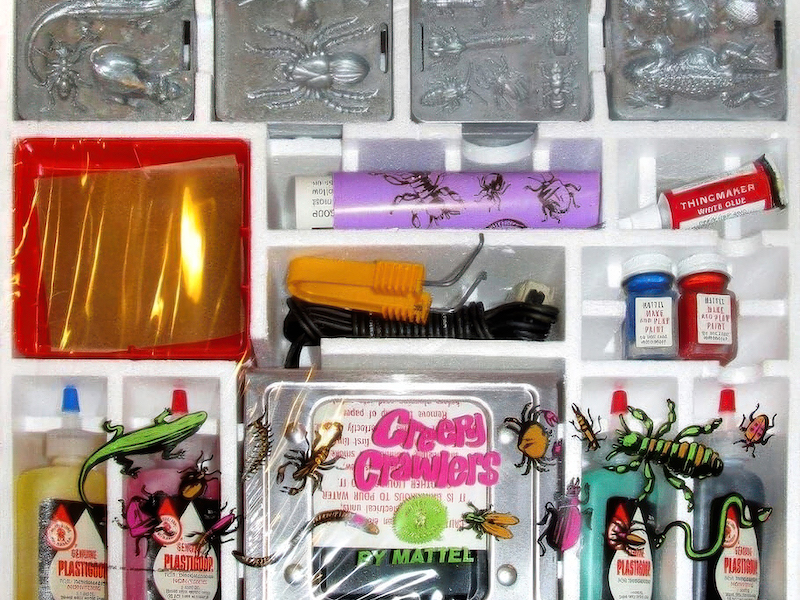
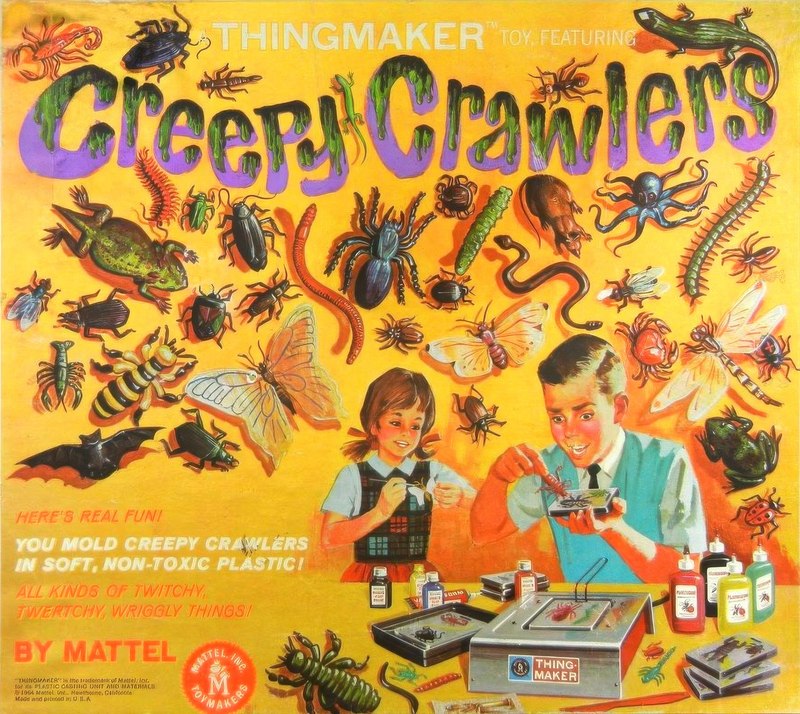
If you were a kid in the mid-1960s, there’s a decent chance you spent many an afternoon making rubber creatures at the kitchen table. Mattel’s Thingmaker, sold as Creepy Crawlers, arrived in 1964 and gave children a small bug factory they could run themselves.
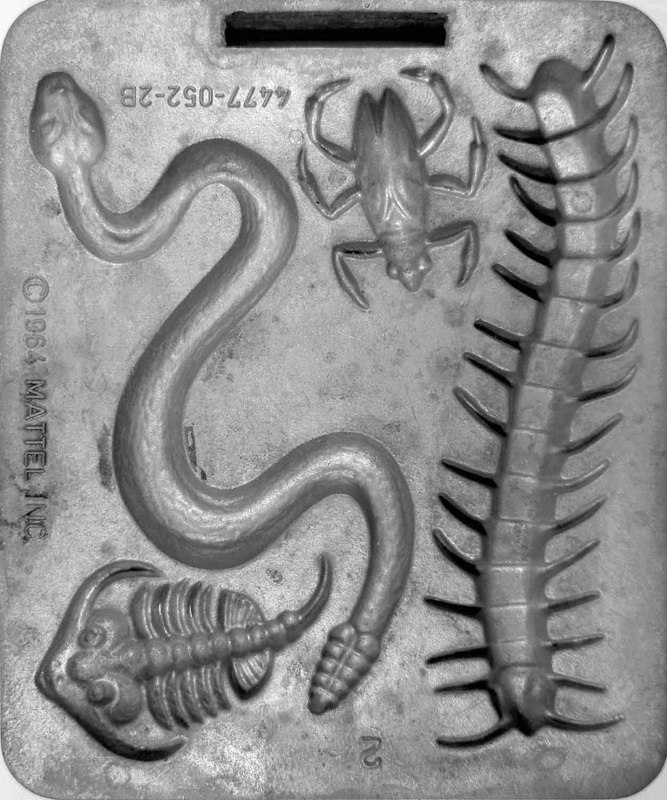
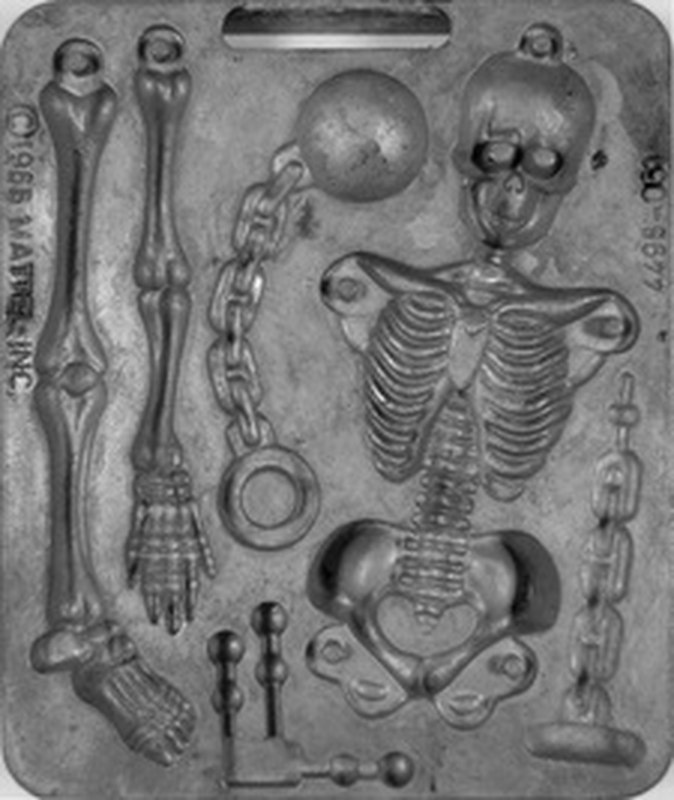
Critter creation started by squeezing a liquid called Plasti-Goop into die-cast metal molds shaped like bugs and other small creatures. Then you set the mold onto an open electric hot plate — that’s right, Mom — a 400-degree hot plate. The heat cured the goop, and once it cooled, you peeled out a soft, rubbery creature. Plasti-Goop came in several colors, including glow-in-the-dark, so you could turn out every bug under the rainbow.
New sets were produced under the Thingmaker umbrella for the rest of the decade.
The Many Molds of Mattel’s Thingmaker
Creeple Peeple produced odd heads, arms and feet meant to sit on top of a pencil. Feathers and paper clothing were included to dress up your “pencil peeple.”
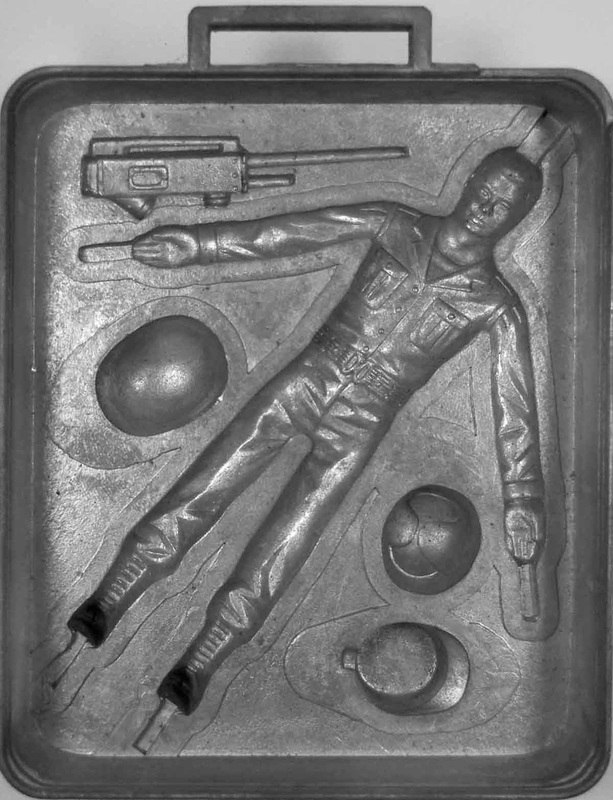
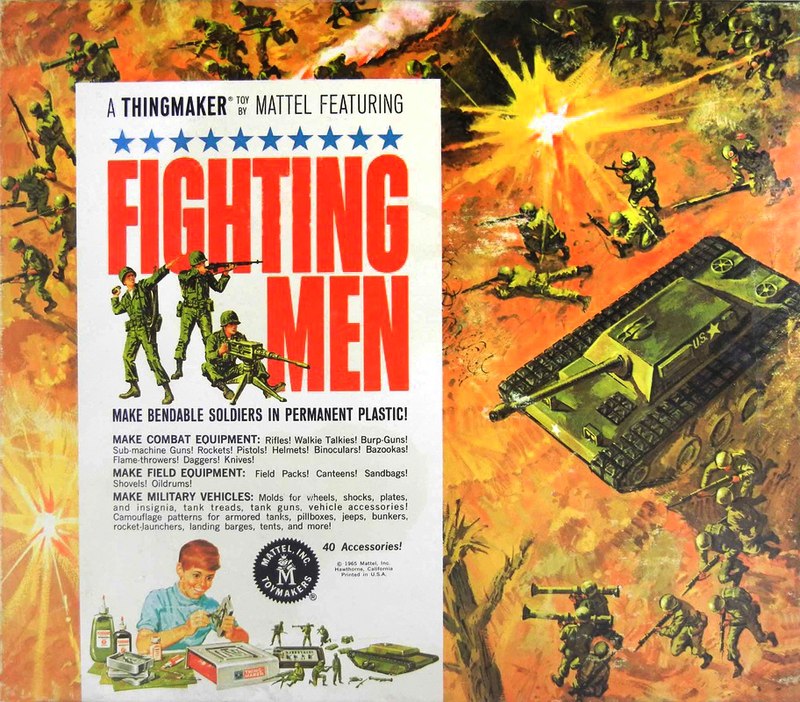
Fighting Men, a more boy-centric set, was military-themed and used two-part molds with bendable wire baked inside the figures to make little soldiers that could be bent and posed for the mission at hand. Weapons and accessories in this six-mold set guaranteed your battle would be won.
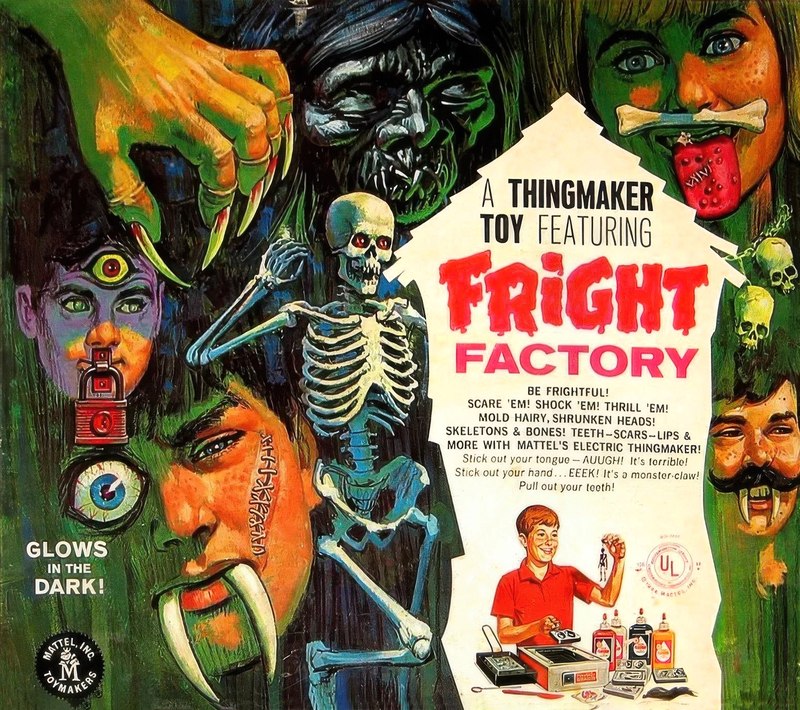
The Fright Factory, a fan favorite, made fake scars, crooked teeth and a third eye for your forehead. Also included in this macabre collection was a mouth padlock. Perfect for silencing that annoying sibling.
Speaking of sisters, Mattel soon released sets geared toward girls, such as Fun Flowers and Mini-Dragons. These sets created colorful pieces that could be cooked and then assembled into larger, more complex creations.