Garnish your feast with delicious sides and decadent desserts
Holiday harmony
Story by Carrie Hirsch + Photography Butch Hirsch
When it comes to the main course for the holiday dinner, we resort to our favorites – standing rib roast, turkey, ham, duck or a vegetarian option – and then build the rest of the menu around that choice. This can be sometimes tedious – trying to avoid repeating what you made last year and being creative in the kitchen with limited time, while at the same time paying equal attention to the presentation. These recipes will work with any main course, along with whichever starch and/or vegetable you’re serving. And surprise your guests with a trendy holiday cocktail.
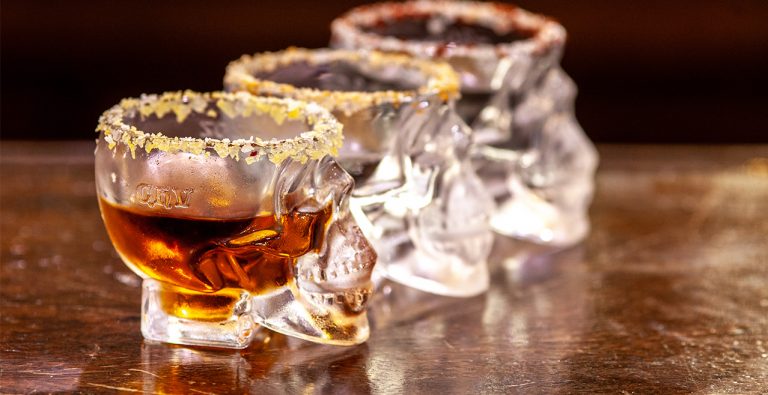
Coquito: A holiday cocktail with a Latin twist
(Serves 6-8)
No offense to traditional eggnog fans, but coquito, meaning “little coconut,” with its rum, coconut and cinnamon flavors, has become wildly popular. It is also vegetarian as there are no eggs. This celebratory Christmas drink originated in Puerto Rico, possibly with the Spanish taking credit for bringing it to the Caribbean during the colonial days. Like eggnog, it does require a few minutes of attentive stove-top cooking, but other recipes for coquito do not require the stove; however, the cooking method ensures it does not separate while refrigerated.

Ingredients
15-ounce can coconut cream
14-ounce can sweetened condensed milk
13.5-ounce can unsweetened coconut milk
12-ounce can evaporated milk
2 tablespoons ground cinnamon
3 tablespoons vanilla extract
3/4 cup white rum (or to taste)
Garnish
Ground nutmeg
8 cinnamon sticks (optional)
Honey & silver sugar crystals for rimming the glass
Directions
[1] Place all ingredients except the rum in a medium, non-stick pot over medium heat. Bring to a low boil, reduce heat to low and simmer, stirring often, for 6-8 minutes. [2] Remove the pot from the burner, set aside and allow to cool completely. [3] Stir in the rum until well incorporated. Pour coquito into a large serving pitcher, cover, and refrigerate for a minimum of 4 hours. [4] To rim the glasses just before serving, pour honey and the sugar crystals onto two small, separate flat plates. Dip the rims of the rocks glasses in the honey, then dip into the sugar crystals. [5] Stir the coquito before serving, pour into rock glasses; garnish with a pinch of nutmeg and a cinnamon stick. An alternate way to serve coquito in smaller portions is to pour it into shot glasses.
Borscht (beet soup)
(Serves 8)
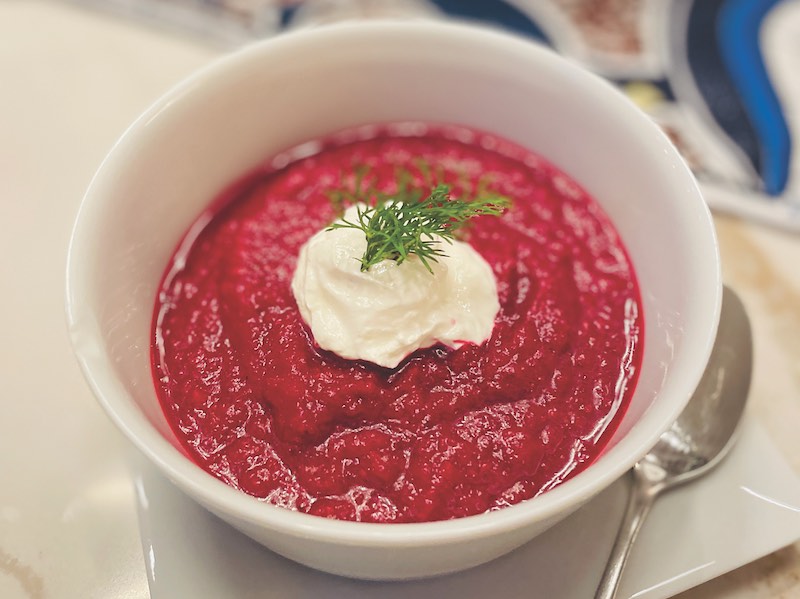
Borscht, a classic Eastern European soup, is a celebration of the humble beetroot, transformed into a comforting and nourishing meal that’s perfect for any soup course. This version is a fusion of earthy beets, hearty potato, sweet carrots and crisp green cabbage, all brought together with homemade broth and the bright notes of fresh dill and lemon. The result is a dish that not only warms the body but also offers a stunning centerpiece to any dining table with its rich, ruby-red hue.
Ingredients
4 large red beets
1 large russet potato, peeled
3 carrots, peeled & cut into 1” pieces
½ medium green cabbage, thinly sliced
2 tablespoons extra-virgin olive oil
2 garlic cloves, peeled
(1) 32-ounce package unsalted beef broth
(1) 32-ounce package of low-sodium vegetable broth
2 tablespoons fresh dill
Zest of 1 large lemon
Juice of 1 large lemon
Salt and pepper to taste
Toppings
Sour cream or yogurt
Fresh dill sprigs
Directions
[1] To cook the beets, trim off the beet greens and scrub away any loose dirt. Boil or steam whole beets for 20 minutes, then add the peeled potato and peeled carrots into the same pot with the beets for 20 more minutes until tender when pierced with a knife. [2] Transfer vegetables to a colander set in the sink, then allow to cool for 5 minutes. Wear dish-washing or disposable gloves to avoid staining your hands while handling the beets. [3] Use paper towels to easily slip off the skins, then trim off any remaining skin with a knife. Cut beets, potato and carrots into 1” pieces. [4] Heat the olive oil in a large soup pot over medium heat, then sauté the garlic clove for 1 minute. Add green cabbage, beets and carrots, then sauté, stirring often, for 10 minutes. [5] Add potato, beef and vegetable broths, dill, lemon and lemon zest, then bring to a low boil and simmer, uncovered, for 10 minutes. Salt and pepper to taste. [6] Turn off burner, then process with an immersion blender until smooth, or transfer in batches to a blender or food processor. If you prefer a thinner borscht, add more low-sodium vegetable broth. [7] Serve warm or cold in individual bowls with a dollop of sour cream and fresh dill sprigs.
Baby greens with Blood orange vinaigrette
(Serves 8)
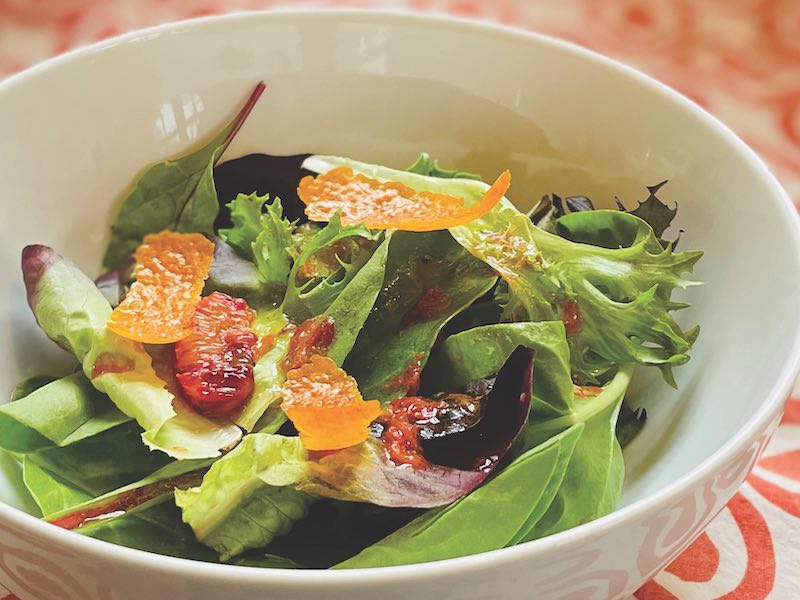
This salad marries the delicate flavors of tender baby greens with the vibrant, citrusy notes of fresh blood oranges. Each plate is a brushstroke of color and taste, featuring the vivid segments and zest of Blood oranges. The homemade vinaigrette, a blend of freshly squeezed Blood orange juice and classic ingredients, lightly coats each leaf, delivering a symphony of flavors.
Ingredients (salad)
2 Blood oranges, segmented
Baby greens for 8
Blood orange zest peels
Directions
[1] Using a vegetable peeler, hold a Blood orange in your hand, then peel 1” slices of the zest, making them as thin as possible, making sure to avoid peeling into any of the bitter piths.
Ingredients (vinaigrette)
(makes approximately 3/4 cup)
3 tablespoons Blood orange juice
2/3 cup olive oil
1 ½ peeled garlic cloves, finely chopped
1 tablespoon Dijon-style mustard
1/2 teaspoon coarse salt
1/8 teaspoon black pepper
Directions
[1] Place all ingredients in a mini food processor for 1 minute, or whisk vigorously to blend together. [2] Arrange greens in a large salad bowl, then dress and toss greens, Blood orange segments and zest peels in vinaigrette.