How to Restore Furniture for Eco-Friendly, Vintage Home Design
Learn best furniture restoration practices and why the project is good for your home, your wallet and the planet.
Story by Lance Hanlin
There’s something deeply satisfying about giving an old piece of furniture a second life. Maybe it’s the thrill of the find, maybe it’s the history etched in the wood, or maybe it’s the chance to add your own touch to something that has already stood the test of time. For Matthew Morris, owner of MM Wood Studio, it’s all of the above. “A well-built piece of furniture is capable of being used and bringing joy to people’s lives, living the tree’s second life for hundreds of years,” he says.

LEARN FROM THE MASTER Curious about furniture restoration or construction? Matthew Morris, owner of MM Wood Studio, shares his expertise through step-by-step videos at mmwoodstudio.com.©LISA STAFF
Why restoration matters
In a world where fast furniture often ends up at the transfer station after a few years, Morris sees restoration as both a personal and environmental win. Older furniture, especially pieces made before World War II, often came from solid wood with no laminates or particle board. Even mid-century designs built with plywood used higher-quality materials than many new pieces today.
“Sometimes you’ll even find wood that’s now protected and can’t be imported,” Morris explains. “An Eames lounge chair built in the 1960s, for example, might be made from Brazilian rosewood, a tree that’s now on the endangered list.”
Restoration isn’t just about saving money or finding rare woods. It is also about creating something personal. “By finding something that says yes to you, that you fall in love with, and by adding your own touch to it — new hardware, a fresh finish — you’re making it uniquely your own,” he says.
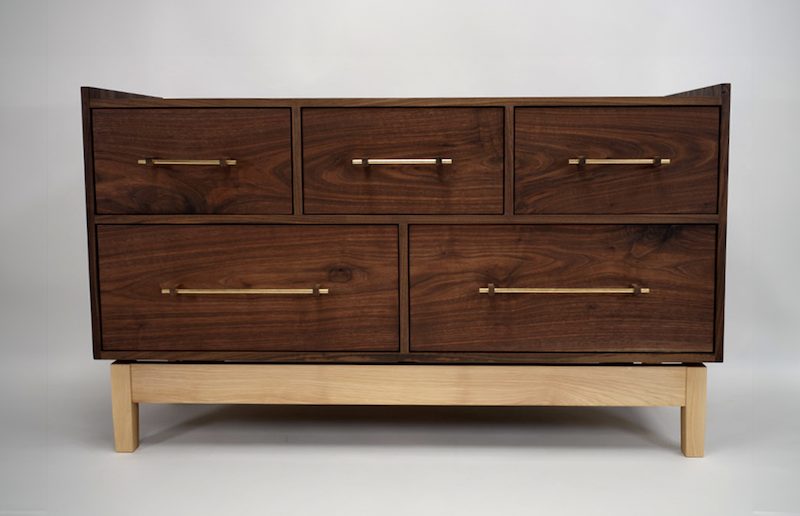
BEAUTY WITH BACKBONE The Luna Dresser by MM Wood Studio pairs a floating walnut case with a sturdy hickory base. Walnut revives with rich tones during restoration, while hickory adds lasting durability. ©MM Wood Studio
Choosing the right project
When asked what pieces are best to restore, Morris doesn’t hesitate. “Something you are in love with,” he says simply. It could be a chair, a dresser or a dining table. The important part is that it speaks to you.
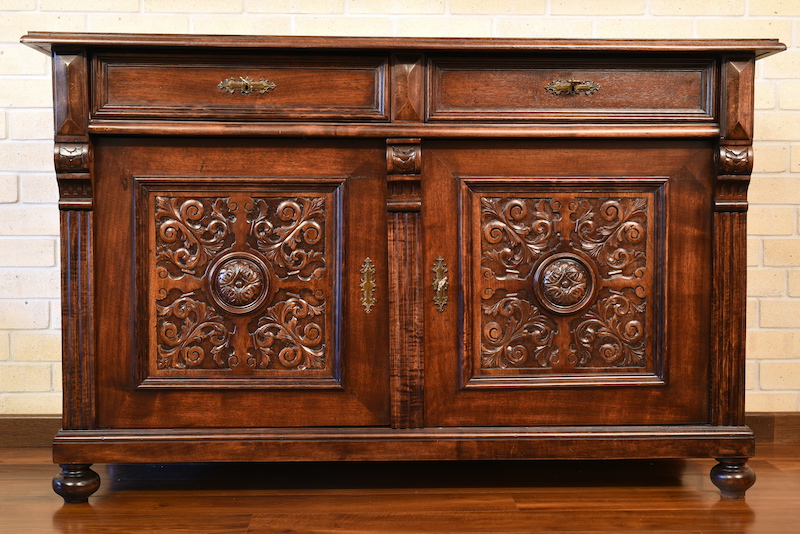
He recommends walnut and oak as especially rewarding woods. Walnut, which can fade over time, can be revived with some careful sanding and finishing, revealing rich browns, reds and purples. Oak often suffers from yellowed finishes but can be brought back to its natural beauty with the right products.
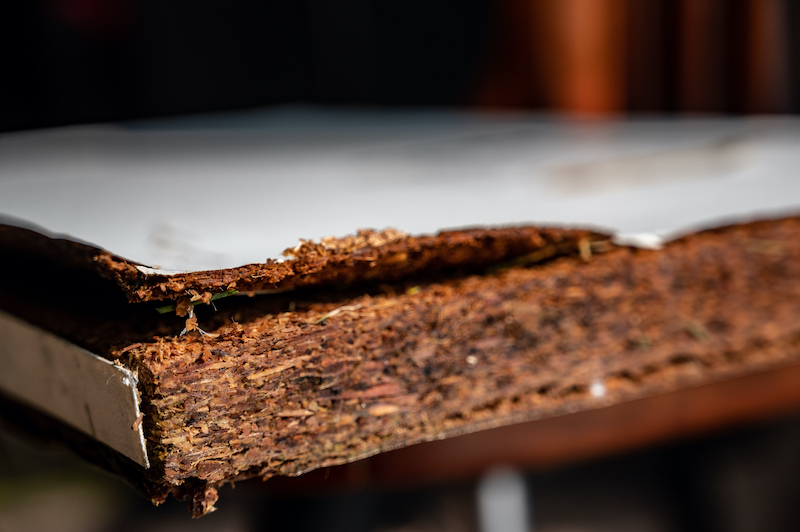
Not everything is worth the effort. Morris advises steering clear of furniture made from MDF or particle board. “That furniture was built to be disposable,” he says. One quick test is to look at the edge of a tabletop. Solid wood will show end grain. Particle board will not.

FILLING THE GAPS Wood filler smooths out scratches, dents and worn spots, giving vintage furniture a strong foundation for restoration and a flawless finish. ©LISA STAFF
Practical advice for beginners
If you’re new to restoration, Morris suggests starting small. “A side table for the living room is a great start. Something without a drawer, or just one drawer. Dining tables can also be good because they’re usually easy to sand and don’t have a lot of tricky corners.”
When hunting for a piece, look for signs of solid construction. A sturdy feel, smooth-moving drawers and joints that can be tightened are all good indicators. And if you run into loose chair joints, he recommends glue or epoxy injectors. Just be ready to clean up any excess with mineral spirits.
There are times when it’s best to call in a professional. “Two things stand out,” Morris says. “If the piece has real damage — something broken or missing — or if you don’t want to handle the chemicals needed to strip a finish, that’s when you should bring in help.”
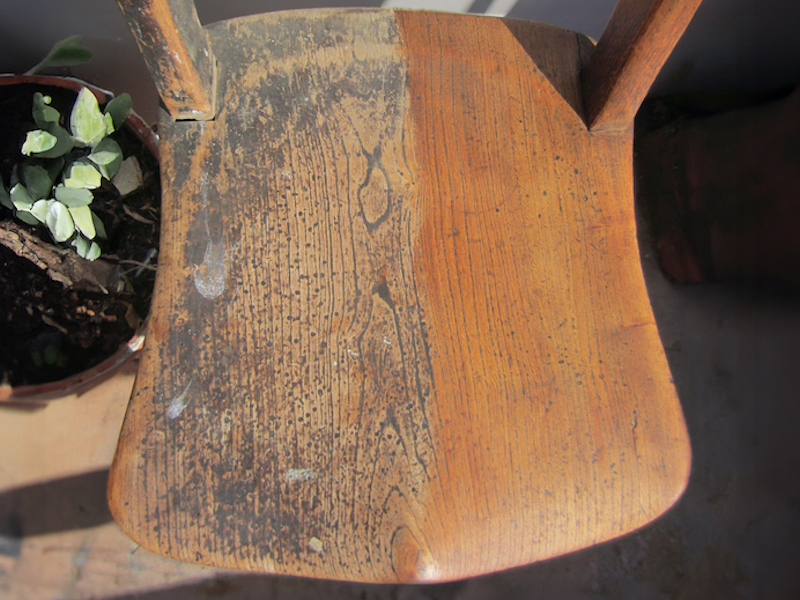
BEFORE AND AFTER Careful sanding reveals the warmth and character hidden beneath years of wear.
Stories in the wood
Every now and then, restoration work reveals surprises. Morris notes that many small studios from the 1950s and 1960s signed their work. “Look for a maker’s mark in a discreet spot. It’s part of the piece’s story, and you don’t want to sand it away.”
He also finds joy in revisiting his own early work. “For me, it’s furniture I made decades ago, originals of pieces we still sell, that have had too much exposure to sunlight. A little TLC makes them look and feel like they did the day I finished them.”
A sustainable craft with local roots
Beyond the beauty and craftsmanship, restoration also ties into sustainability. “We’re allowing that tree to continue its second life,” Morris says. “It may have grown for hundreds of years, and now it can keep being useful. At the same time, we’re avoiding disposable furniture that requires cutting down more trees than what’s sustainable.”
Here in the Lowcountry, restoration also means keeping family stories alive. “Think of all the conversations your mom’s favorite lounge chair could tell about your life growing up,” Morris says. “These pieces of furniture are witnesses to our lives; imagine what they could share.”
That’s the real charm of restoration. It’s not just about wood and finish. It’s about preserving history, honoring craft and giving our homes furniture with character and a story worth keeping around.
Vintage pieces not worth restoring
Even the most enthusiastic DIYer should know when to walk away. These items rarely justify the time, effort or expense.
Particle-board furniture: Built to be disposable. Once it swells, chips or crumbles, there’s no saving it.
MDF pieces: Medium-density fiberboard is heavy, weak and prone to sagging. Refinishing doesn’t improve their short lifespan.
Overly warped or cracked pieces: Severe structural damage often costs more to fix than the piece is worth.
Veneered furniture with deep damage: Thin veneers can’t handle sanding and won’t hide major flaws.
Heavily upholstered pieces: Reupholstery can cost more than buying a new, high-quality chair or sofa.
Water-damaged items: Mold, mildew or swelling in wood or joints is a deal breaker.
Broken pressboard or laminate items: Once the surface peels or chips, it’s nearly impossible to restore.
Cheap mass-market reproductions: Pieces made quickly and cheaply won’t hold up, no matter how much effort you put in.