Every grain tells a story
A guide to grains
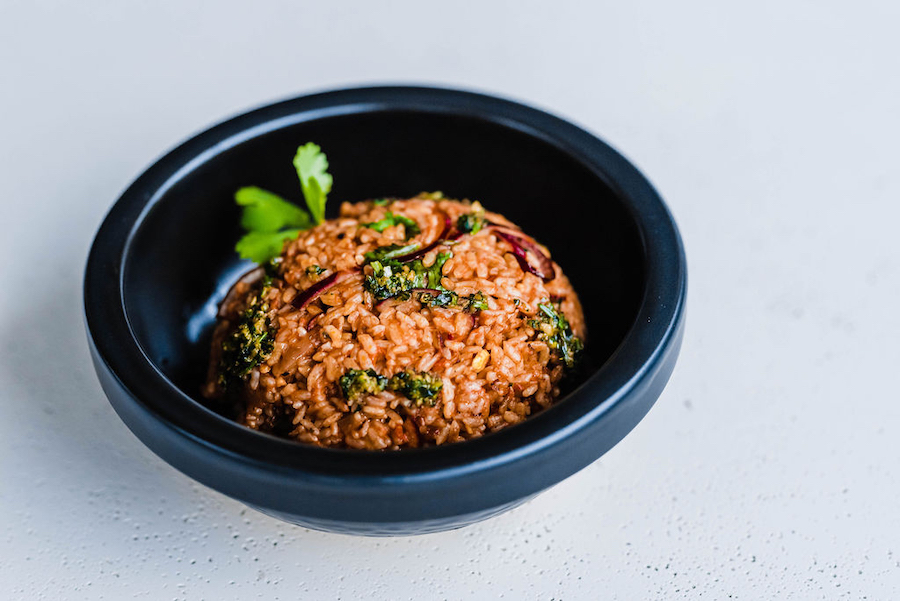
Grains aren’t just side dishes. In the South they carry memory, migration and resilience. They crossed oceans through hardship, took root in Lowcountry soil and grew into the backbone of entire cuisines. To Chef Bernard Bennettof Okàn, they’re also the clearest lens for understanding how West African foodways shaped the American South.“There’s a bigger history to African American cuisine, and it’s not always spoken about,” Bennett said. For him, rice is especially powerful. “Carolina Gold rice, benny seeds, red rice — those wouldn’t be here without slavery. But those ingredients transformed the culture.”Grains carry stories. People brought them across the ocean through unimaginable hardship, planted them in Southern soil, and they ended up defining entire cuisines. Bennett invites us to look closer at these old staples, not just for how they taste, but for the history they hold.Take Carolina Gold rice, the heirloom variety at the heart of Gullah-Geechee cooking. Creamy and starchy, it is perfect for dishes where the grains cling together and soak up bold flavors: red rice, gumbo, Hoppin’ John. “It has a huge starch content,” Bennett explains. “That makes it perfect for stews or anything braised.” More than a pantry staple, Carolina Gold is a survivor. Nearly lost to history, it came to the South through the transatlantic slave trade, where enslaved Africans used their knowledge of rice cultivation to make it thrive. Cook it gently, rinse only a little, and let it get creamy. It is meant to be rich, comforting and a little messy.


In contrast, broken jasmine rice, beloved in Senegal, offers a softer texture and just enough stickiness to hold a tomato-rich Jollof rice together. “Jollof rice originally used broken rice,” Bennett says. “It’s flavorful and a little sticky, perfect for soaking up the sauce.” Cover the pot and finish with steam, and you are closer to the original than you might think.Of course, Bennett has his own preference: the Nigerian style, made with basmati. Light, floral, and never sticky, it is his go-to grain. “I love basmati rice,” he says. “It’s my favorite. I’m not a fan of sticky rice.” With its long, separate grains, basmati is perfect alongside grilled meats or lighter stews. Rinse well, keep the ratio around 1:1.5, and you will end up with a clean, elegant texture.Not every grain has to be a heavy hitter. Bennett points to vermicelli rice, long-grain rice mixed with toasted vermicelli noodles, as proof that even humble pairings can carry weight. “The flavor is nutty and vibrant,” he says. Common across African, Middle Eastern and Mediterranean kitchens, this dish shows how far a simple grain can travel and how many stories it can tell.If you are after drama, black rice delivers.
Sometimes called forbidden rice, it is chewy, nutty, slightly sweet and striking on a plate. Bennett uses it with Haitian fermented mushrooms, which can turn white rice gray. “Black rice helps us get the flavor and the color we want,” he says. Yes, it takes longer to cook, but the result is worth the soak: bold flavor, striking color and plenty of substance.Fonio, one of the oldest cultivated grains in West Africa, may be less familiar but is easy to love. Naturally gluten-free and quick-cooking, it is mild, nutty and fluffy like couscous. It takes just five minutes with a 2:1 water-to-grain ratio, making it one of the most approachable entry points for African-inspired cooking.And then there are benne seeds. “Benne seeds are our ancestors,” Bennett says. Brought to the Lowcountry by enslaved Africans, they are a cornerstone of Gullah cuisine. Toast them for sauces, vinaigrettes, spice blends or the crisp bite of a benne wafer. Their deep, nutty flavor connects every bite to a lineage that is as vital as it is delicious.Choosing the right grain comes down to texture, flavor and purpose. Carolina Gold brings creaminess, broken jasmine lends authenticity to Jollof, basmati gives elegance, black rice adds structure and drama, fonio delivers speed and versatility and benne seeds add complexity to anything they touch.“What you think of as Southern food, for the most part, was slave food,” Bennett reminds us. “It was what they were allowed to eat or had access to. But they made it happen. They created something beautiful out of it.” Cooking with these grains is not only about flavor, it is about honoring that creativity, resilience and legacy every time we put pot to stove