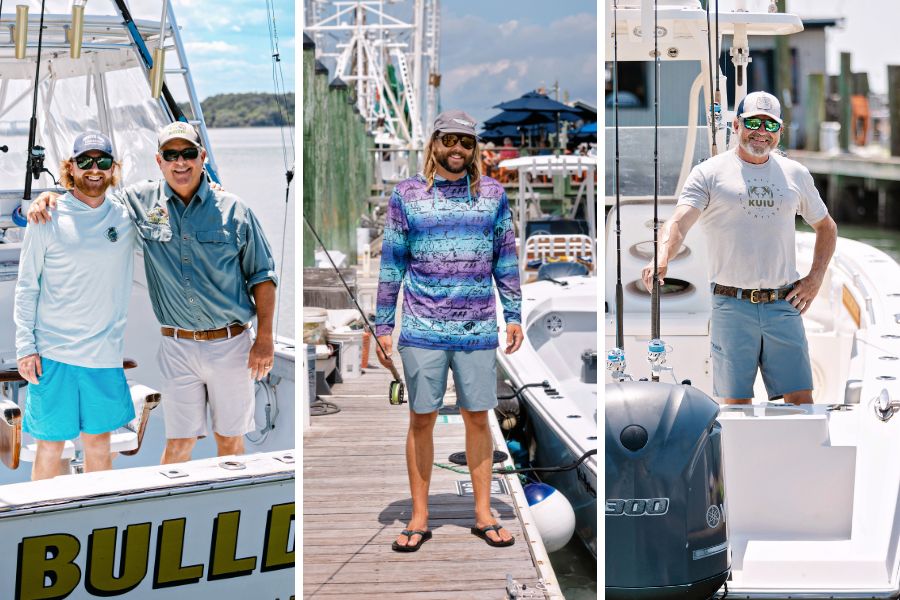
Lowcountry Charter Fishing Captains Share Life on the Water
Saltwater in their veins. The tides come and go, but these men of the sea maintain a steady course.
STORY BY BARRY KAUFMAN
PHOTOGRAPHY BY LISA STAFF
The Lowcountry is a land of seafarers. Long before anyone laid down sod for a golf course, cleared a field for a timeshare or even entertained the notion of vacationing here, it belonged to the old salts. They were the ones who beat the sunrise every morning to feed their families, whether casting lines into the many creeks and shallows around the Lowcountry or harvesting the morning’s crop of oysters.
Living their lives on the water, they witnessed the growth of the Lowcountry from beyond the shore, secure in the knowledge that no amount of economic development could change the rhythm of the tides. And as the face of the Lowcountry transformed from pristine coastal wilderness to a bustling hometown and vacation destination, these seafarers endured. The world around them changed, but the rhythm of their lives is still measured in waves, tides and sunsets.
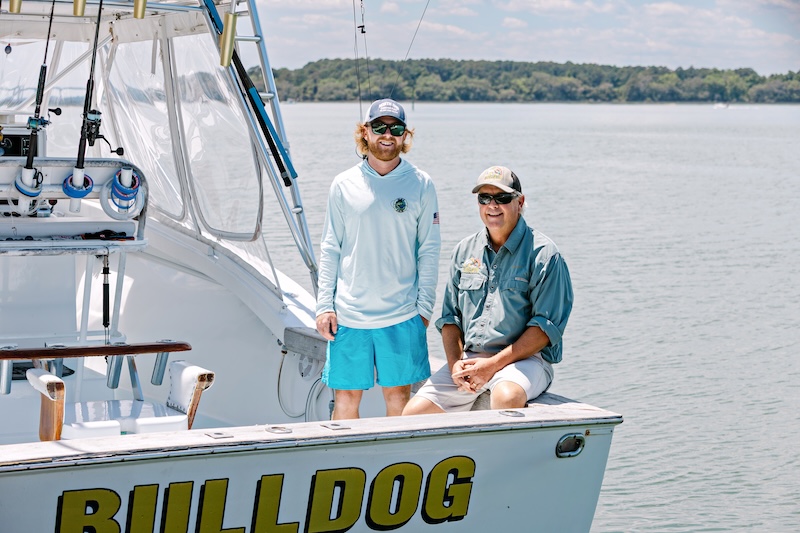
Christiaan and Stratton Pollitzer
Generations before the mast
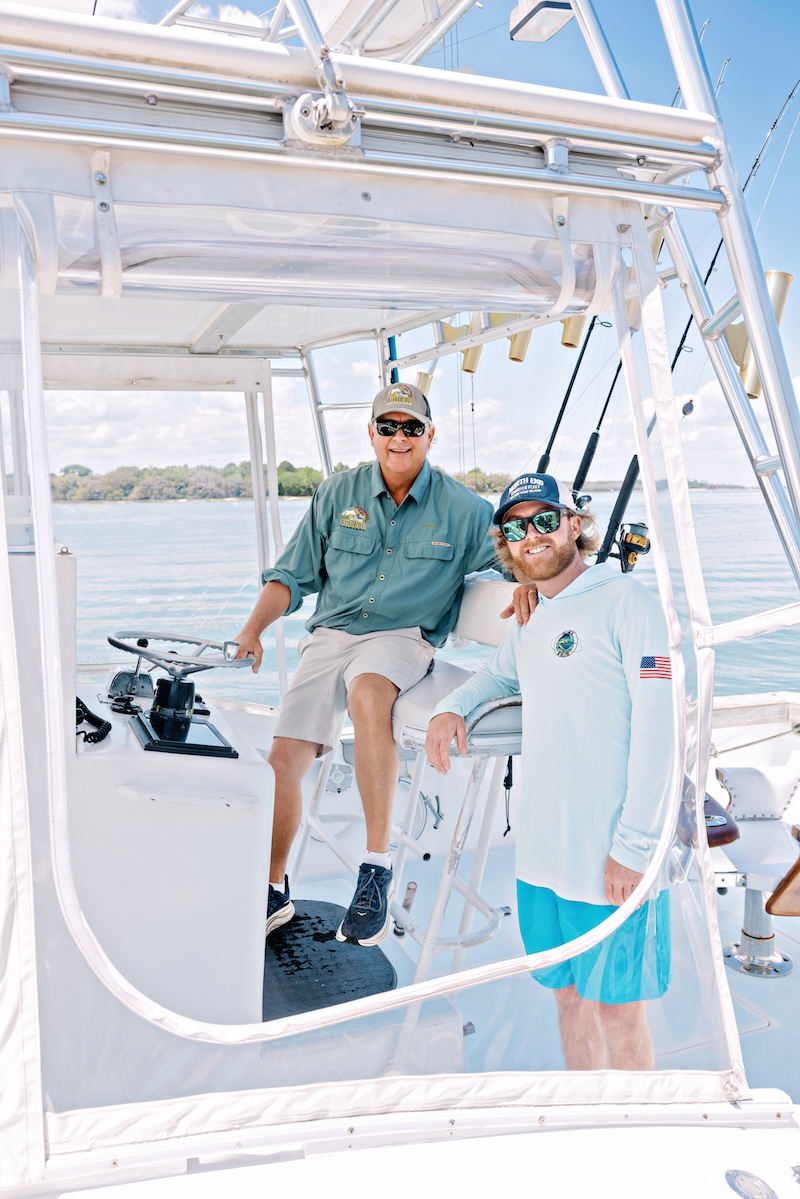
Each of us has some kind of project we started during the worst of the COVID doldrums. Maybe that’s when we took up guitar, learned to make sourdough bread or finally built that shed in the backyard. Father-and-son duo Christiaan and Stratton Pollitzer’s COVID project was a little more ambitious, and when it was finished, it represented the latest link in a chain of sailors three generations strong.
“Stratton had been working for me during summers in high school and attending Clemson when COVID hit. He couldn’t really see himself doing the online thing, so he said he was going to go into charter fishing,” said Christiaan.
It was hardly a surprise. Stratton had served on Christiaan’s charter boat, The Bulldog, just as Christiaan had served aboard The Hero under his father, Stratton “Captain Stratty” Pollitzer.
The pair soon found an old boat for sale, The Black and Blue, and brought it out to their farm in Ridgeland, where it was stripped down and rebuilt.
“Dave Harter had given it to me after it had sat for about eight years at the Boathouse. It was decrepit,” said Stratton. “We had to rip the decks out, rip out all the wiring. It took three weeks just to clean it. We added a toilet, made it more open and put a new outboard on it. It was a big overhaul.”
With The Black and Blue once again seaworthy, Stratton became the latest member of the family to take to the sea under his own sail. Each boat serves its own clientele, with The Bulldog focusing more on inshore trips and Black and Blue heading farther offshore.
In his son, Christiaan sees the lessons he learned being reinforced by the next generation.
“Stratton is so passionate about it, and he’s so good at it. He’s passionate about making people happy, and that’s what this business is all about. My father taught me that at a young age. This is the entertainment business,” said Christiaan. “I definitely passed along that the people mean everything. The fishing is kind of a sidebar.”
Stratton has not only carried those lessons forward, he’s also opening new dimensions for Bulldog Fishing Charters, adding his own stamp to the family legacy.
“My grandfather passed away when I was 11, but thankfully I grew up right next to him, so I got to fish with him. The first time I ever caught a mahi was with him and my dad,” said Stratton. “It’s nice to have started my own thing so now I can just go out fishing with my dad and have fun. Plus, I’ve had a few high school kids serve as first mates, so it’s great to see them learn.”
Bulldog Fishing Charters: What’s in a name?
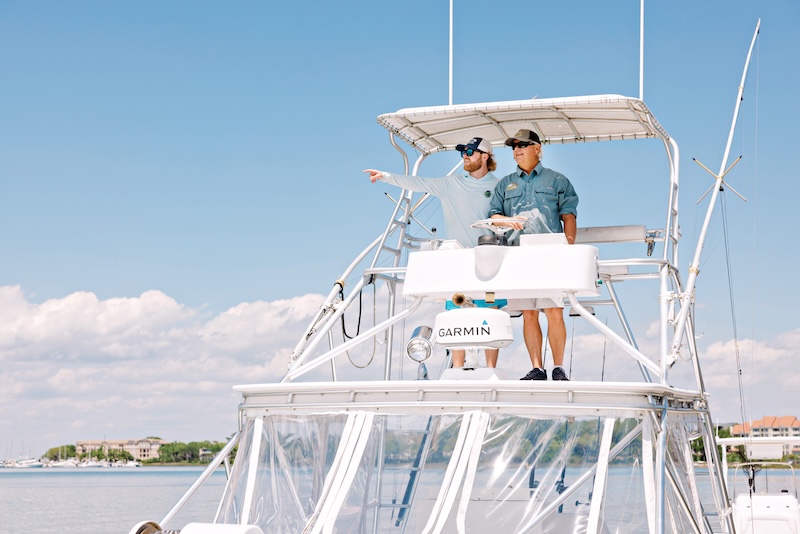
Sailing aboard The Bulldog as captain of Bulldog Fishing Charters, you might assume Christiaan Pollitzer is one of the many rabid University of Georgia fans who call the Lowcountry home. You would be mistaken. Both he and his son Stratton, the two captains of the company’s fleet, attended Clemson. So why isn’t the boat called The Tiger?
“A lot of people ask about that. My wife graduated from UGA, so I did marry a Bulldog, but that’s not why it’s called The Bulldog,” he said with a laugh.
Instead, the name of the boat serves as an homage to the tight-knit fellowship shared by Lowcountry charter fishermen. Just as Christiaan can call on a network of fellow captains when he needs an extra set of hands or advice on what’s biting that day, his father, Stratton “Captain Stratty” Pollitzer, could always count on his own circle of fishing buddies.
“The boat I started on was my father’s boat, which he’d named after his good friend Dean Jacobs. Everyone called him ‘Bulldog,’” said Christiaan. “My dad and Bulldog were really tight, so he named the boat after him.”
That same sense of community extends to the other boat in the fleet, The Black and Blue. Under Christiaan’s son Stratton, who was named after his grandfather, the boat represents the camaraderie that defines life on the water.
“Dave Harter had it listed for sale for $5,000,” said Christiaan. “When I told him Stratton and I were going to fix it up and charter it, he sold it to him for $1.”
Kai Williams
Every day is a new adventure
We’ve all had that beach day that blows up in our faces. It’s a big reason some longtime locals will sheepishly admit it’s often been years since their last trip to the beach. You get everything ready, pack a cooler, fish the boogie boards out from behind the water heater and prepare your family for a day of sun-soaked fun. Then you arrive and realize everyone else on the island, plus half the populations of Ohio, New York and Pennsylvania, had the same idea.
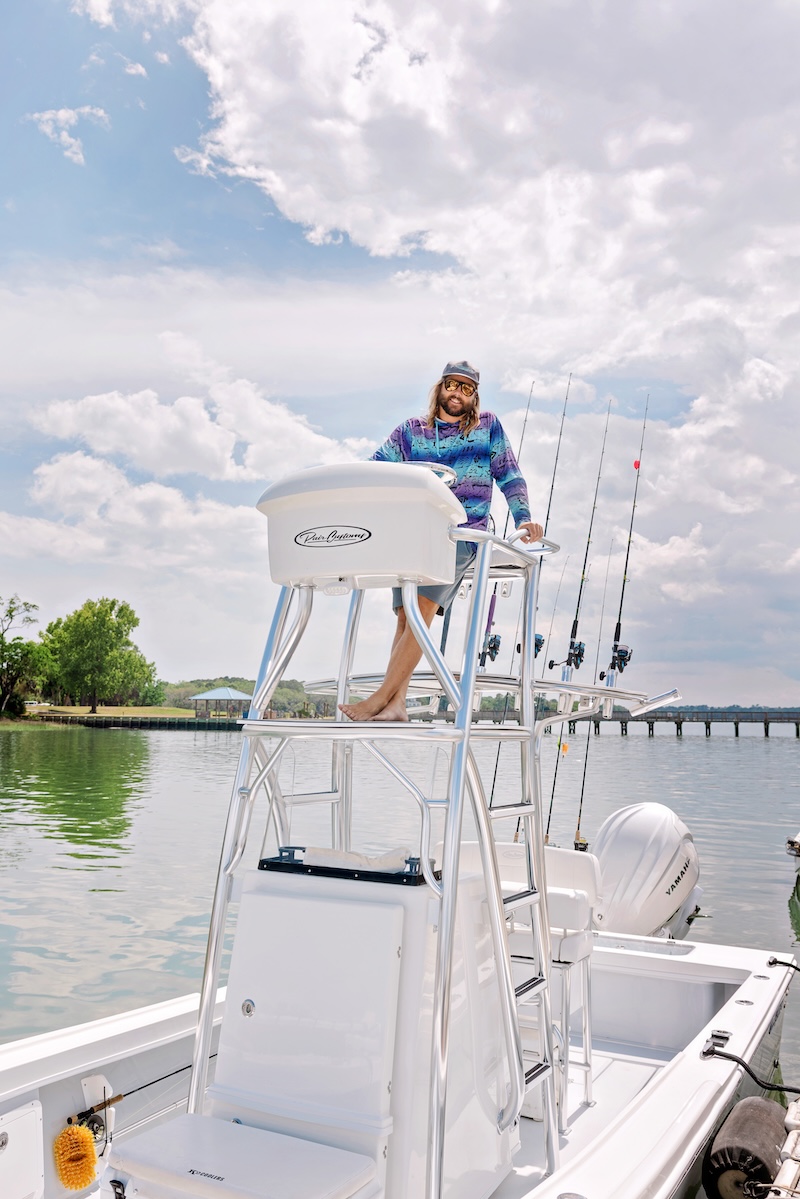
Helping scratch that itch is what led Capt. Kai Williams to launch the latest offering from his Awesome Adventure Charters: private beach excursions.
“Hilton Head is getting so busy on the beaches that people come down and find that unless you’re here first thing in the morning, it’s close to shoulder-to-shoulder,” he said. “We take people to some of these smaller beaches in other areas, really cool tucked-away spots off the beaten path. We collect shells, discover marine creatures, race hermit crabs, and sometimes we bring poles and surf fish. It’s like going to the beach 50 years ago.”
It’s an outside-the-box idea from a captain who was raised on them.
“I’ve always been a waterman overall: surfing, wakeboarding, fishing, the whole deal. I got that love from my dad, Rick, who’s a big windsurfer. While he was windsurfing, he would troll lines behind him and catch fish,” he said. “I grew up in a household where it was just normal to do all these things. That’s why I don’t always do the standard charters. I like things to be strange, interesting and as much fun as possible.”
That love of the water, nurtured in him from birth, led him to get an early start on his career.
At just 16 years old, he was already leading kayak tours.
That experience leading kayak tours not only let him get his metaphysical feet wet, it also taught him one of the most important aspects of being a charter captain.
“I could already fish, but there’s a difference between knowing how to fish and knowing how to guide,” he said. “That was a pretty cool thing to start learning at such a young age.”
It’s knowledge that has served him well. Launching Awesome Adventure Charters in 2011 with an 18-foot flats boat, he now takes visitors on inshore and near-shore trips while sharing his knowledge of the best flats for redfish and the runs for tarpon. And with every trip, he gets to reconnect with the love of the water that brought him here.
“There are a lot of fun moments to being a fishing guide. Helping a kid catch their first fish and explaining what we’re doing or why, or seeing someone catch their bucket-list fish, is pretty rewarding.”
Catch and release
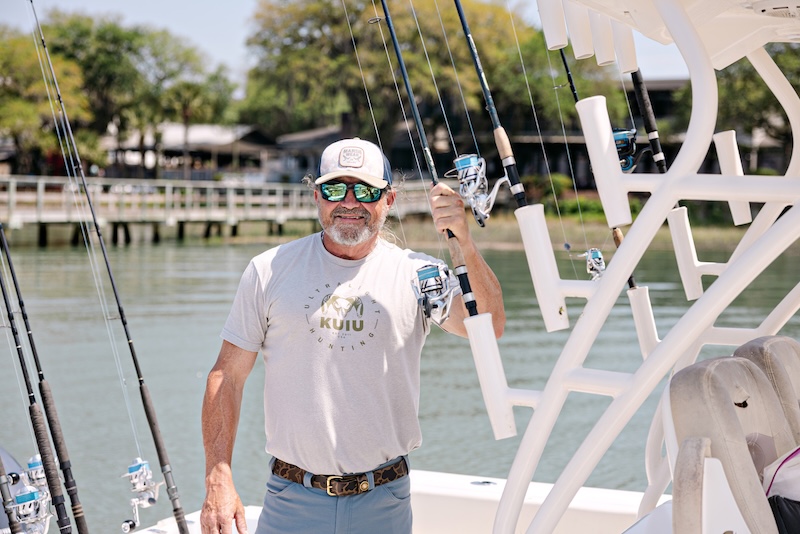
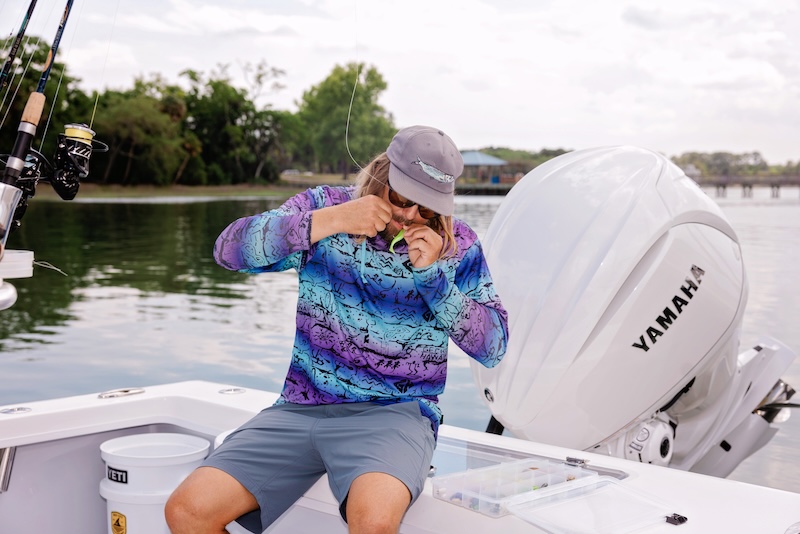
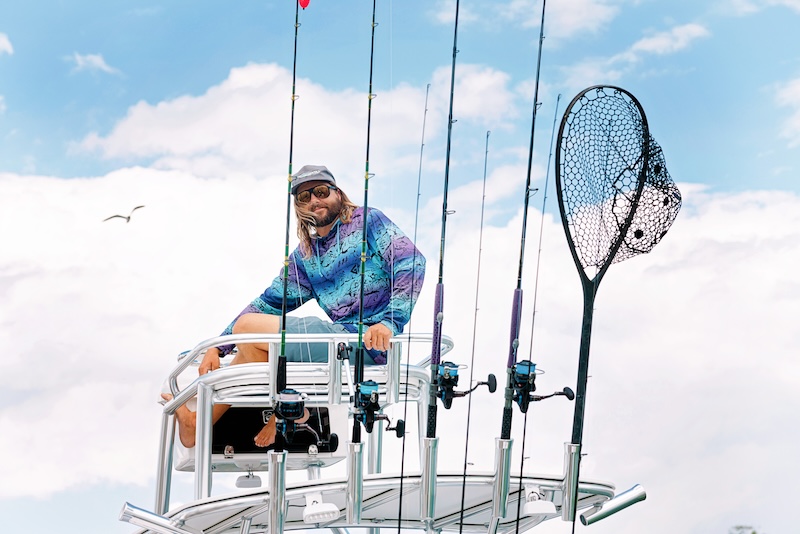
Many charter captains consider themselves fishermen first. Kai Williams looks at his job a little differently. He is a fisherman, sure, but he’s also a waterman and interpretive naturalist. When you step aboard his boat, a custom 2026 model he had received just days before this interview, it’s often more about the experience than the catch.
“Most of what we do is catch and release, which sets us apart from a lot of other boats. When I first started, I had to take whoever was going to hire me, but I’ve been really fortunate to build up a clientele that’s more in line with what I do. Believe it or not, there are a lot of people who want to put that fish back in the water and catch another one,” he said.
His catch-and-release philosophy stems not only from his early years in ecotourism and his studies in marine biology throughout high school and college, but also from a deeper sense of conservation responsibility.
“The conservation side just gets ingrained into you. When you start to see the fisheries slipping, the easiest thing to do is stop harvesting to protect them. Redfish have been hit particularly hard over the last decade and a half. We all work closely with DNR, but I’ve also been asked to participate in focus groups,” he said. “This year, DNR is putting in new regulations that essentially cut in half the number of redfish you can harvest, so we should hopefully start seeing improvement within five years or so.”
Chris Prince
One Cool Cat
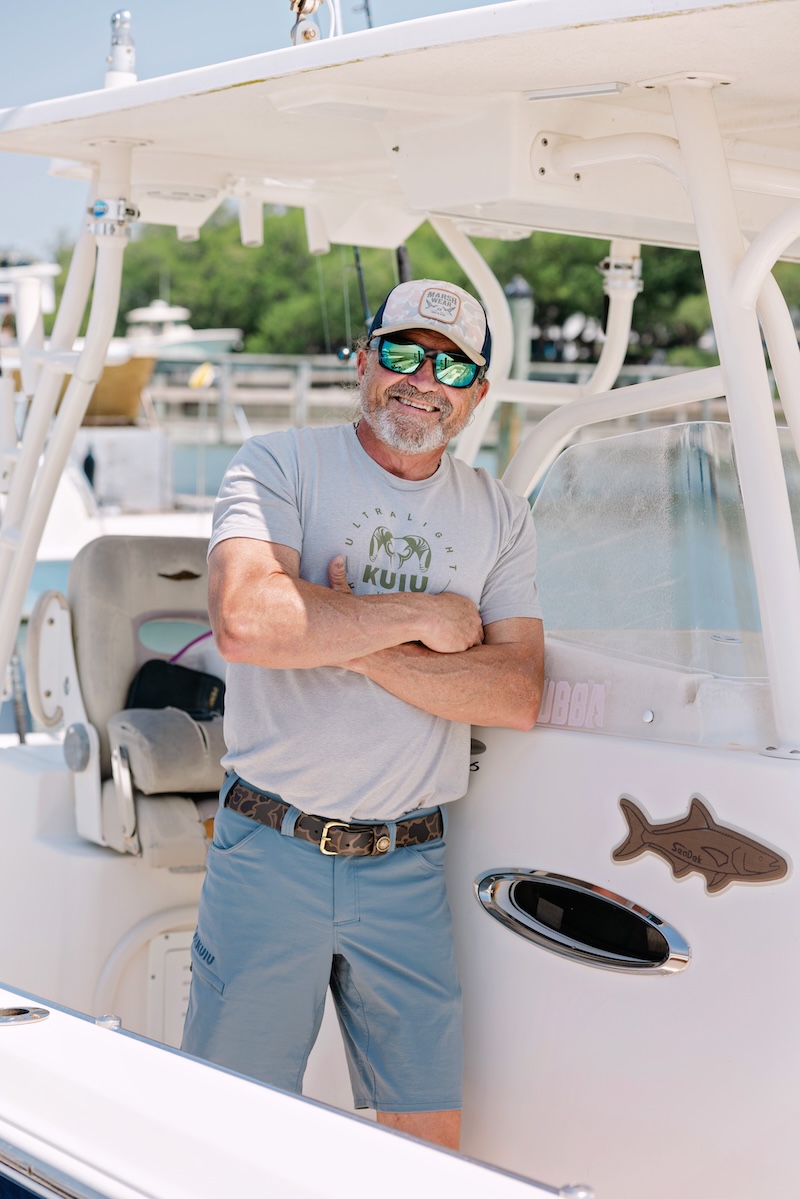
One of the interesting things about charter fishermen on Hilton Head Island is how they all know each other. And within that circle, Chris Prince stands out.
“We call him ‘Bubba.’ He’s the funniest dude,” said fellow fisherman Stratton Pollitzer.
You need only share a boat ride, or even a cup of coffee, with Prince to understand why. A 32-year resident of the island, he’s been chartering for 17 years and has the stories to prove it.
There are the big fish tales, like the 600-pound goliath grouper he caught two years ago. “I got lucky with that one,” he said. There are the late nights sharing drinks with fellow fishermen. “Hangovers are the best thing that ever happened to me. They slowed me down.” And there’s the time he won the Fishing for Miracles tournament with a 52-pound, 8-ounce king mackerel he caught on his very first cast.
Each story is delivered with a wide smile that could only come from a fisherman living his best life.
“When you’ve been doing this as long as me and some of my buddies, it’s work. But we try not to take for granted that this is someone else’s dream job,” said Prince. “You’re still fishing. When you come down to it, you’re not sitting in some office somewhere.”
His journey to captaining the Cool Cat began shortly after arriving on the island following a few years in Colorado working in food and beverage.
“I’d get out of the bar at 2 or 3 in the morning, fill up a bag of ice and meet my buddies at the boat with just enough time to get a nap in before we left,” he said.
Still, for years the charter business remained firmly a side hustle while he transitioned from food and beverage into real estate. When the housing market collapsed in 2008, it wasn’t difficult for him to make the leap into fishing full time.
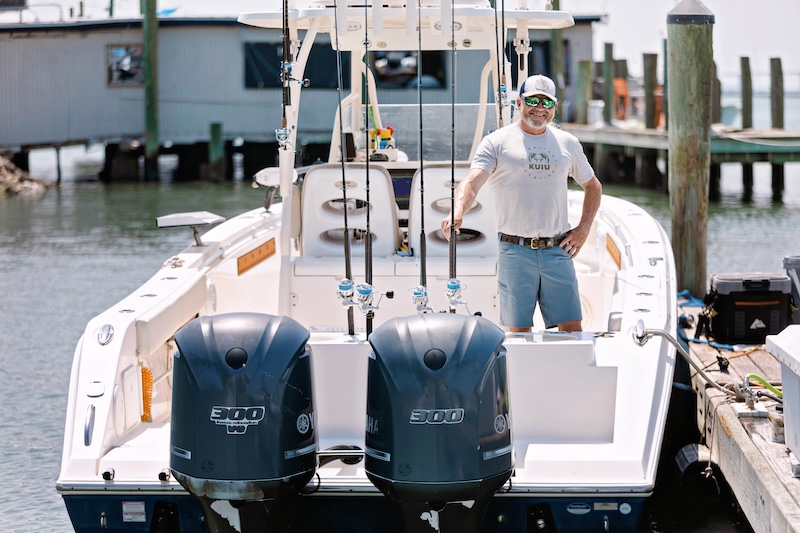
It helped that by then he had already built a sizable clientele based on both his effortless wit and his deep knowledge of the area’s waters. Aboard the 30-foot Cool Cat, clients get an education along with front-row seats to the Capt. Chris Prince show.
“With my clients, it’s kind of built into the trip that you’re going to get a couple of barracudas and hopefully some cobia, kingfish or snapper. You get people saying they don’t want to catch sharks, until you tell them it’s a 400-pound fish. For a lot of them, that’s the biggest fish they’ve ever caught,” he said. “I would probably say 95% of my customers just want to have fun, be involved, catch a fish, make their kids happy and be entertained. And down here, you’re part of their trip. They’ve got a guy.”
It also helps that he docks at the north-end marina beside Dockside and Hudson’s, where he can clean and portion his clients’ catch for them to have prepared that night. And among the 14 boats anchored there, Prince has found himself at the center of a tight-knit community of fishermen.
“Business-wise, we want everyone to do well. I’ll be the first one to let everyone know if I’m catching fish or if the bite is really good,” he said. “But when it comes to side-by-side fishing, it’s more of a competition. I have to catch more than they do. They might not know it, but we’re in competition.”
The season ahead
After more than 32 years fishing Lowcountry waters, including the last 17 as full-time captain of the Cool Cat, Chris Prince has developed an instinctive understanding of the local rhythms. He can tell you where the baitfish will be, when the sheepshead start biting and the best months to fish around the wreck of the Betsy Ross — May through September, for the record.
This year he’s already seeing plenty to get excited about.
“I had a great January and February this year. The sheepshead were out, the weather was good, and the bite stayed strong the whole time,” he said. “So we started early and just kept going. This time of year is when the cobia and kingfish start coming in. When the water temperature gets to 70 or 72 degrees, the whole place lights up. Then in June and July, we always have the shark fishing. Whether they’re inshore guys, bait-boat guys, flats guys or offshore guys, we’re all shark fishing.”
Having fished waters across the Southeast, Prince also recognizes just how special the Lowcountry fishery is year-round.
“In places like the Keys, you’re always trying to catch mahi and things like that, but we’re pretty blessed to have all the inland fishing we do. The Gulf Stream is 80 miles out, so it can be tough to go that kind of distance,” he said. “With all the nutrients and bait inshore, plus all the redfish and flounder, we’re very seasonal. We can go from sheepshead to cobia to bottom fishing for snapper and bull reds in the fall. Then the tarpon show up in June or July. We’re very blessed.”