The Truth About Corn Snakes: Why They’re One of the Lowcountry’s Best Neighbors
Often mistaken for venomous reptiles, harmless corn snakes quietly protect Lowcountry homes and ecosystems by keeping rodent populations in check.
Story by Bailey Gilliam
For many people, spotting a snake in the yard triggers instant panic. It is a fear many of us learned early, often without ever questioning why. But what if that snake quietly moving through the grass was not a danger at all and was actually helping protect your home?
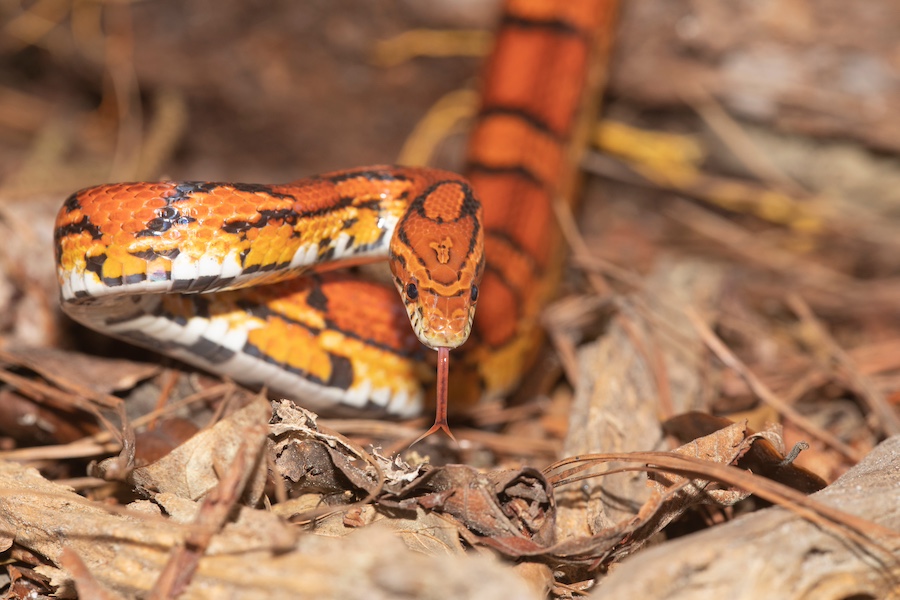
The corn snake is one of the most unfairly feared animals in the Lowcountry. Often mistaken for venomous copperheads or killed simply because it is a snake, this beautiful reptile is, in reality, shy, beneficial and remarkably gentle. Far from looking for confrontation, corn snakes would much rather disappear into the underbrush, making them one of the easiest wild neighbors to peacefully coexist with.
“Corn snakes are some of the most coveted snakes in the Southeast due to their extremely variable patterns, often calm demeanors and defensive displays,” says Chris Kehrer, science program manager at the Port Royal Sound Foundation. “They have a secretive lifestyle with a very convoluted natural history. This is mainly due to their ubiquity across the landscape and appearing at any time of the year.”
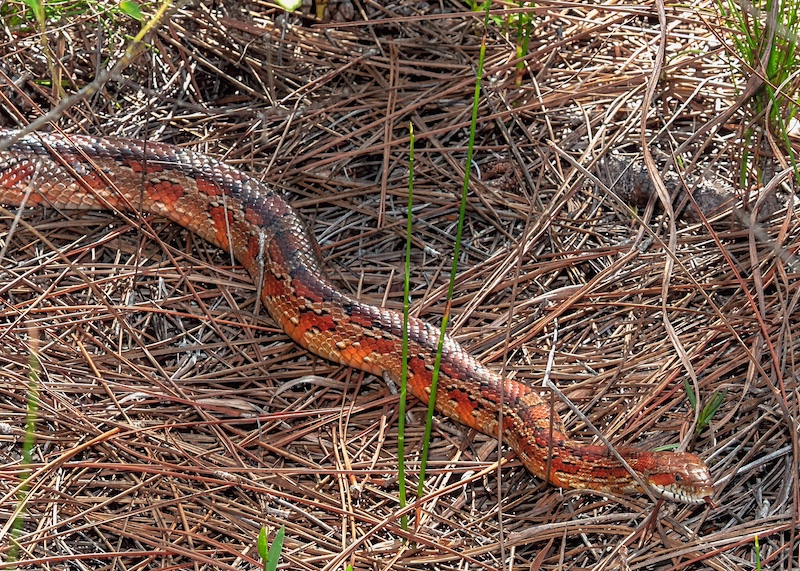
Their beauty is one reason they have become one of North America’s most popular pet snakes, but it is also why they are often mistaken for far more dangerous species. Corn snakes display a stunning range of colors, including bright oranges, reds, yellows, grays and browns.
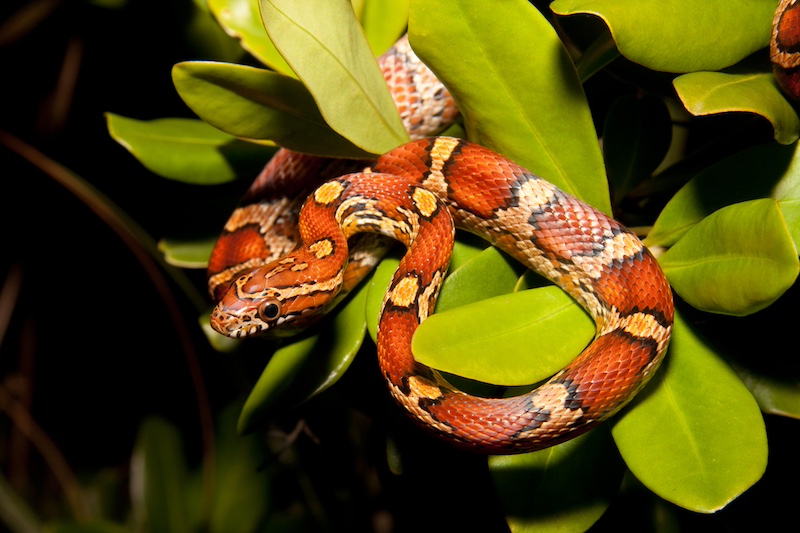
“This species is easily identified by the arrow-like pattern on their head, blotches along their back and the hallmark checkerboard pattern on their belly,” Kehrer says.
No two look exactly alike, making every encounter feel a little different. Fortunately, striking colors do not tell the full story.
Beauty without danger
Despite their striking appearance, corn snakes are completely harmless to people. They are nonvenomous constrictors, meaning they subdue prey by wrapping around it rather than using venom. When threatened, they usually freeze, vibrate their tails in dry leaves to imitate a rattlesnake or quietly flee the area. Biting is rare and usually happens only when the animal feels cornered or threatened.
Unfortunately, their reddish coloring causes many people to mistake them for copperheads, leading to countless unnecessary deaths each year. That misunderstanding comes at a cost.
“Corn snakes and their close relative, the yellow rat snake, may be some of the most efficient predators of rodents in the natural world,” Kehrer explains. “Healthy snake populations have a direct correlation to healthy ecosystems and communities by reducing the spread of rodent-derived diseases.”
A single corn snake can consume dozens of mice and rats each year, quietly serving as one of nature’s most effective pest-control systems for farms, gardens and neighborhoods. But rodents are only part of the story.
“Snakes in general also act as a major food resource in any ecosystem,” says Kehrer. “While many species are not snake- eating specialists, they are very opportunistic, such as alligators, fish, birds of prey, amphibians and even other snakes.”
In other words, removing snakes does far more than increase rodent populations. It creates ripple effects throughout the entire ecosystem.
Nature’s quiet worker
If you happen to spot a corn snake in your yard, the best response is surprisingly simple: admire it from a respectful distance and allow it to continue on its way.
“Snakes are not typically aggressive toward humans,” Kehrer says. “Relocation of the snake is always the best solution when encountering one in living spaces.”
Ironically, many venomous snake bites happen when people attempt to kill or handle snakes rather than simply leaving them alone. Wearing closed-toe shoes and gloves while gardening, particularly during warm summer evenings when snakes are more active, is another easy way to reduce unwanted encounters.
Corn snakes have become beloved pets because of their calm personalities, manageable size and relatively easy care. However, wildlife belongs in the wild. While captive-bred corn snakes from reputable breeders can make excellent companions, wild snakes should never be collected as pets. Removing them deprives local ecosystems of an important predator that has spent its life quietly keeping rodent populations in check.
Like so many animals that call the Lowcountry home, corn snakes are not asking for much. They simply want a quiet place to hunt, hide and survive. The next time you spot one slipping silently through the grass, consider yourself lucky. It is not a threat. It is one of nature’s quiet workers, doing exactly what it was designed to do.