The Strange, Ancient Lives of Lowcountry Horseshoe Crabs
Older than the dinosaurs, horseshoe crabs still come ashore with the tides, feeding migrating birds, supporting coastal ecosystems and contributing to modern medicine.
Story by Bailey Gilliam
Photos by Dawn Brut
Key Points
● Dawn Brut, director of education at the Coastal Discovery Museum, explains the remarkable life of horseshoe crabs, whose evolutionary lineage stretches back about 450 million years.
● Each spring and early summer, horseshoe crabs move toward beaches and salt marshes to spawn, often around higher tides near new and full moons.
● Their eggs feed migrating shorebirds, fish and other animals, connecting horseshoe crabs to the larger coastal ecosystem.
● Their distinctive blue blood helped scientists develop a test used to detect dangerous bacterial contamination in medical products.
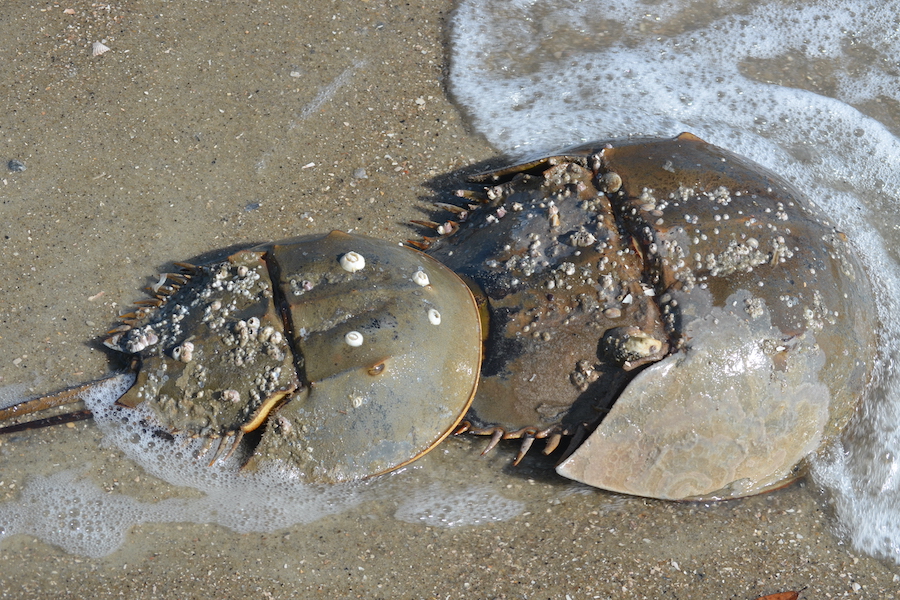
Most legends survive only in stories. Horseshoe crabs still crawl onto our shores. Armored like something from another age, these unmistakable creatures belong to an evolutionary lineage stretching back about 450 million years — long before the first dinosaurs. Despite their name, they aren’t actually crabs. They’re marine arthropods more closely related to spiders and scorpions, equipped with copper-blue blood, a formidable-looking tail and a reproductive rhythm tied to the moon and tides. If someone invented them for folklore, they might sound a little far-fetched. Yet each year horseshoe crabs emerge from Lowcountry waters to continue a ritual their distant ancestors were performing long before humans existed.
Why they follow the moon
“Horseshoe crabs are just an absolutely incredible and unique animal,” said Dawn Brut, director of education at the Coastal Discovery Museum.
Adults move toward beaches and salt marshes to spawn in spring and early summer, with East Coast activity concentrated primarily in May and June. Their arrival often coincides with higher spring tides surrounding new and full moons. Females dig nests and deposit thousands of tiny eggs, which males fertilize externally. A female may return repeatedly during a season, ultimately laying 80,000 to 100,000 eggs.
Most will never become adults.
“Maybe just a handful, maybe five, are going to survive to be adults,” Brut said.
Horseshoe crabs provide no parental care, but their eggs become part of a much larger coastal story. In South Carolina, research by the S.C. Department of Natural Resources has documented spawning in salt marshes, broadening scientists’ understanding of the habitats these animals use.
Fuel for a legendary journey
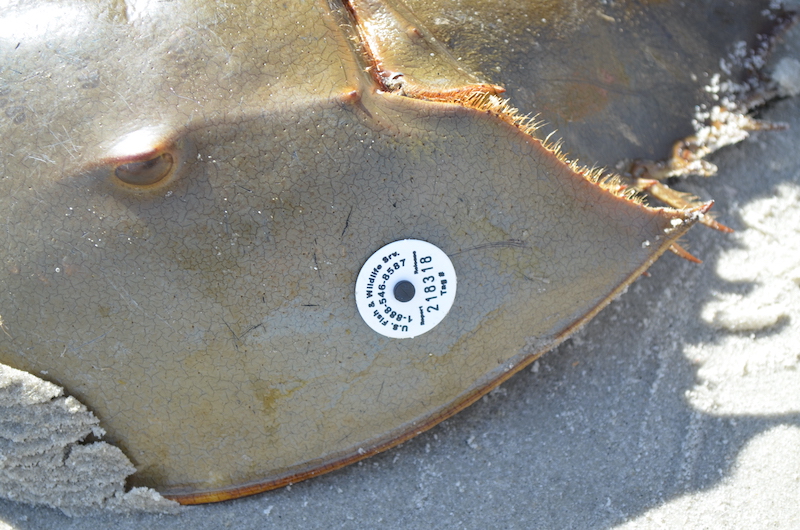
Horseshoe crab eggs provide a rich food source for shorebirds and other animals. Among those travelers are red knots, which migrate thousands of miles between southern wintering grounds and Arctic breeding areas. The connection is especially dramatic around Delaware Bay, where migrating red knots arrive during horseshoe crab spawning and feast on exposed eggs.
“Horseshoe crab eggs are like instant energy,” Brut said. “It gets them nice and plump so they’re healthy and can continue their journey. Then they’re ready to breed when they get back to the Arctic.”
Here in the Lowcountry, the eggs feed shorebirds, fish and other animals, connecting what happens beneath a few inches of sand or tucked into a salt marsh to the larger coastal ecosystem.
Growing into their armor
The eggs that escape predators hatch into larvae resembling miniature horseshoe crabs. Young crabs spend their early lives in shallow coastal waters, feeding and growing.
Because their hard external skeleton cannot stretch, horseshoe crabs must periodically crawl out of their old shells, or molt. Juveniles molt repeatedly and typically take nine to 12 years to reach sexual maturity. By adulthood they have molted more than a dozen times. After their final molt, their armor begins accumulating evidence of life along the seafloor, from scratches to barnacles and other hitchhikers.
A tail designed for survival
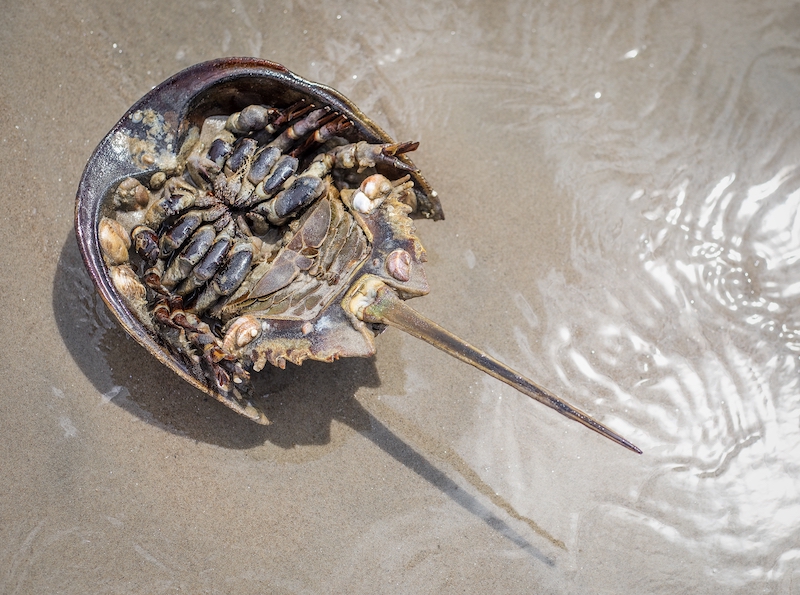
That intimidating tail isn’t a weapon. Called a telson, it helps horseshoe crabs steer and right themselves when overturned. They don’t sting or bite.
“If you see a horseshoe crab flipped on its back, you can flip it back over,” Brut said. “Grab it gently by the sides of its shell, never by the tail, turn it upright and allow it to continue on its way.”
That simple gesture can be lifesaving.
The blue blood that changed modern medicine
Horseshoe crabs are also famous for their blue blood. Instead of the iron-containing hemoglobin that makes human blood red, theirs contains copper-based hemocyanin. Cells in their blood react quickly to bacterial endotoxins, a trait scientists harnessed to develop the LAL test, long used to detect dangerous contamination in drugs, vaccines and some medical devices. Newer recombinant tests can perform this job without horseshoe crab blood, but their contribution to medicine remains extraordinary: an animal whose lineage predates the dinosaurs has helped safeguard modern medical products.
How to help these ancient survivors
Horseshoe crabs have faced human pressures for centuries. Today their populations and spawning habitats are closely watched because of their importance to coastal ecosystems. In South Carolina, taking or possessing a live horseshoe crab without an appropriate state permit is unlawful. The Coastal Discovery Museum helps introduce students to these ancient animals through its Crabs in the Classroom program. The public can also help by protecting beaches and marshes, keeping shorelines free of debris and turning over stranded horseshoe crabs when needed.
And if you encounter one moving across the sand beneath the moon, remember what you’re seeing: a descendant of animals that lived hundreds of millions of years before us, still coming ashore with the tides and following the moon.