The Sport of Kings: How Polo Found Its Place in the Lowcountry
How a bold vision, a dusty field and a few horse-loving dreamers brought polo to the Lowcountry.
Story by Sheila Paz + Photography by Kathy Hickling
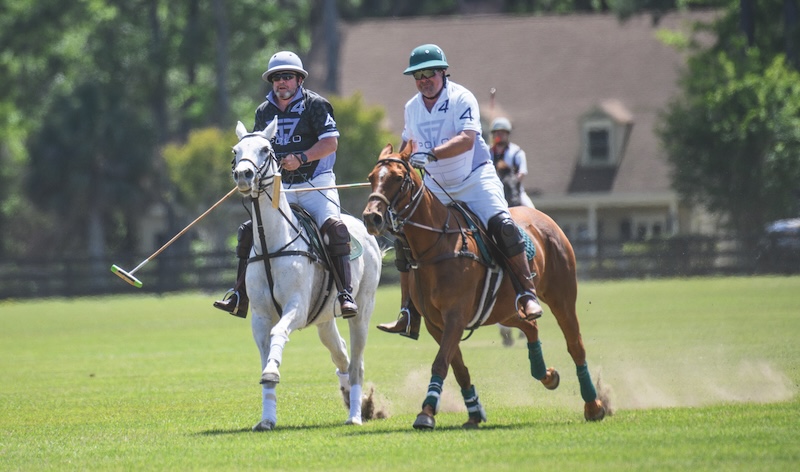
You’re living the Lowcountry dream: sun-soaked days, salty breezes and the gentle hum of golf carts. But even paradise, as it turns out, craves a little pomp and thunder. Something timeless. Something with hooves.
That “something” trotted into the region in 1974 when Dr. Sandy Termotto and three friends brought polo, the sport of kings, to Hilton Head Island. Inspired by a vision to create a polo corridor from Central Florida to Charleston and Aiken, Termotto, along with Frederick Hack, Bill Ruth and Billy Roe, saw untapped potential in the Lowcountry’s wide fields and rich traditions.
At the time, Hilton Head had no polo fields, no stables to speak of and certainly no precedent. But that didn’t deter Termotto, a Vietnam veteran, studio musician, dentist and lifelong horseman. In true pioneering spirit, the group carved out a playing field at Honey Horn Plantation and held the island’s first match during a 1974 equine-themed showcase, dubbed the Equine Expo.

The event galloped forward in popularity and in 1982, thanks to the generosity of Iva Welton and her family, found a permanent home at Rose Hill Plantation, complete with a custom-built polo field. The venue quickly became a destination for fans of equestrian sport, Southern hospitality and philanthropic flair. Polo had arrived, and the Lowcountry embraced it.
Over the years polo matches in the area became more than just sport. They were full-blown festivals. Crowds flocked to see the speed, strategy and spectacle unfold across the field. Tailgating reached new levels of elegance, with seersucker suits, sun hats and sparkling rosé under shady live oaks. Announcer Monty Jett, a Lowcountry legend himself, gave voice to the action with charm and charisma, adding yet another local touch to the experience.
In 2022 the event was re-imagined as the Rose Hill Charity Polo Classic, with Termotto once again at the helm. The day featured not only polo but barrel racing, breed parades, hunt displays and thrilling six-bar jumping competitions. But at its heart, it remained a tribute to heritage, horses and hospitality. It also gave back, raising funds for beloved causes like the American Diabetes Association, the Gullah Museum of Hilton Head, Heroes on Horseback, SCAD’s equestrian program and local chapters of Volunteers in Medicine.
Today the Rose Hill Polo Field bears Dr. Termotto’s name, a symbol of passion, perseverance and polo’s place in the story of the Lowcountry.

For the first time in decades, the charity polo match will take a pause this year; not for lack of interest, but because events of this scale require monumental effort. Still, those close to its legacy aren’t calling it quits. The horses may rest, but the ideas are quietly trotting forward for either a spring or fall event in 2026. As anyone who’s watched a chukker unfold knows, the next thrilling play is just around the bend.
Did you know?
Oldest team sport: Polo originated over 2,000 years ago in ancient Persia as cavalry training.
Size matters: A standard polo field is 300 yards long, about nine football fields.
It’s a team game: Four players per team, each with a defined role.
Chukkers: Matches are divided into 6-8 chukkers (7-minute periods).
Ponies: They’re actually full-size horses known for speed and agility.
Horse swap: Players change horses between chukkers to keep mounts fresh.
Only right-handed: All players must play right-handed for safety.
The gear: Think white pants, tall boots, helmets and numbered jerseys.
Beyond royalty: These days, players range from pros to philanthropists.
Worldwide game: Played in over 80 countries. Argentina, U.S. and U.K. are major hubs.