


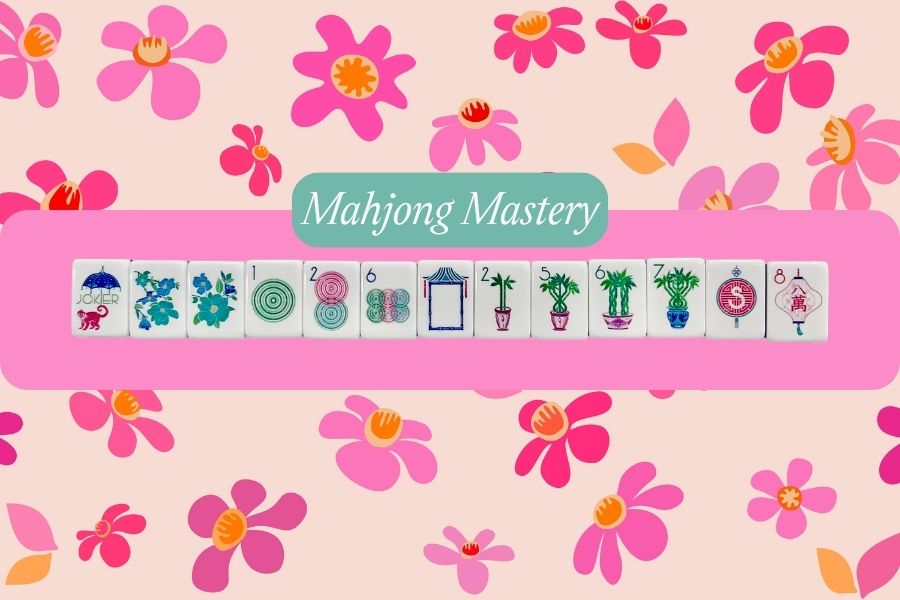
Mahjong hand of the month: June Charleston strategy
Get out your 2026 card and prepare for your first Charleston decision.
This month’s hand may not be as obvious as it first appears. There are several possible directions, which makes your opening pass especially important.
You need to discard three tiles.
Which section of the card are you considering — and which tiles would you pass?

Your move
Before you scroll, study the hand and decide which three tiles you would pass.
👉 Think about:
- Which suits already have momentum
- Whether isolated tiles fit your direction
- What sections of the 2026 card your hand supports
- Which tiles could hold you back later in the game
This hand has multiple possibilities, which is what makes the Charleston decision especially fun.
What section of the card are you considering?
One of the biggest keys to strong Mahjong strategy is recognizing patterns early while staying flexible.
As you study this hand, ask yourself:
- Does one suit stand out more than the others?
- Are there connected numbers worth protecting?
- Could this hand support multiple sections of the card?
- Is it better to narrow your focus or stay open longer?
The strongest Charleston passes often come from simplifying your hand without giving up too many possibilities.
Pro picks
Mahjong instructor Jennifer Kenwell would pass:
South, 1 Dot and 8 Crak
Why this works
At the start of the Charleston, flexibility matters — but so does identifying which tiles aren’t helping your strongest direction.
South
A lone wind tile can quickly become dead weight unless your hand clearly supports honors or winds.
1 Dot
Single low tiles are often harder to build around unless they already connect to a developing pattern.
8 Crak
Although high tiles can be useful, this one doesn’t support the strongest momentum already forming in the hand.
By passing these three tiles, you create a cleaner path toward stronger suit-based possibilities while keeping multiple sections of the 2026 card in play.
Watch the strategy in action
What would you do?
For a closer look at the strategy behind this pass, watch Mahjong instructor Jennifer Kenwell of Pink Palmetto Mahjong break it down here.
What this hand suggests
This hand shows promising bamboo potential, along with some flexibility in dots.
By removing isolated tiles and the honor, you:
- Strengthen your core suit direction
- Increase flexibility as new tiles come in
- Avoid getting stuck holding disconnected tiles
- Improve your odds of pivoting later if needed
The best early Mahjong strategy is often less about forcing a hand and more about building efficiency.
Could you play it differently?
Absolutely.
Some players may:
- Hold onto South longer in case honors develop
- Keep the 1 Dot for low-number possibilities
- Break apart bamboo to stay more balanced
That’s what makes Mahjong so engaging — there’s often more than one possible path, but some decisions create stronger probabilities than others.
Want to improve your Mahjong game?
Each month, we feature a new Mahjong hand to help sharpen your Charleston strategy and strengthen your understanding of the 2026 card.


