Meditation for Anxiety and Fear: 5 Simple Practices to Find Calm
Overcoming Fear Through Meditation – Five Practices You Can Try Today
Story by Michele Roldán-Shaw
A racing mind before your feet hit the floor. Tightness in the chest before a difficult conversation. Sleepless thoughts that seem to replay the same worries long after the house grows quiet. Fear has a way of settling into the body, convincing us danger is closer than it really is.
In small doses, fear serves an important purpose. It helps us sense and respond to threats and is part of how we survive. But fear is not meant to become a permanent state of being. When anxiety lingers or feels overwhelming, speaking with a doctor or mental health professional may be an important step. Alongside that support, simple daily practices can help soothe the nervous system and restore a sense of steadiness. One of the most powerful is meditation.
Meditation is not about making fear disappear entirely. There is no magic switch that suddenly silences worry or uncertainty. Instead, it offers a way to meet fear with greater awareness, steadier breath and a calmer mind. By dedicating even a few quiet moments to ourselves, we begin creating space between what we feel and how we respond. Over time, fear may still visit, but it no longer gets to take the wheel.
Breath meditation
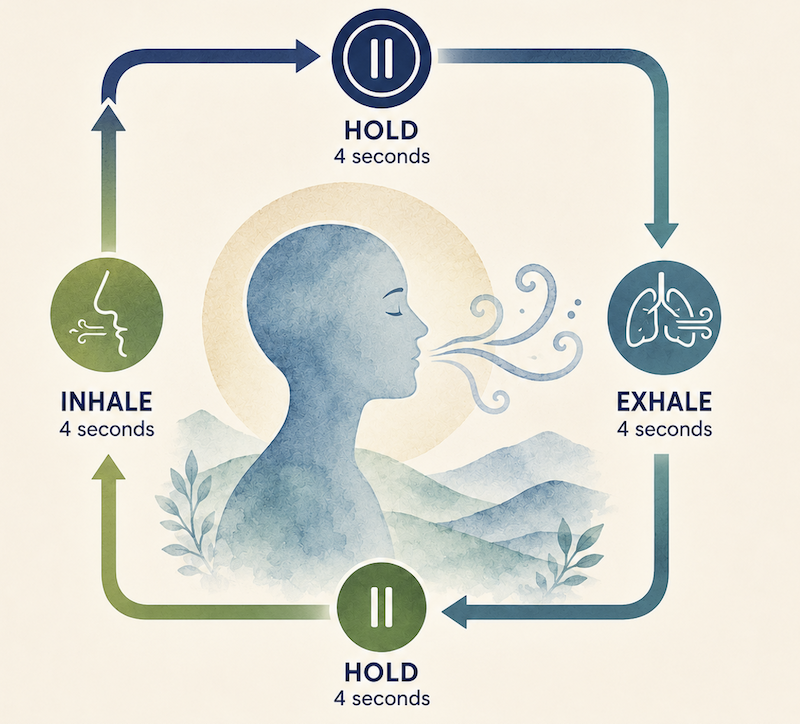
Breathing is one of the body’s most remarkable systems because it can happen automatically or by choice, creating a powerful connection between mind and body. Simply slowing down and observing the breath can help quiet physical tension and calm emotional overwhelm. One popular breathing technique, known as “box breathing,” is practiced by Navy SEALs to help them stay alert and grounded during stressful moments.
Begin by exhaling fully and emptying the lungs. Hold for a count of four. Then inhale for four, hold for four and exhale for four. This simple 4-4-4-4 cycle is one round of box breathing. Repeat until you feel calmer and more present.
Walking meditation
Fear often creates restless energy in the body, a natural response tied to the fight-or-flight system. Movement can help release some of that tension, and walking meditation offers a grounding way to calm both body and mind.
Walk at whatever pace feels natural, and begin noticing the sensations beneath your feet as they meet the ground. Pay attention to the rhythm of your stride, the movement in your legs and the feeling of air against your skin. You might coordinate your breathing by taking four steps with each inhale and eight steps with each exhale. Rather than spiraling into anxious thoughts, this practice gently anchors attention to the present.

Grounding meditation in nature
Nature can be a quiet but powerful companion during stressful moments. Whether you step into a peaceful wooded trail, sit beside the water or simply stand barefoot in a patch of grass, the natural world offers subtle reminders to slow down.
Find a comfortable, quiet place outdoors where you will not be disturbed. Sit on the ground or lean against a tree for support. Begin noticing what surrounds you: the rustle of leaves overhead, birdsong in the distance, the hum of insects or the feel of a breeze moving across your skin. Observe the shifting light, the textures around you and your connection to the physical earth beneath your feet.
When distracting thoughts arise, acknowledge them gently, and return your attention to what is immediately around you.

Guided meditation
Sometimes thoughts become so loud or repetitive that quieting them alone feels difficult. Guided meditations can help interrupt the cycle by gently leading the mind toward a calmer state through breathing, visualization, affirmations or relaxation exercises.
Thousands of guided meditations are available online, making it easy to experiment until you find one that feels helpful. Create a quiet, comforting space for the practice, whether that is soft lighting, a favorite chair or simply a peaceful corner of your home where you can settle in without interruption.

Mindfulness meditation
If you feel ready to face fear more directly, mindfulness meditation can be a powerful way to build inner steadiness. Rather than trying to eliminate difficult thoughts or emotions, mindfulness teaches us to notice them without becoming consumed by them.
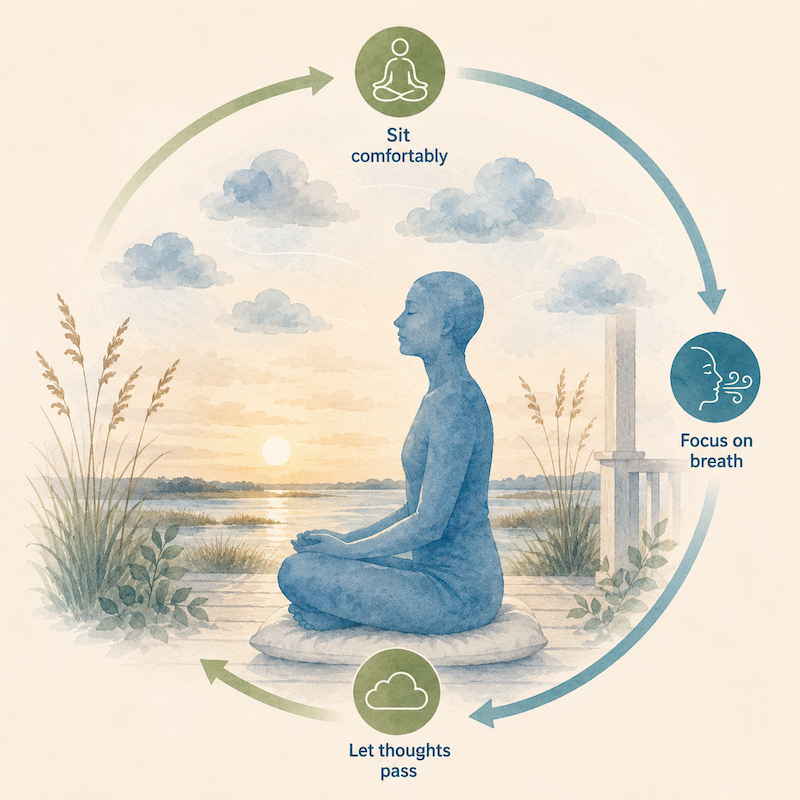
Create a consistent routine, perhaps 10 quiet minutes when you wake up or before bed. Sit in a posture that feels comfortable and grounded, then take a few slow breaths to settle into the moment.
As thoughts and emotions arise, simply notice them. Rather than getting caught up in the story, imagine them drifting past like clouds crossing the sky. Fears, worries and distractions may still appear, but the practice is to acknowledge them without judgment and gently return attention to the breath.
Over time, mindfulness does not erase fear. Instead, it helps create a healthier distance from it, allowing you to meet life’s uncertainties with greater calm, clarity and resilience.