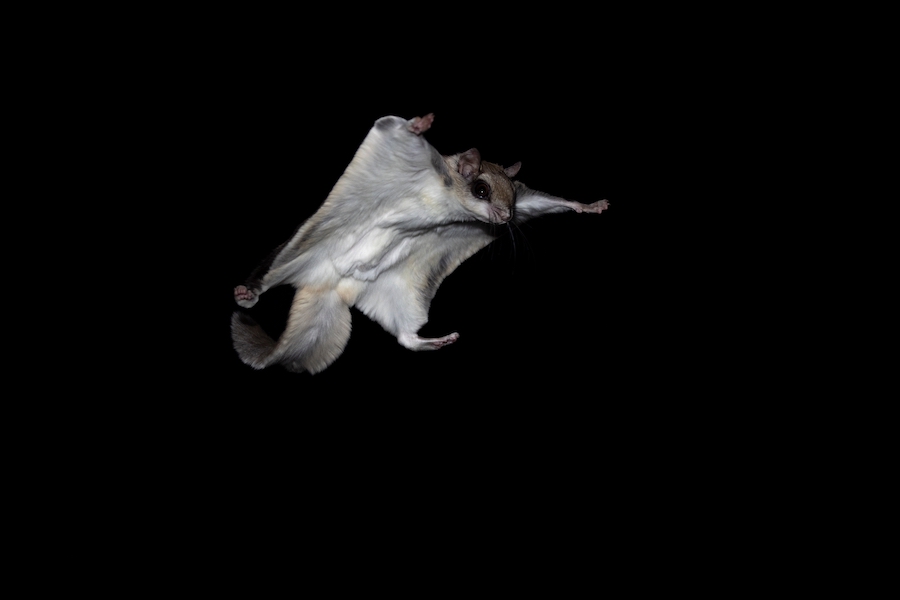
Inside the Secret World of Lowcountry Flying Squirrels
With insight from Hilton Head Island wildlife rehabilitator Tiffany VanBlaricum, discover how these elusive nighttime gliders navigate the dark forests of the Lowcountry largely unseen.
Story by Bailey Gilliam
Most nights in the Lowcountry, the sky feels still. The marsh quiets. The trees settle. Just when it seems like nothing is moving, something is.
High above, in the dark, flying squirrels are at work. Bats may be the only mammals that fly, but they aren’t the only ones moving through our night skies. For tens of millions of years, small, furry mammals have glided through forests around the world, including right here at home. Rarely seen and often overlooked, flying squirrels are among the Lowcountry’s most intriguing residents. Most people don’t realize they’re here, but on a still evening you might hear them.
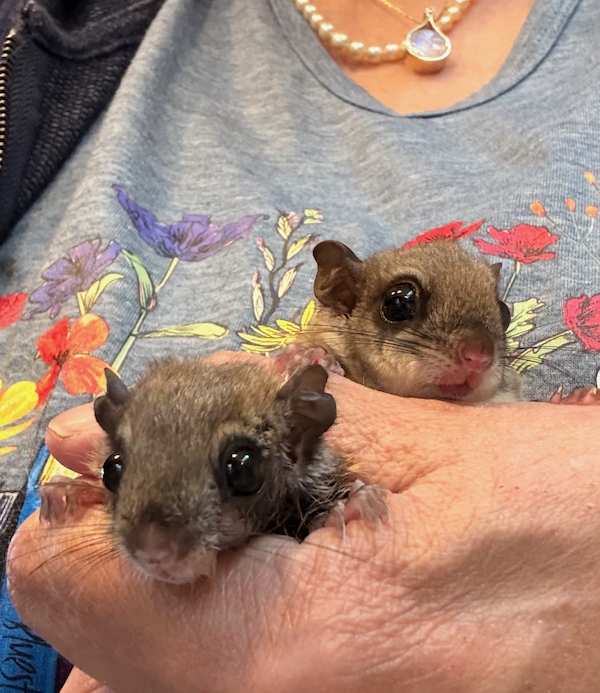
“They’re extremely nocturnal,” says Hilton Head Island wildlife rehabilitator Tiffany VanBlaricum. “That’s why you rarely ever see one. But you can hear them at night. They sound a lot like loud crickets; they’ll sing their songs all night long.” Those soft, high-pitched, sonar-like calls are often the only clue that an entire hidden world is active just overhead. With large, round eyes built for night vision and a wide-eyed charm that’s hard to ignore, flying squirrels are perfectly adapted to life in the dark, navigating the canopy with precision while the rest of us sleep.
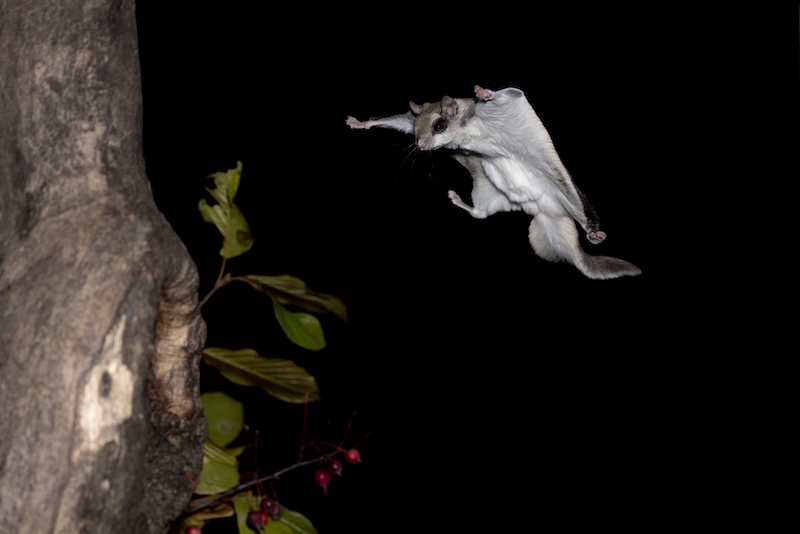
Built to glide
Despite their name, flying squirrels don’t actually fly. They glide. Stretching a thin, parachute- like membrane called a patagium between their front and back limbs, they leap into the air and sail from tree to tree, sometimes covering distances of up to 300 feet. Their flat tails act as rudders, helping them steer, brake and even make sharp turns midair before landing neatly against a trunk. Then they climb and do it again. Quiet. Efficient. Effortless.
Forest caretakers
Beyond the spectacle, they play a role most of us never notice. “The flying squirrel is an integral part of our ecosystem,” explains Jeanne Paddison, executive director and lead wildlife rehabilitator at Savannah Wildlife Rescue Center. “If you have flying squirrels, it shows that you have a healthy ecosystem.” Unlike gray squirrels, which bury seeds, flying squirrels specialize in spreading spores and fungi, a process that keeps the forest floor alive. “Fungi are essential to our ecosystem,” Paddison says. “They help keep the forest floor healthy.”
They may feel rare, but they’re not. Flying squirrels live anywhere there are mature trees, from deep woods to neighborhoods. Their invisibility comes down to timing. While we sleep, they glide, forage and communicate above us. In North America only a few species exist. Here in the Lowcountry, just one: the southern flying squirrel. Still, they belong to a much larger global family, most of which is found in Asia.
Stronger together
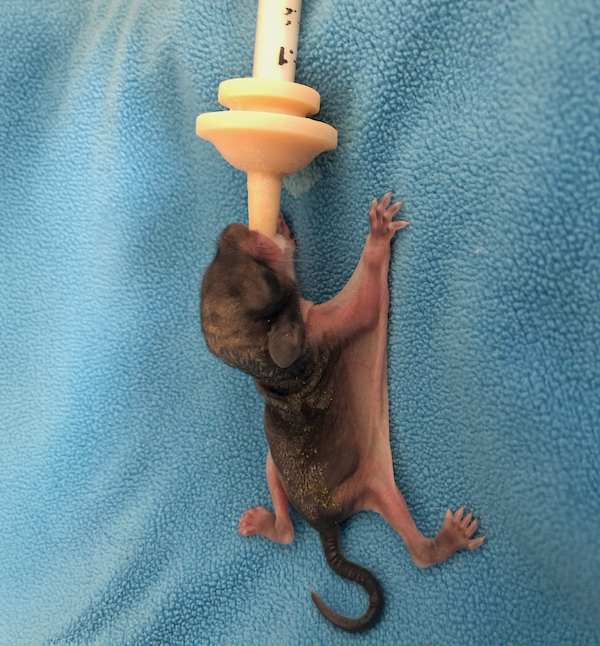
Their social lives are just as compelling as their aerial skills. “They can only be released back to the wild in groups,” VanBlaricum says. “A single squirrel will not survive out alone. They are colony animals.” They nest together for warmth and protection, relying on each other in ways many small mammals do not. “You can’t release a stranger into an existing colony either,” she adds. “That’s why many rehabbers end up keeping the singles they get in. But the squirrels bond very well to their new human family. They’re very sweet and loving.”
At wildlife rescue centers, they arrive at their most vulnerable, after falling from nests or becoming separated from their mothers. Raising them takes time, warmth and careful attention. In the wild that early window is everything. Without it, survival becomes uncertain.
Living with flying squirrels
Flying squirrels are not pests. They are native, highly beneficial wildlife that depend on mature trees and healthy forests to survive. If you hear them at night or discover signs of activity near your home, the best approach is coexistence. They do not damage structures as larger rodents might, and they play an important role in dispersing fungi and supporting forest health. The most important thing is to avoid sealing them inside spaces during nesting season. Instead, wait until they have naturally moved on before making any exclusions. Preserving old trees, building nest boxes, limiting unnecessary nighttime disturbance and supporting healthy wooded habitats all help ensure these tiny gliders continue thriving in the Lowcountry canopy.
If you find an injured, orphaned or trapped flying squirrel, contact:
- Tiffany VanBlaricum: 843-422-2654
- Savannah Wildlife Rescue Center: 912-596-1237
- Paws Animal Wildlife Sanctuary: 864-683-3190