The Surprising Life Cycle of Lowcountry Shrimp
From microscopic larvae drifting offshore to juveniles growing in tidal creeks, shrimp depend on the Lowcountry’s connected ocean and estuary habitats to survive.
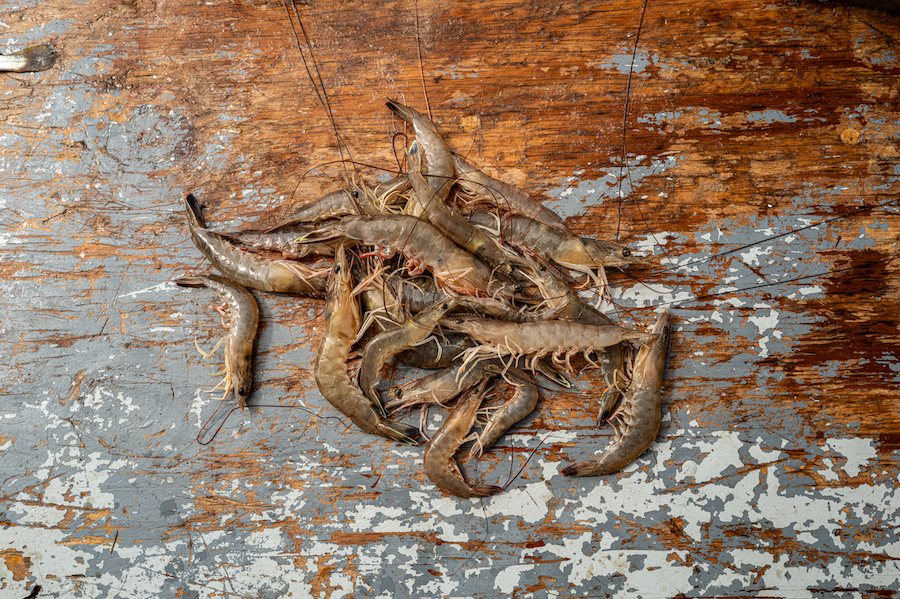
For an animal we most often encounter boiled, fried or resting on a bed of grits, the shrimp leads a surprisingly adventurous life. The wild-caught shrimp prized across the Lowcountry don’t simply hatch in a creek and grow until they’re large enough to catch. Their lives span two very different worlds: the open Atlantic and the protected estuaries along the coast. Along the way, they repeatedly molt, change shape, switch diets and travel remarkable distances before returning to deeper water as adults.
Joe Staton, professor of biology and marine science at the University of South Carolina Beaufort, describes the process as a “complex ballet of biochemistry, development and behavior.”
The Southern Atlantic Bight, which stretches from southern North Carolina to northern Florida, is home to three primary commercial shrimp species: white, brown and pink. Their timing and habits differ, but their basic life cycles share many similarities. White shrimp, one of the Lowcountry’s most familiar catches, offer a particularly fascinating example.
Life begins offshore
The journey starts in coastal ocean waters, outside the estuaries where young shrimp will later grow. Adult white
shrimp mate and spawn there, with females releasing enormous numbers of tiny eggs directly into the water. Those eggs hatch into microscopic larvae called nauplii.
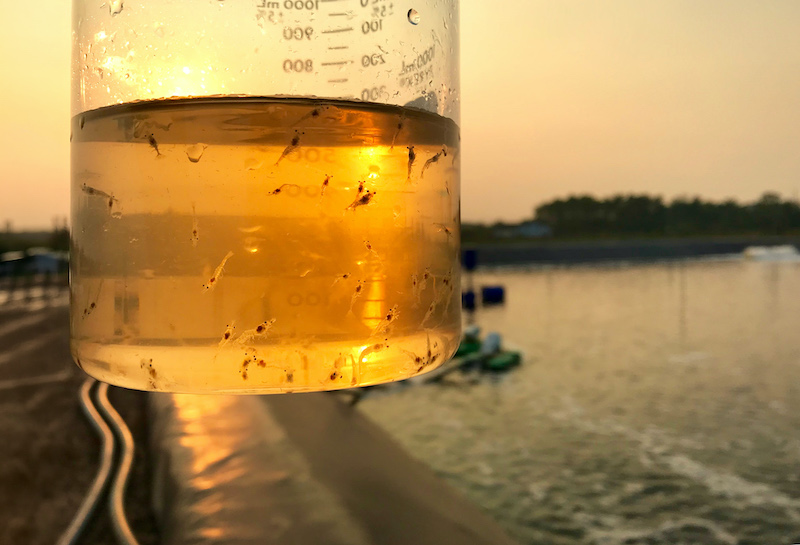
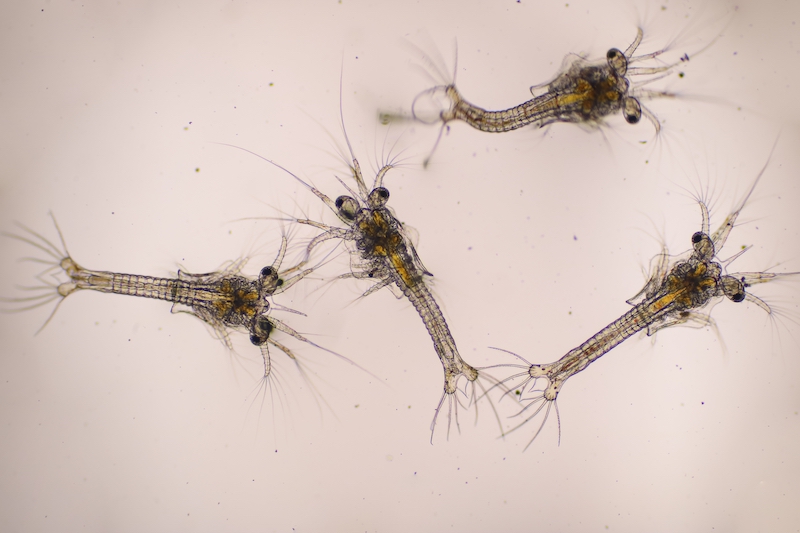
At this point they look almost nothing like the shrimp we recognize. Floating among plankton near the ocean’s surface, the larvae feed on microscopic plankton and repeatedly shed their exoskeletons as they grow. “All arthropods must molt to grow, and shrimp are no exception,” Staton explains.
Before ever reaching a Lowcountry estuary, a white shrimp passes through five naupliar stages, three protozoea stages and three mysis stages, repeatedly molting and changing its appearance and anatomy along the way. The transformations are so dramatic that early marine biologists sometimes mistook different larval stages for entirely separate species.
Migration from ocean to estuary
Eventually the developing shrimp undergoes another dramatic transformation. After spending its earliest stages near the surface feeding on plankton, it becomes post larval and begins to resemble a miniature adult. Its behavior changes too, preparing it for the journey into coastal estuaries.
Then comes the journey that makes Lowcountry estuaries essential to its survival.
Post-larval shrimp use currents and incoming tides to move from coastal ocean waters into sounds, tidal creeks and salt marshes. These nutrient-rich estuaries serve as nurseries, offering abundant food and shallow habitat where young shrimp can grow.
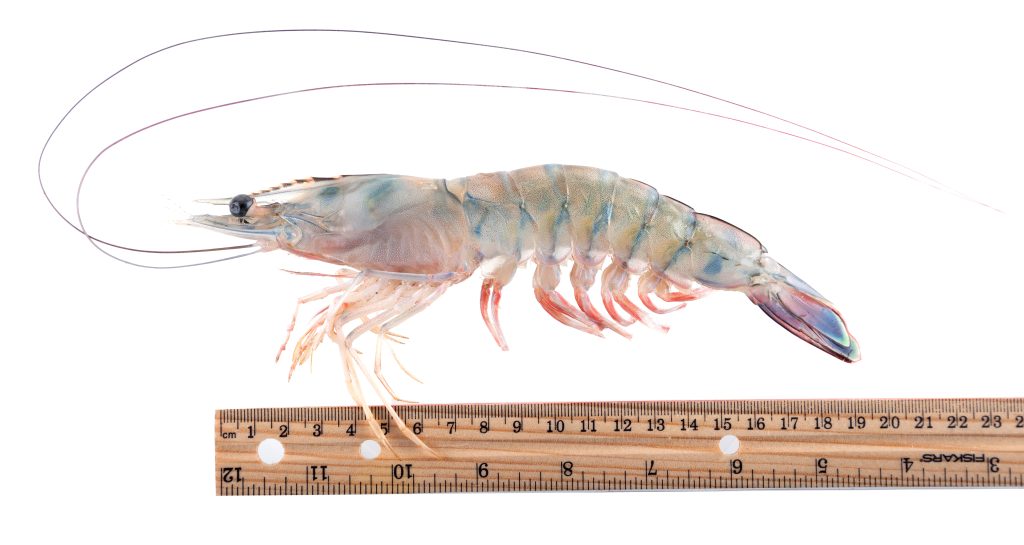
Here they develop into juveniles and begin to resemble the shrimp that eventually appear in cast nets, seafood markets and restaurant kitchens.
Growing up in the marsh
Through the warmer months juvenile shrimp feed and grow rapidly, shedding their exoskeletons again and again to make room for larger bodies. But the estuary isn’t simply a nursery. Shrimp also become an important part of its food web, providing meals for fish, birds and countless other predators.
Those that survive eventually reverse the journey. As they mature, shrimp leave the creeks and sounds and migrate toward deeper ocean waters, where commercial shrimp boats pursue them with trawl nets. Survivors eventually reproduce offshore, beginning the cycle again.
That connection between ocean and estuary is why healthy coastal habitat matters far beyond the marsh grass.
Staton recalls a once-familiar Lowcountry bumper sticker that summed up the relationship in four words: “No estuaries, no seafood.”
For shrimp, that’s more than a catchy slogan. Their journey from microscopic offshore larvae to one of the Lowcountry’s most treasured catches depends on healthy oceans, estuaries and the waterways connecting them.