The Patriot and South Carolina History: Real Figures and Events Behind the Film
The South Carolina figures and events that inspired The Patriot
Story by Lance Hanlin
When The Patriot debuted in 2000, Mel Gibson’s Benjamin Martin arrived as a fully formed movie hero: a reluctant warrior drawn back into conflict, a devoted father driven by loss and a master tactician who understood how to strike quickly and disappear. Though fictional, Martin is rooted in South Carolina’s Revolutionary War history. Screenwriter Robert Rodat deliberately avoided modeling Martin after a single historical figure. Instead, he built the character as a composite, drawing inspiration from journals, letters and battlefield accounts of militia leaders who fought across South Carolina during the British Southern Strategy (1778-1781), when British forces attempted to retake control over the American South and its valuable resources under the belief that there was a significant Loyalist population here. The result is a cinematic hero shaped by real Carolina patriots, grounded in the land, the conflict and the people who lived it.

 The fiercely independent tactics and guerrilla leadership of Francis Marion, the famed Swamp Fox, served as a primary inspiration for the character of Benjamin Martin in The Patriot.
The hero: Benjamin Martin
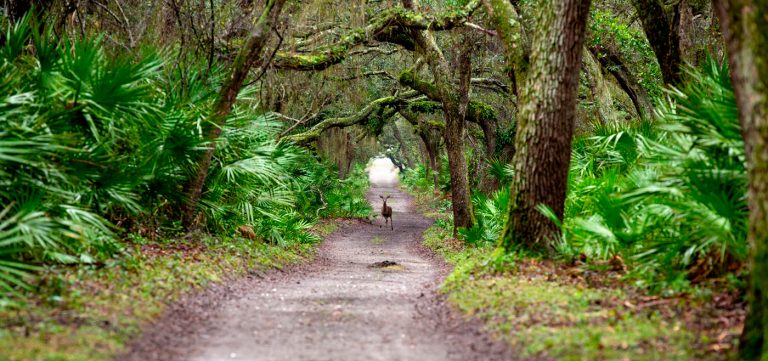
Portrayed by Mel Gibson, Benjamin Martin draws his strength from several real Revolutionary War figures, most notably Francis Marion, the legendary Swamp Fox. A native South Carolinian, Marion perfected guerrilla warfare, using the Lowcountry’s rivers, swamps and dense forests to ambush British troops before melting back into the landscape. Martin’s hit-and-run tactics, reliance on terrain and rejection of formal European-style fighting closely echo Marion’s real-life methods. In the film the landscape itself becomes a weapon, just as it did for Marion and his men.
Thomas Sumter, known as The Gamecock, adds emotional fire to the character. Fierce and relentless, Sumter repeatedly returned to battle despite devastating personal and military losses.
That intensity is reflected in Martin’s transformation from a man determined to avoid war into one fueled by grief and resolve. Andrew Pickens contributes moral weight and discipline. Pickens initially wavered in his allegiance before fully committing to the Patriot cause, and he emphasized order and restraint within militia ranks. His influence appears in Martin’s ability to turn ordinary farmers into a coordinated and effective fighting force. Beyond Carolina, the character also draws from leaders such as Daniel Morgan and Henry “Light Horse Harry” Lee, commanders respected for their adaptability and unconventional strategies. Together these influences create a hero who feels larger than life yet firmly grounded in the realities of frontier warfare.
While The Patriot compresses timelines and heightens violence for dramatic effect, its emotional core rings true. In this region the Revolutionary War was often fought along rivers, dirt roads and plantations rather than on grand battlegrounds. For local audiences, Benjamin Martin represents the men who knew this landscape intimately and used it to challenge a global empire.


The villain: Colonel William Tavington
Opposing Martin is Colonel William Tavington, played by Jason Isaacs, whose cold brutality makes him one of the film’s most unforgettable figures. The character is loosely inspired by Banastre Tarleton, a British cavalry officer whose name became synonymous with fear across South Carolina during the war.
Tarleton played a prominent role in the British Southern Strategy and was known for swift, aggressive raids intended to intimidate civilians and crush Patriot resistance. In January 1779 he was aboard the HMS Vigilant during British operations in the Beaufort District, including raids along Skull Creek on Hilton Head Island.
Homes were burned, plantations looted, and enslaved people were captured and sold in the West Indies.
After a gale reportedly cost many of his dragoons their horses, Tarleton is said to have confiscated mounts from Hilton Head Island plantations to re-equip his cavalry ahead of the march toward Charleston. His British forces continued inland, burning Thomas Heyward Jr.’s plantation at Whitehall and later attacking militia General Stephen Bull’s Laurel Bay plantation.
Tarleton’s reputation was sealed at the Battle of Waxhaws near Lancaster in 1780, where Patriot troops were killed after attempting to surrender. The incident gave rise to the phrase “Tarleton’s Quarter,” meaning no mercy offered, and ignited outrage throughout the backcountry. While The Patriot amplifies his cruelty for cinematic effect, Tarleton’s real actions helped galvanize the very militia resistance he was sent to suppress.

The Battle of Cowpens
In The Patriot, the Battle of Cowpens is portrayed as a chaotic, close-quarters clash driven by individual heroics and sudden reversals, with Benjamin Martin at the center of the action. In reality, Cowpens was a carefully planned and brilliantly executed victory by Brig. Gen. Daniel Morgan on January 17, 1781. Morgan deliberately arranged his forces in three lines, including militia instructed to fire two volleys and then retreat, a move designed to draw Banastre Tarleton’s aggressive troops into a premature charge. When British forces surged forward, they lost cohesion, allowing Continental regulars and returning militia to envelop them in a classic double envelopment. The film captures the spirit of ingenuity and resolve behind the Patriot victory but simplifies the battle’s disciplined strategy and collective coordination, which historians regard as one of the most decisive tactical successes of the Revolutionary War’s British Southern Strategy.

Setting the scene
The story of The Patriot is inseparable from the landscape that shaped it. Filmed entirely on location in South Carolina, the movie grounds its sweeping narrative in the same terrain where the Revolutionary War unfolded. Charleston provided several key backdrops, including Middleton Place and the Cistern Yard on the College of Charleston campus, both of which stood in for Colonial-era public spaces. Mansfield Plantation, an antebellum rice plantation in Georgetown County, supplied atmospheric Lowcountry scenery well suited to the film’s rural settings.
Many battle scenes were filmed near Rock Hill, while Benjamin Martin’s farm was shot in and around Lowrys, with additional scenes filmed at nearby Fort Lawn. Farther north, the Brattonsville Historic District in McConnells played a major role. Hightower Hall, the Homestead House and the surrounding plantation grounds doubled as multiple locations throughout the film.
Producers Mark Gordon and Dean Devlin emphasized historical authenticity, noting that the story demanded respect for the real events behind it. Costume designers studied original Revolutionary War uniforms at the Smithsonian Institution, and locations were chosen to reflect the terrain and architecture that defined the era.