


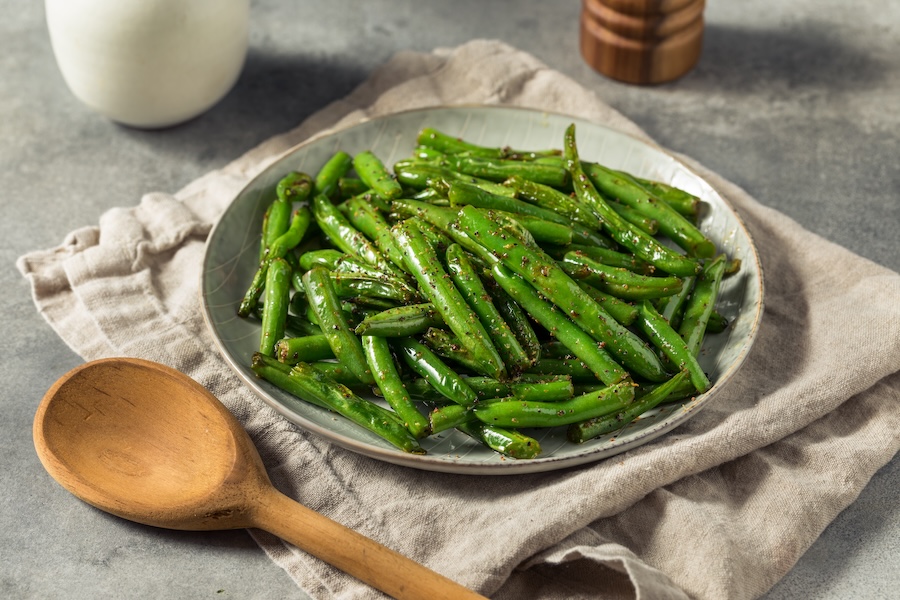
What’s fresh in January? Green beans
Why green beans deserve a spot on your winter table
Story by Bailey Gilliam
Green beans bring a welcome pop of color when winter plates start leaning a little beige. They’ve long been a Southern favorite, whether simmered low and slow, tucked into casseroles or served crisp alongside weeknight suppers. Thanks to the Lowcountry’s mild climate, they show up at markets nearly year-round and feel especially refreshing in January. Their clean, grassy taste pairs well with almost anything, and the tender snap reminds you that fresh, simple ingredients still shine during the coldest months of the year.
No strings attached
Green beans trace their roots to the ancient terraces of the Andes, where they were grown thousands of years ago and became a staple across Central and South America. Columbus carried them back to Europe in 1493, and they quickly found a home in early gardens. By 1542 botanist Leonhart Fuchs produced the first drawing of bush beans, a legacy later reflected in the naming of the fuchsia. Early beans weren’t the tender pods we know today. They were tough and stringy, grown more for decoration than dinner. Centuries of crossbreeding eventually gave us string and stringless varieties, including Calvin Keeney’s breakthrough snap beans in 1889 and the popular Bush Blue Lake in 1962. Today more than 130 varieties thrive, from slim haricots vert to broad, meaty Romano types. It’s a family of beans that continues to evolve while staying deeply familiar.
Beans, beans, the magical fruit
Green beans may be simple, but their nutrition profile punches above their weight. They’re low in calories, high in fiber and loaded with vitamins A, C and K, which support immunity, healthy skin and strong bones. B-vitamins help keep energy steady, and minerals like potassium, iron and magnesium support everything from fluid balance to red blood cell production. They’re also packed with antioxidants that help reduce inflammation and may lower the risk of heart disease and certain cancers. Light, hydrating and easy on the stomach, they bring a healthy lift to winter meals without feeling heavy.
A green bean thumb
Home gardeners love green beans because they’re easy to grow and generous with their harvests. The two main types are bush beans and pole beans. Bush varieties stay compact at 1 to 2 feet tall and don’t need support. Pole beans can climb up to 10 feet and need a trellis or pole. Both prefer temperatures between 60 and 75 degrees, which makes our region a welcoming place for successive plantings. Grow them in full sun and well-drained, fertile soil. Plant seeds when the ground reaches at least 60 degrees, setting them 4 inches deep and spacing bush varieties 2 to 4 inches apart. Reliable performers include Bush Blue Lake 274, Contender, Derby, Provider, Kentucky Wonder, Kwintus and Mountaineer White.
Here are a few simple ways to cook green beans:
Roast: Toss with oil and roast at 425 degrees for 20 to 25 minutes.
Sauté: Cook in a wok or frying pan over medium-high heat for 7 to 10 minutes.
Boil: Drop into salted boiling water for 6 to 8 minutes until just tender.
Steam: Steam over boiling water for 10 to 12 minutes.
Microwave: Add 1/4 cup water to a microwave-safe dish. Cook 3 minutes for a cup or 7 to 12 minutes for a pound.
Blanch: Boil for 3 to 4 minutes, plunge into ice water, and drain. Ideal for freezing.
Snap decisions
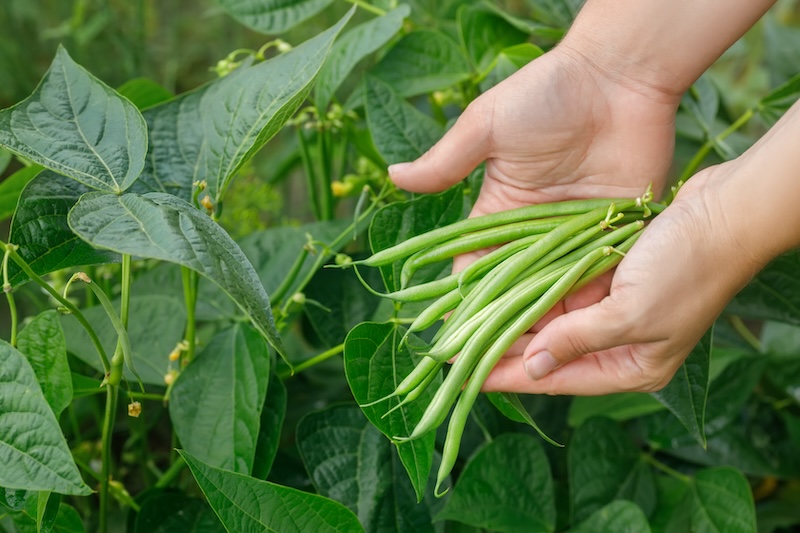
Fresh green beans should look young and feel firm, with a smooth surface and good color. The best ones snap cleanly when bent and are no thicker than a pencil. Skip pods with bulging seeds, limp texture, rust spots or scars, which are signs that they’re past their prime. Uniform size also helps them cook evenly.
For your inner peas
Store green beans unwashed in a paper or perforated plastic bag, and keep them in a slightly warmer part of the refrigerator. They’ll stay crisp for two to three days. If they start to wilt, a quick dip in ice water perks them up. When you’re ready to cook, rinse the beans and trim the ends. Most modern varieties don’t need de-stringing, which keeps prep quick and easy. Good storage and gentle handling go a long way toward preserving their fresh flavor, whether you steam, sauté, roast or simmer them.
Snap them up
Green beans have a mild, earthy flavor and a satisfying bite that works in almost every cuisine. After trimming, leave them whole or cut them into pieces for quick cooking. They’re delicious steamed and tossed with lemon and butter, sautéed with garlic and shallots, or roasted until the edges caramelize. Southern cooks love them simmered with ham hocks, onions and a splash of vinegar. Classic dishes like salade niçoise give them a starring role. They also pair well with almonds, hazelnuts, Parmesan, mushrooms, tomatoes, citrus, béchamel and plenty of herbs. You’ll find them in stir-fries, pickled in jars, holiday casseroles and just about any dish that benefits from a clean, crisp vegetable.
LOCAL Life Test Kitchen
Spinach and green bean omelet
This simple omelet makes a clean, bright breakfast that feels right at home in January. Fresh spinach and tender green beans add texture and color, while the eggs tie everything together in a light, satisfying way.

Ingredients
1 cup fresh green beans, trimmed and cut into 1-inch pieces
1 cup fresh spinach, roughly chopped
4 large eggs
2 tablespoons milk or cream
1 tablespoon olive oil or butter
1/4 teaspoon salt
1/4 teaspoon black pepper
Optional add-ins: grated Parmesan, sliced green onions, herbs (dill, tarragon or parsley)
Directions
[1] Bring a small pot of salted water to a boil. Add the green beans and cook for 3 to 4 minutes until bright and just tender. Drain and rinse under cool water. Set aside. [2] In a medium bowl, whisk the eggs, milk, salt and pepper until smooth. Stir in the spinach and cooked green beans. [3] Heat the olive oil or butter in a nonstick skillet over medium heat. Pour in the egg mixture and spread the vegetables evenly. Cook without stirring for 3 to 4 minutes, until the edges begin to set. Reduce heat to low and cover the skillet. Cook another 4 to 5 minutes, until the center is firm and the omelet is cooked through. [4] Slide the omelet onto a plate and cut into wedges. Add Parmesan or herbs if you like. Serve warm with toast, fresh fruit or a small salad.
LOCAL Life Test Kitchen
Green bean casserole
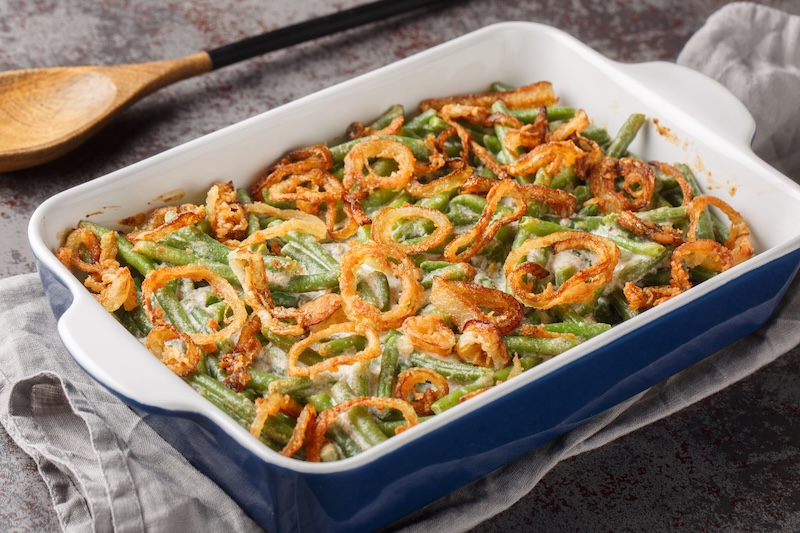
This classic casserole is the reason green beans show up at so many winter tables. Tender beans, a creamy sauce and plenty of crispy onions make it comforting without feeling heavy. It’s simple, familiar and always one of the first dishes to disappear.
Ingredients (casserole)
1 1/2 pounds fresh green beans, trimmed and cut into 1 1/2-inch pieces
2 tablespoons unsalted butter
1 small yellow onion, finely chopped
2 cloves garlic, minced
8 ounces sliced mushrooms
2 tablespoons all-purpose flour
1 cup chicken or vegetable broth
1 cup heavy cream or whole milk
1 teaspoon kosher salt
1/2 teaspoon black pepper
1/4 teaspoon ground nutmeg
1 cup crispy onions, plus extra for topping (recipe below)
Directions
[1] Bring a large pot of salted water to a boil. Add the green beans and cook 4 to 5 minutes until bright green and just tender. Drain and plunge into an ice bath to stop the cooking. Drain again and set aside. [2] In a large skillet, melt the butter over medium heat. Add the chopped onion and cook until soft, about 5 minutes. Add the garlic and mushrooms and cook until the mushrooms release their moisture and begin to brown. [3] Sprinkle the flour over the mixture, and stir until everything is coated. Cook 1 minute. Slowly pour in the broth, stirring constantly. Add the cream, salt, pepper and nutmeg. Simmer 3 to 4 minutes until thickened. [4] Stir the blanched green beans into the sauce, and add 1 cup of crispy fried onions. Mix gently to coat. [5] Heat the oven to 375 degrees. Transfer the green bean mixture to a 9-by-13-inch baking dish. Bake for 20 minutes. Remove from the oven and sprinkle generously with additional crispy onions. Return to the oven for 5 to 10 minutes, until the onions are golden and the casserole is bubbling at the edges. Let the casserole rest for 5 minutes before scooping.
Ingredients (crispy onions)
1 large yellow onion, thinly sliced into rings
1 cup buttermilk
1 cup all-purpose flour
1 teaspoon salt
Vegetable oil, for frying
Directions
[1] Soak the sliced onions in buttermilk for 20 minutes. Mix the flour and salt in a shallow bowl. [2] Heat oil in a deep skillet over medium-high heat. [3] Dredge the onions in the flour mixture, and fry in batches until golden, about 2 to 3 minutes per batch. Drain on paper towels.


