


I yam what I yam: Yams vs. sweet potatoes, health benefits and recipes
The Surprising Truth Behind a Holiday Favorite
STORY BY BAILEY GILLIAM
Key Points
- True yams and sweet potatoes are botanically different vegetables, with true yams generally being starchier, drier and less sweet.
- Yams have deep cultural roots in West Africa and connections to the Lowcountry’s Gullah-Geechee food traditions.
- White yams, purple yams (ube) and yellow yams offer different flavors, textures and culinary uses.
- Yams provide fiber, potassium, vitamin C, vitamin B6 and carbohydrates.
- International markets in Hilton Head Island, Bluffton and Savannah are suggested places to look for true yams.
- True yams can be incorporated into both savory and sweet recipes, including purple ube gnocchi and yam scones with candied pecan butter.
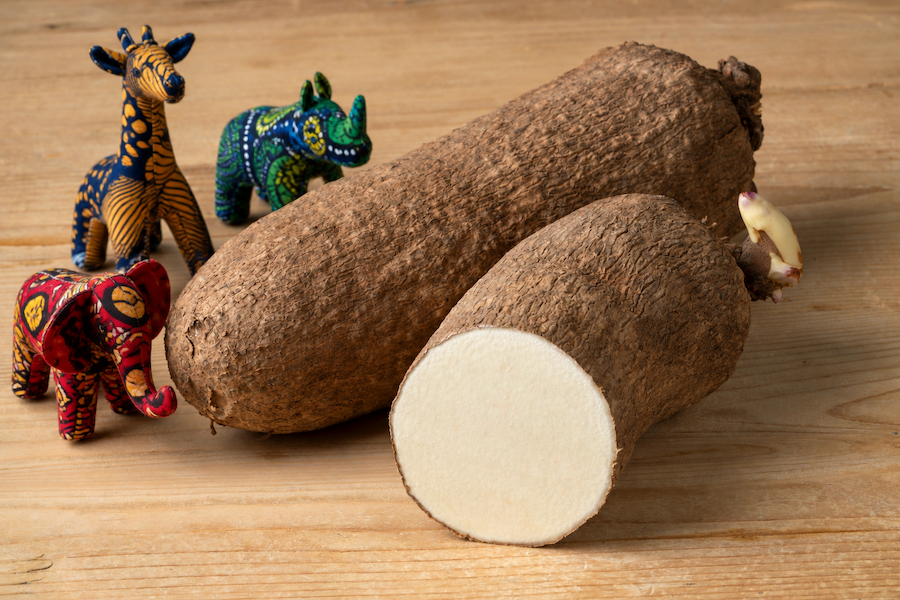
Yams have a serious case of mistaken identity. Every holiday season, they appear on Southern tables in everything from candied yams to sweet potato casseroles. There’s just one problem: Most of those dishes don’t contain actual yams. The real deal is a tropical tuber with rough, bark-like skin, starchy flesh and a history stretching back thousands of years. A staple across West Africa, the Caribbean and parts of Asia, true yams are far more versatile than their holiday reputation suggests. Boiled, roasted, fried or mashed, these ancient roots deserve a little recognition of their own.
Yams vs. Sweet Potatoes: What’s the Difference?
Despite grocery store labels, yams and sweet potatoes are entirely different vegetables. The confusion dates back to the early 20th century, when Southern growers began marketing softer, orange-fleshed sweet potatoes as “yams” to distinguish them from firmer varieties. The name also has cultural roots in the traditions of enslaved West Africans. True yams are starchier, drier and less sweet than sweet potatoes. Some grow more than six feet long and weigh over 100 pounds. Sweet potatoes belong to the Morning Glory family, while yams belong to the Dioscoreaceae family. So that can of “yams” destined for your holiday casserole? Chances are it’s filled with sweet potatoes.
Rooted in History: Yams, West Africa and Gullah-Geechee Cuisine
Yams have nourished civilizations for thousands of years, particularly in West Africa, where they symbolize prosperity, fertility and the rewards of hard work. Their influence also reaches the Lowcountry. Enslaved West Africans brought their agricultural knowledge and food traditions to the Sea Islands, helping shape Gullah-Geechee cuisine. Yams were among the foods connecting these traditions to their African roots, and even the word yam entered English through Gullah. Across the Pacific, purple yams known as ube became staples of Filipino cuisine. Today West Africa produces most of the world’s yams, with Nigeria leading production.
Know Your Yams: White, Purple (Ube) and Yellow Varieties
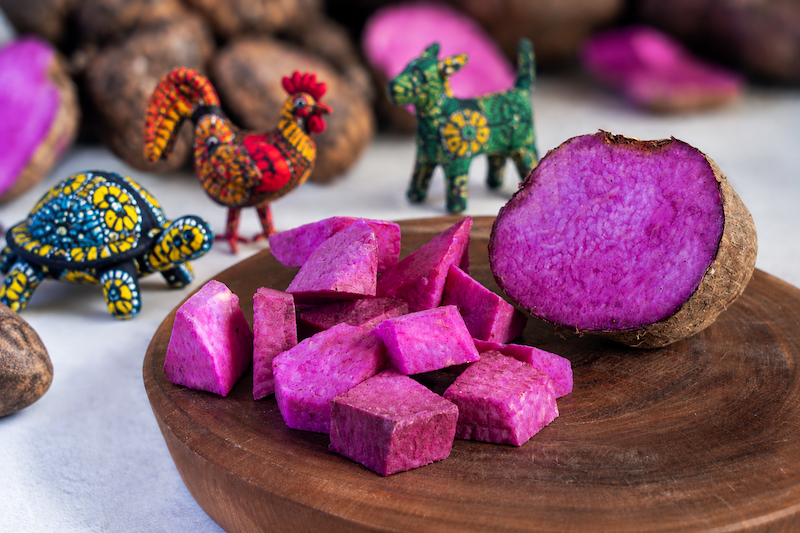
With hundreds of varieties grown worldwide, here are three worth knowing.
- White yam: Mild, starchy and widely cultivated throughout West Africa.
- Purple yam (ube): Vibrant purple flesh and a subtly sweet flavor popular in Filipino desserts.
- Yellow yam: Golden flesh, firm texture and mild sweetness, making it a favorite in West African cooking.
Good for the Body: Yam Nutrition and Health Benefits
Behind that rugged exterior, yams pack a surprising nutritional punch. Depending on the variety, a 100-gram serving of raw yam provides roughly 100–120 calories, along with fiber and potassium, which supports healthy blood pressure and muscle function. Yams also supply vitamin C, vitamin B6 and carbohydrates for energy. Purple varieties contain anthocyanins, antioxidants being studied for their potential anti-inflammatory benefits.
Grow Your Own True Yams in the Lowcountry
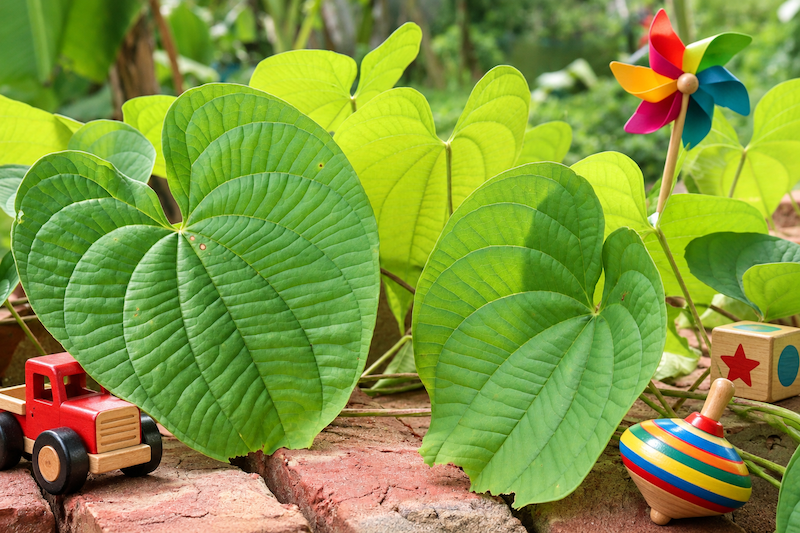
The Lowcountry’s warm climate offers potential for growing true yams, although they need a long, frost-free season. For suitable varieties, planting typically begins in spring, once frost danger has passed and the soil has warmed. Plant tubers or sections with a growing eye in loose, well-drained soil, and provide sturdy trellises for vines that can climb 10 to 15 feet. Depending on the species, yams may take six months or longer to mature. Choose a variety suited to the local growing season, and harvest before the first frost.
Where to Buy True Yams on Hilton Head, Bluffton and Savannah
Most American grocery stores sell sweet potatoes labeled as “yams.” True yams, however, remain staples in African, Caribbean, Latin American and Asian cuisines, making international markets a better place to find them. Locally, try La Poblanita or Supermercado El Don Juan on Hilton Head Island, El Super Internacional in Bluffton or Okey Tropical Market in Savannah. Call ahead to confirm availability, and ask for ñame at Latin markets. Look for firm tubers with rough, bark-like skin and no soft spots.
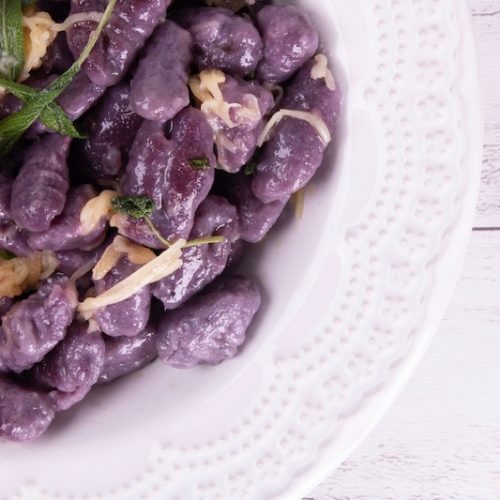
French-style ube gnocchi
Ingredients
Gnocchi
- 2 large russet potatoes
- 2 large ube purple yams
- 1 1/2 cups all-purpose flour
- 1 large egg
- 1 tablespoon coarse salt
Brown butter sage sauce
- 1 stick butter plus 1 tablespoon
- 8-10 sage leaves
- 1 tablespoon apple cider vinegar
- Freshly shaved Parmesan for serving
Instructions
Gnocchi
- Heat oven to 375 degrees. Place the potatoes and ube on a baking sheet with a thick layer of salt. Bake until very tender (45-75 minutes, depending on size).
- Let cool slightly, then peel. Pass the flesh through a potato ricer or strainer. Allow to cool until comfortable to handle.
- On a floured cutting board, mix the egg and salt into the mashed potatoes and ube until combined.
- Add the flour in four stages, mixing until fully incorporated.
- Transfer the dough to a piping bag fitted with a thumb-sized opening.
- Bring a pot of salted water to a rolling boil. Pipe the dough over the water, using the back of a knife to cut thumb-sized pieces directly into the pot. Dip the knife in water as needed to prevent sticking.
- Cook about 10 pieces at a time. When they float, remove with a slotted spoon and transfer to a lightly oiled baking sheet. Repeat with the remaining dough.
Brown butter sage sauce
- Melt the butter in a sauté pan over medium heat, stirring until it begins to brown and develops a caramel-like aroma.
- Remove from heat. Carefully add the sage leaves and apple cider vinegar.
- Let steep for 3 minutes, then strain.
To Serve
- Heat a cast-iron skillet until a faint wisp of smoke appears. Add a little oil.
- Add the cooked gnocchi and sauté until golden brown.
- Remove from heat and toss with the brown butter sauce. Add 1 tablespoon of room-temperature butter to emulsify.
- Season with salt and freshly ground black pepper.
- Plate and finish with shaved Parmesan. Garnish with fresh chives or lemon zest, if desired.
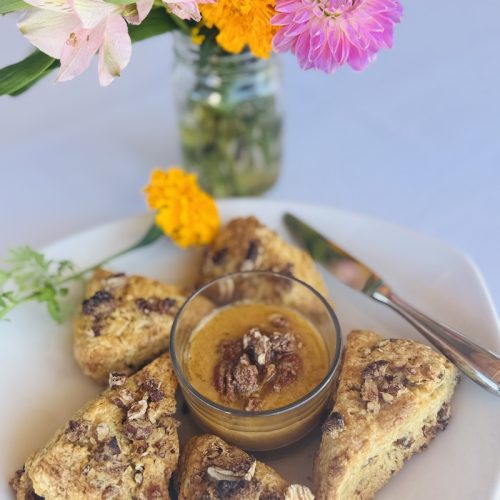
Homemade yam scones with candied pecan butter
Ingredients
Dough
- 2 cups all-purpose flour
- 1/2 cup packed light or dark brown sugar
- 1 teaspoon baking soda
- 1 teaspoon baking powder
- 1/2 teaspoon coarse salt
- 1 stick salted butter cut into 1/2-inch slices
- 1/2 cup golden raisins
- 1/2 cup mashed cooked yam
- 1/2 cup half-and-half
Topping
- 1/3 cup half-and-half or heavy cream
- 1/2 cup candied pecans coarsely chopped
Candied Pecan Butter
- 1/2 stick butter softened
- 1/2 cup mashed cooked yam
- 1/2 teaspoon ground cinnamon
- 1/2 teaspoon salt
- 1/2 cup candied pecans coarsely chopped
Instructions
- Heat oven to 400 degrees. Line a baking sheet with parchment paper, or lightly coat with cooking spray.
- In the bowl of a stand mixer, combine the flour, brown sugar, baking soda, baking powder and salt. Cut in the butter until the mixture resembles coarse crumbs.
- Stir in the raisins, mashed yam and half-and-half. Mix for about 1 minute, until a dough forms. If too crumbly, add a little more half-and-half.
- Transfer to a floured surface. With floured hands, knead gently for about 30 seconds.
- Shape into a 7-inch round, approximately 2 inches thick. Cut into eight wedges. Brush with half-and-half, and sprinkle with chopped pecans.
- Bake for 20-25 minutes, until golden brown and a knife inserted into the center comes out clean.
- Transfer to a wire rack to cool.
- To make the candied pecan butter, combine all ingredients in a small bowl or ramekin. Refrigerate until firm. Serve with warm scones.


