Best Saltwater Experiences in the Lowcountry: Kayaking, Sandbars, Shrimping and More
The Lowcountry’s best saltwater experiences, timed to perfection
Story by Lance Hanlin
The Lowcountry doesn’t just sit beside saltwater. It moves with it. It slips into the marsh on the morning tide, settles on your skin by afternoon and finds its way onto your plate and the rim of your glass by sunset. Around here the tide sets the pace, and most of us have learned not to argue with it. It shapes what we eat, how we spend our days and where we land when the day winds down. One minute you’re ankle-deep in pluff mud; the next you’re raising a salt-rimmed cocktail and calling it a perfect day. This is the Lowcountry at its best, leaving you with sun on your face, salt on your skin and a story that only gets better with time.
On the water: Where salt meets motion
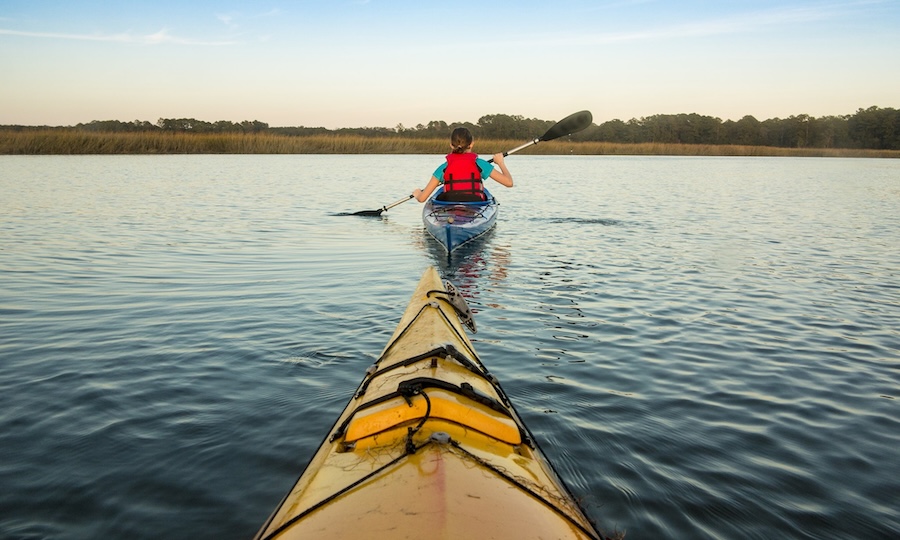
Everything here starts on the tides. Creeks, rivers and open sound offer endless ways to move through water that never sits still. Dolphin tours remain a classic, with pods surfacing in the boat’s wake like they’ve done it forever. Kayaks and paddleboards slip quietly into the marsh, trading engine noise for birdsong, the splash of mullet and the distant hum of a passing boat. Inshore charters put you on redfish and trout within minutes, while a boat run to Daufuskie delivers a full-day escape of dirt roads, dockside lunches and wide-open views. Out here, the scenery moves with you.
Paddle this: Kayak the Chechessee
If you’re craving a paddle that feels a little wilder and less crowded than Broad Creek, Skull Creek or the May River, the Chechessee delivers. This quiet tidal waterway opens into some of the least-seen stretches of Beaufort County, where winding creeks and wide marsh views still feel undiscovered. Launch from Edgar Glenn Boat Landing in Okatie, and plan your route with the tide for an easy glide out and back, with the current doing half the work.
Or book a two-hour naturalist-guided tour through the Port Royal Sound Foundation ($55), where dolphins, ospreys and the story of the marsh unfold with every stroke. It’s beginner-friendly, immersive and just wild enough to feel like you found it first.
Beachcombing & tidal exploration: Where the shoreline tells the story
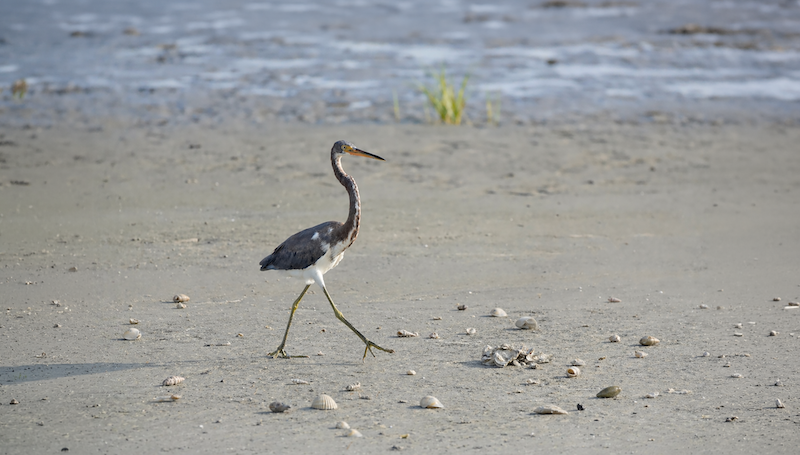
No two tides leave the same shoreline behind. At low tide the coast stretches wide, revealing shells, tidal pools and small details that disappear when the water returns. It slows you down whether you planned to or not. Shorebirds pace the edge. Crabs dart between holes. The farther you look, the more you start to see.
Low tide treasure: Go shelling at Fish Haul
For the best shelling on Hilton Head Island, head north to Mitchelville Beach and Fish Haul Beach Park. These stretches feel wilder, with a more natural shoreline and consistently better finds than the main Atlantic beaches.
Time your visit for low tide, ideally early morning, when the sand is freshly revealed and the best treasures are still waiting. After a strong onshore wind or passing storm, the finds only get better. Look along the wrack line for banded tulips, cockles, augers, olive shells and moon snails.
Keep an eye out for the unexpected, too. Sculptural driftwood, the occasional shark tooth and other ocean surprises have a way of turning up here. It’s quieter, less trafficked and the kind of place that leaves you thinking you should come back more often.
Taste the salt: Where the water hits the plate
Eventually, all that motion leads somewhere. Around here, it usually ends at the table. Oyster roasts, fresh shrimp, dockside seafood and raw bar spreads all tell the story of water meeting plate. Markets sell shrimp straight off the boat, sometimes still popping in the cooler, while local kitchens turn coastal staples into something worth slowing down for. And then there are the drinks. A salt-rimmed cocktail at sunset has become its own ritual, equal parts refreshment and reward.
Catch your supper: Go deep-hole shrimping
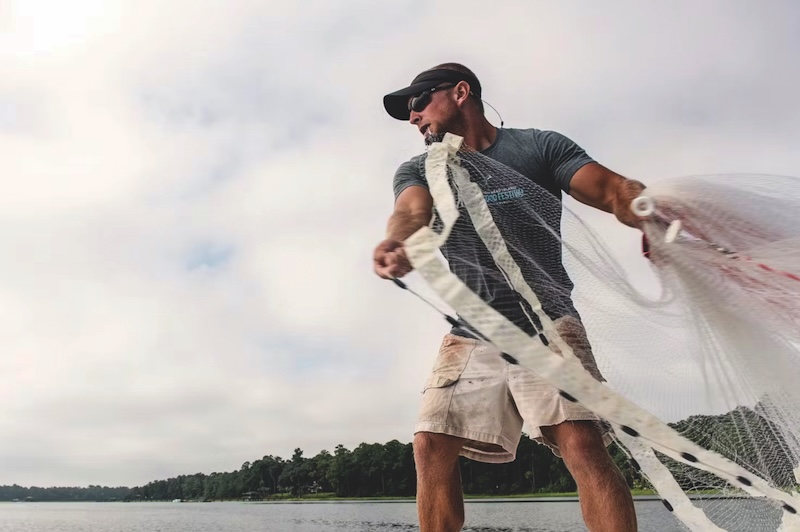
These waters are loaded with sweet, wild shrimp, and few things beat catching your own. Deep-hole shrimping, typically late summer into fall, turns a simple boat ride into a hands-on hunt. Cruise slowly through deeper channels. Watch your sonar for dense pods holding near the bottom, often 20 to 50 feet down, showing up as tight, bright clusters.
Ease into position and make your throw, allowing your cast net to sink 30 to 40 feet and fully open. A proper deep-hole net, with a 10–12-foot radius and a reinforced lead line, helps it stay spread and improves your odds. Then pull it back in with a steady, even rhythm. Hit it right, and the net comes up heavy and alive with shrimp, ready for the cooler. When it works, it feels like you cracked the code.
Chasing the tide: Where the Lowcountry appears and disappears
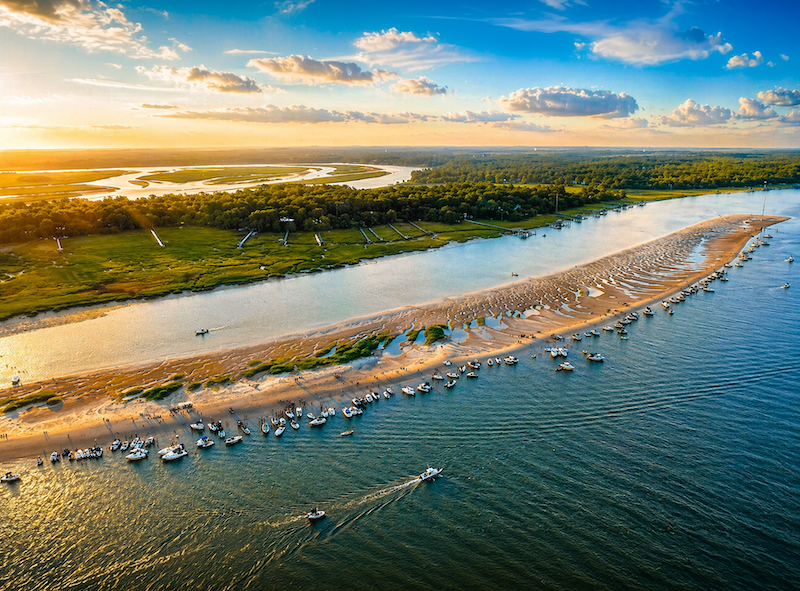
At low tide the landscape shifts. Sandbars rise, creeks narrow, and places that were once underwater suddenly open up. Follow the tide, and you start to see the Lowcountry differently. Oyster beds surface. Spartina stretches farther than expected. Hidden pockets of shoreline invite exploration. Stay long enough, and you can watch it all disappear again.
Catch it while you can: Visit a local sandbar
Sandbars are the coast’s best-kept secrets, rising for a few fleeting hours before slipping back beneath the surface. They offer calm, shallow water perfect for wading, floating and watching the tide reshape everything around you.
Vanishing Island is the most dramatic, appearing for only about an hour in Calibogue Sound between Hilton Head and Daufuskie. The shifting sands and shallow channels make navigation tricky and best left to experienced local captains.
The May River Sandbar leans more social, with boats rafted together and easy afternoons in the shallows just off Bluffton. Near Beaufort, broader tidal flats reveal quieter stretches, with plenty of room to spread out and take it all in.
Plan around low tide, and leave early. Miss it, and it’s gone. Catch it right, and it feels like you discovered something you weren’t supposed to. If you do run aground, don’t panic. Trim the motor up, shift weight off the bow, and wait for the tide to rise instead of forcing it. That might mean 30 minutes or a few hours, depending on timing. Settle in, crack a drink and let it happen. The tide runs the schedule here. You just learn to enjoy the wait.
Salty adventures: Where things get a little wilder
If you want to turn up the energy, the water delivers. Parasailing lifts you high above the coastline, jet skis carve across open water, and sunset cruises trade speed for scenery. But some of the best adventures are the simplest, requiring little more than timing, curiosity and a willingness to get your hands dirty.
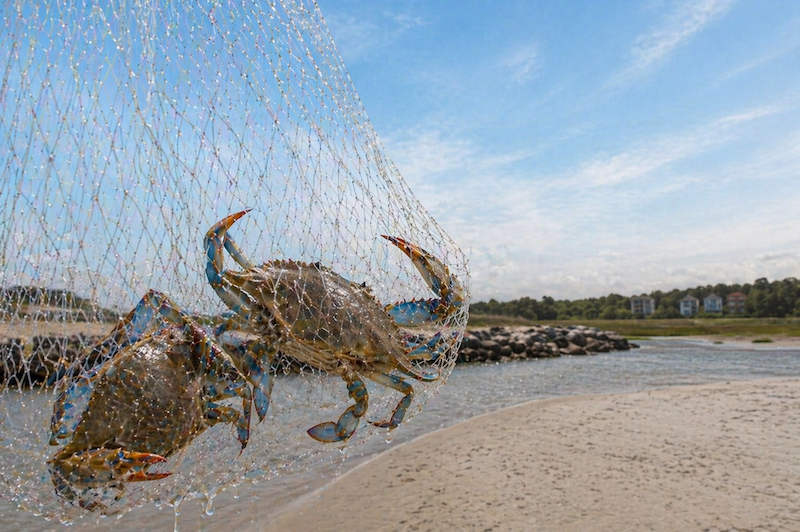
Throw a cast net. Set a crab line. Wade into the shallows with a bucket and a plan, or chase bait flickering along the edge of the tide. This is where you stop watching the Lowcountry and start participating in it.
Get a little wild: Net blue crabs at the folly
Near Burkes Beach, a tidal folly slips into the marsh, creating a natural pocket that draws in blue crabs. The bend concentrates current and bait, turning a scenic stretch of shoreline into a surprisingly productive place to catch blue crab.
Wade the muddy edges, or work from the sandy bank, scanning for subtle movement before making your throw. A 6–8-foot radius cast net with 3/8-inch mesh works well in these shallows. You won’t catch every crab this way, but when you get lucky, the net comes up clattering with blue claws and instant excitement.
Equal parts beach day and backwater fun. Just watch your hands on release. Those claws are quick.