Black Magic: How to Cook with Black Garlic
Black garlic looks mysterious, tastes surprisingly sweet and brings deep umami to just about anything
What Is Black Garlic?
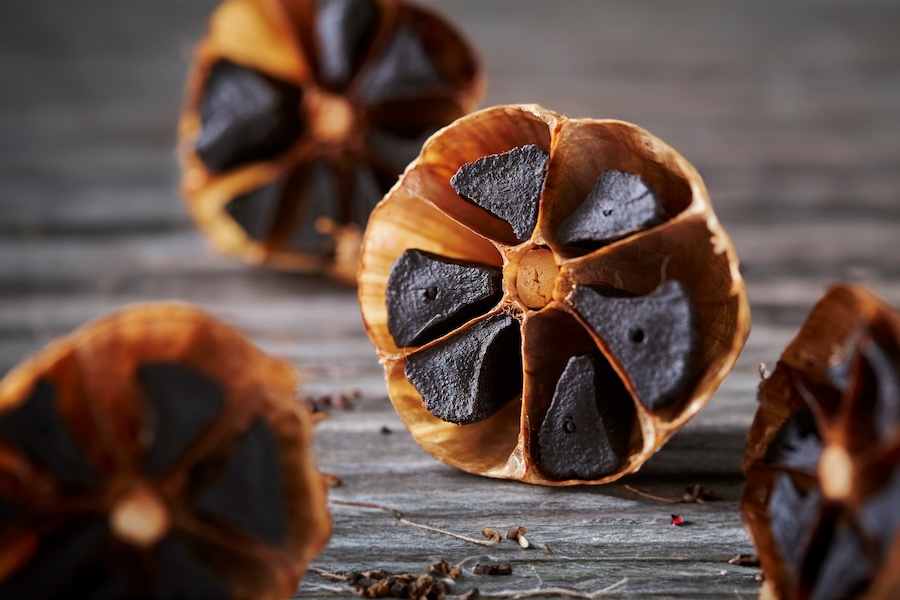
If regular garlic keeps vampires and other creatures of the night away, imagine what black garlic can do. This jet-black ingredient may look a little sinister, but its flavor is anything but scary. Sweet, tangy, savory and loaded with umami, it can bring unexpected depth to everything from steak and pasta to salad dressings and even chocolate desserts.
Despite its appearance, black garlic isn’t a special variety of garlic, nor is it simply roasted. It starts as ordinary garlic that spends several weeks in a carefully controlled warm, humid environment. During that time chemical reactions, including the Maillard reaction responsible for many of the browned, complex flavors we love in cooked foods, transform the cloves. They darken, soften to an almost jammy consistency and lose the sharp, pungent bite of raw garlic.
What Does Black Garlic Taste Like?
What emerges tastes remarkably different from what went in. Black garlic is often compared to balsamic vinegar for its sweet-tart depth, with flavors reminiscent of molasses, tamarind, dried figs and raisins. Beneath all that sweetness is a deep savory quality that hints at its garlicky origins without the familiar raw-garlic heat.
How to Cook with Black Garlic
The trick is to treat black garlic as an ingredient of its own rather than a substitute for fresh garlic. It won’t provide the same aromatic foundation as a clove sizzling in olive oil. Instead, use it where its concentrated sweet-savory character can stand out. Mash the soft cloves into a paste before adding them to sauces, dressings and dips, or blend them with a little liquid to help distribute the flavor. Because their natural sugars can scorch, black garlic is generally best added toward the end of cooking rather than exposed to prolonged high heat.
Black garlic also can be made at home with ordinary garlic, steady warmth, controlled conditions and plenty of patience, but the process takes weeks. The reward is a familiar ingredient transformed into something darker, sweeter and far more mysterious.
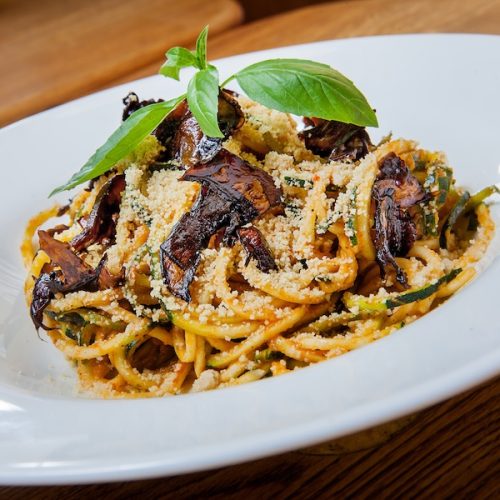
Black Garlic, Shiitake & Zucchini Pasta
Ingredients
- 8 ounces spaghetti or linguine
- 2 tablespoons extra-virgin olive oil divided
- 4 ounces shiitake mushrooms stems removed and caps sliced
- 2 small zucchini spiralized or cut into thin matchsticks
- 2 shallots thinly sliced
- 4 black garlic cloves mashed into a paste
- 1/2 teaspoon red pepper flakes
- 1/2 cup reserved pasta water as needed
- 1/2 cup finely grated Parmesan plus more for garnish
- Salt and freshly ground black pepper to taste
- Fresh basil leaves for garnish
Instructions
- Bring a large pot of salted water to a boil. Cook the pasta according to package directions until al dente. Reserve 1/2 cup of the pasta water, then drain.
- While the pasta cooks, heat 1 tablespoon olive oil in a large skillet over medium-high heat. Add the shiitake mushrooms, and cook for 5 to 7 minutes, stirring occasionally, until deeply browned around the edges. Season lightly with salt and pepper, then transfer to a plate.
- Reduce the heat to medium and add the remaining tablespoon of olive oil. Add the shallots and cook for 3 to 4 minutes, until softened and beginning to caramelize. Add the zucchini and red pepper flakes, and cook for another 2 minutes, just until the zucchini begins to soften.
- Add the mashed black garlic and 1/4 cup of the reserved pasta water. Stir until the black garlic dissolves into the liquid and forms a light, glossy sauce.
- Add the drained pasta and half of the mushrooms to the skillet. Toss until everything is evenly coated, adding more pasta water a little at a time as needed. Stir in the Parmesan and season with salt and pepper.
- Divide among four bowls. Top with the remaining browned shiitake mushrooms, additional Parmesan and fresh basil.