How Kayaking Broad Creek Differs at High and Low Tides
With insights from local guide Dave Kerns, explore how Broad Creek’s tides create unique kayaking experiences depending on the time of day.
Story by Belle Whitfield
The paddle slips quietly into water that looks deep enough to swallow the marsh whole. At high tide spartina grass bends at the surface, creek edges disappear, and Broad Creek feels wide, open and almost endless. Hours later that same stretch of water drains away, revealing oyster beds, rippled mud and a buffet line for birds. Twice a day the marsh rewrites itself. Here in Broad Creek tides typically swing six to 10 feet, and during full and new moons they can approach 11 feet. That dramatic rise and fall is driven by lunar pull and amplified by the shape of our coast. As ocean water funnels into creeks and rivers before retreating again, it reshapes habitat in real time, shifting where fish feed, where birds gather and where paddlers can explore.
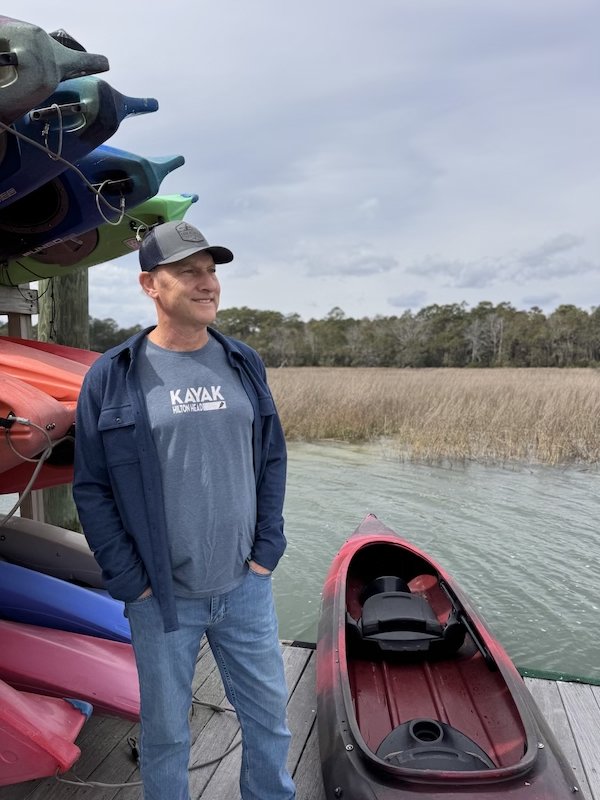
“High tide and low tide can offer completely different experiences,” says Dave Kerns, owner and longtime guide at Broad Creek Marina with Kayak Hilton Head. “Same route. Totally different feel.”
Many of his regular local customers intentionally alternate between tides, paddling once at high water and again at low, not because the schedule demands it, but because the marsh looks and behaves differently each time.
High tide: Freedom to explore
When the tide is high, water spills into the grass and fills narrow side channels that would otherwise sit shallow or dry. Kayaks glide easily through winding creeks that seem to stretch farther than they should. Reflections double the sky. Sound softens. The marsh feels continuous.
“Some people prefer high tide because they can explore more territory,” Kerns explains.
High tide invites curiosity. You can slip deeper into shaded cuts and around oyster points without worrying about scraping bottom. It is often the easiest paddle for beginners, especially during the calm first tours of the day. Wildlife, however, can be more dispersed. As fish and shrimp push into flooded grass to feed, birds spread out. The action is there, just less concentrated.
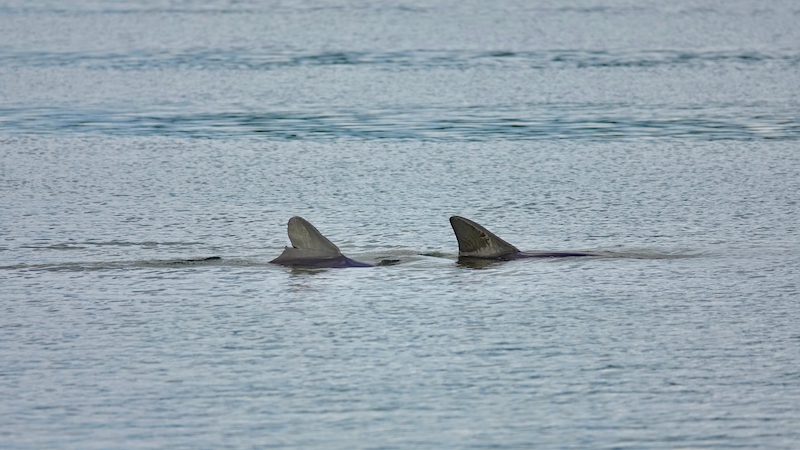
Dolphins remain the exception. At high tide they often work deeper holes and bends where bait gathers. Their dorsal
fins roll slowly through calm water, sometimes appearing close enough to hear a breath before slipping beneath the surface again. Even when the marsh appears still, it is never empty.
Low tide: The marsh revealed
If high tide feels expansive, low tide feels intimate. As water drains from the grass, the hidden structure of the marsh emerges. Mudflats glisten. Oyster reefs catch the light. The smell of pluff mud drifts on the air. Shrimp snap and flick in the shallows.
“Low tide, on average, has more visible wildlife activity,” Kerns says. “There’s simply more happening in plain sight.”
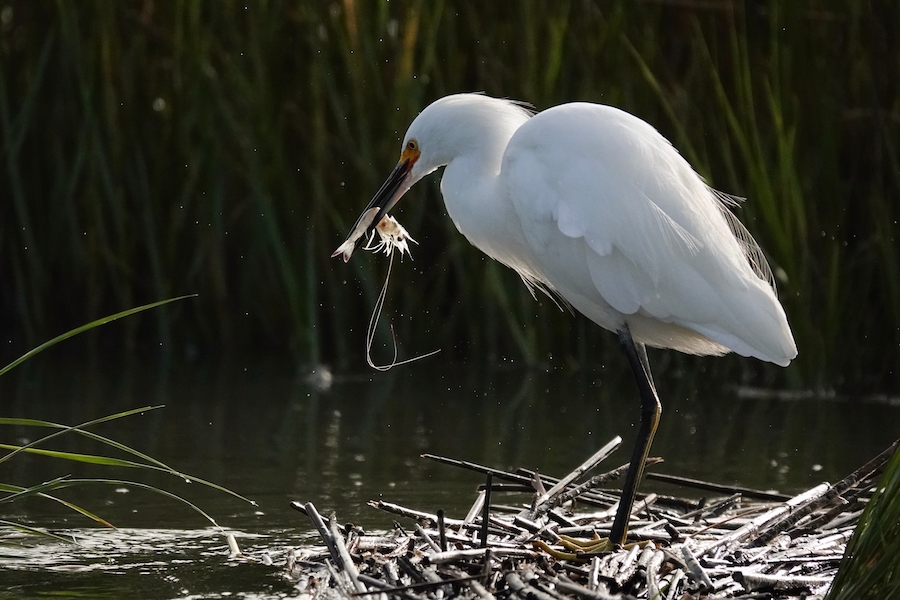
With shrimp and small fish concentrated in shallow channels, birds gather to feed. Snowy egrets shuffle quickly across exposed flats. Great blue herons stand motionless before striking. Osprey circle overhead, scanning for movement. And then there are the shrimp.
“At low tide, alarmed shrimp start jumping out of the shallow water,” Kerns says. “Sometimes they even land in the kayak.”
Stingrays glide like shadows just below the surface. Whelk shells dot the mud. Oysters snap shut as water recedes. Dolphins shift tactics as well. In skinny water they may use powerful tail slaps to stun fish before circling back to feed. For guides, low tide often becomes the favorite, simply because there is so much to point out.
The marsh at any hour
No matter the tide, Broad Creek rarely disappoints. Dolphins are present year-round, often most active during early tours when boat traffic is light and water lies smooth. In warmer months manatees drift into the creek, surfacing near docks from mid April through early October. Bald eagles soar above both high and low water. Blue crabs stir in warm shallows. Guides sometimes
lift a crab trap to show children the estuary’s armored residents before lowering it back again.
Morning tours at 8 a.m. in summer and 9 or 10 a.m. in cooler months typically offer the calmest conditions and softest light. Evenings bring golden reflections across the spartina, though summer storms can build late in the day. But the real magic, Kerns says, is not about statistics or guarantees.
“In 25 years of running guided tours, we’ve had dolphins jump in front of the kayaks and manatees gently bump into us,” he says. “The people who enjoy it most are the ones who put their phones away and just take it in.”
A kayak moves without a motor. There is no wake, no roar, just the quiet rhythm of paddle and breath. The marsh responds differently at high tide than it does at low, but in either state it has a way of slowing you down. The route may not change. The water does. So the next time you launch into Broad Creek, the question is not whether you should go. It is which tide you choose.
Wild neighbors of Broad Creek
Almost Guaranteed Sightings
- Bottlenose dolphin: Look for rolling dorsal fins in deeper bends and holes, especially during moving tides. Calm mornings make them easier to spot.
- Snowy egret: Scan exposed mudflats at low tide. Their bright white feathers pop against dark marsh mud.
- Great blue heron: Watch for tall, motionless figures along shallow edges before they unfold into flight.
- Osprey: Listen for sharp whistles, and look for dramatic dives into open water.
- Brown pelican: Keep an eye on feeding schools. Pelicans fold their wings and plunge headfirst.
- Blue crab: Peer into shallow water near docks and oyster beds in warm months.
- Eastern oyster: At low tide, exposed beds line the creek. You may hear shells snap shut as water recedes.
Frequent but Not Guaranteed
- Bald eagle: Scan tall pines and open sky for a broad wingspan and white head.
- West Indian manatee: In warm months, watch marina slips and shoreline edges for a rounded snout or slow swirl in still water. Cownose ray: Look for dark, diamond shaped shadows gliding beneath clear, calm water.
- Roseate spoonbill: Search shallow pools at low tide for a flash of pink, sweeping side to side.
Lucky Sightings
- River otter: Paddle quietly near grassy banks at low tide, and listen for playful splashing.
- Mink: Keep your eyes low along muddy edges at dawn or dusk. They move quickly and stay close to cover.
- Loggerhead sea turtle: On glassy days, watch for a rounded head surfacing briefly before slipping below.