How Your Dog’s Ancient Instincts Show in Everyday Life
From fetching sticks to rolling in the grass, unpack your dog’s everyday habits and how they descended from ancient survival skills.
Story by Bailey Gilliam
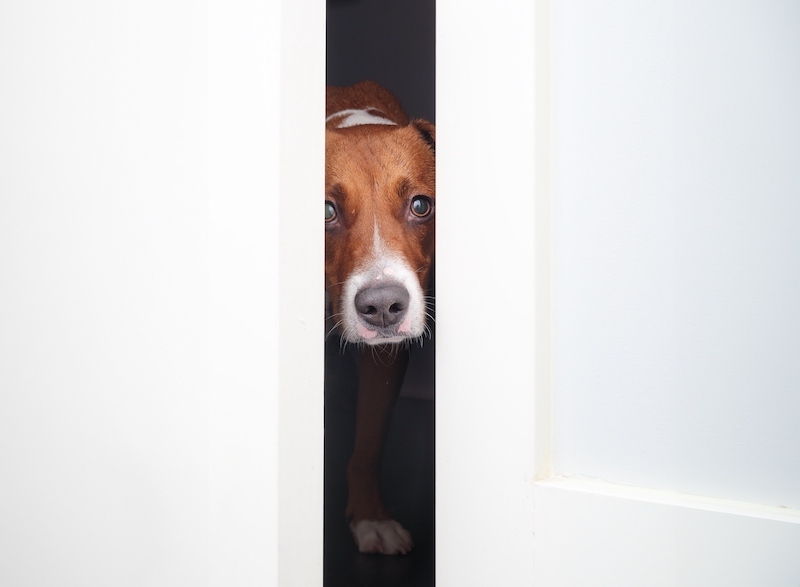
The siren wails down William Hilton Parkway. Your dog answers. A squirrel darts across the yard beneath a live oak. Your dog freezes mid-step. You close the bathroom door. A nose appears in the crack. These moments feel modern. They are anything but.
Dogs were the first animals domesticated by humans, joining us somewhere between 15,000 and 30,000 years ago. Early wolves lingered near human camps, drawn by scraps and opportunity. Over generations they adapted to life beside us. Domestication reshaped behavior, but it did not erase what evolution had already written into their biology. Beneath the collar and memory-foam bed lives a creature shaped by wind, hunger, pack bonds and survival. In many ways, your couch companion is proof that evolution does not forget.
What’s in your mouth?
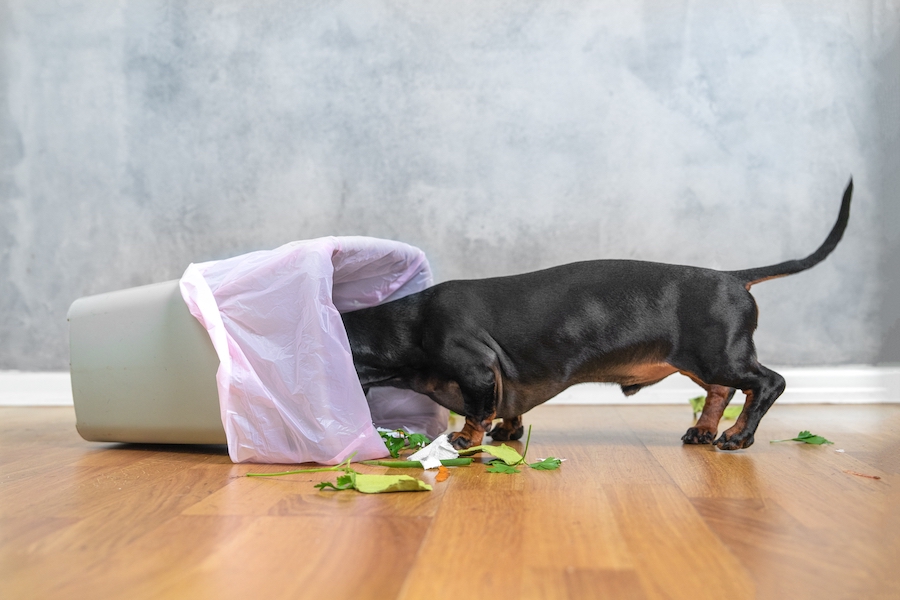
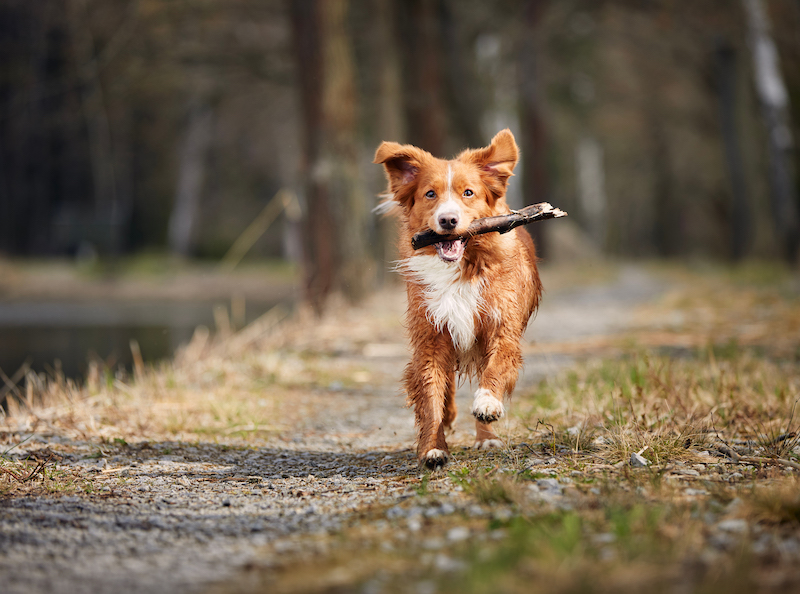
If dog ownership often feels like asking, “What do you have now?” there is a reason. Dogs are opportunistic eaters, hardwired to seize calories wherever they find them. Digging in the yard, investigating trash cans after a backyard oyster roast, chewing sticks or hoarding socks all trace back to a scavenger’s mindset.
Wild canines survived by hunting when they could and scavenging when they had to. Food was never guaranteed. Passing
it up was not an option. Burying treats in the backyard or tucking them beneath couch cushions mirrors the practice of caching food for lean times. Carrying a prized chew to a crate or bed reflects the impulse to transport prey back to a secure den where it could be consumed safely or shared. Even the dramatic “I haven’t eaten in weeks” performance at dinnertime is biology talking. Survival once depended on never refusing a meal.
Unpleasant behaviors have evolutionary logic as well. In the wild, consuming waste could help keep dens clean and reduce scents that might attract predators. It was not refined. It was practical. The instincts we see in pet dogs are not mistakes.
They are behaviors that once kept their ancestors alive. We did not remove those drives. We redirected them. The scavenger remains, even if dinner now arrives in a stainless steel bowl.
The thrill of the hunt
On a walk through the neighborhood, your dog suddenly locks in. Tail straight. Ears forward. Eyes fixed on something you have not even noticed yet. That stillness is encoded. Long before tennis balls and squeaky toys, survival depended on spotting movement, tracking quietly and reacting fast.
The sequence remains embedded: orient, stalk, chase, grab.
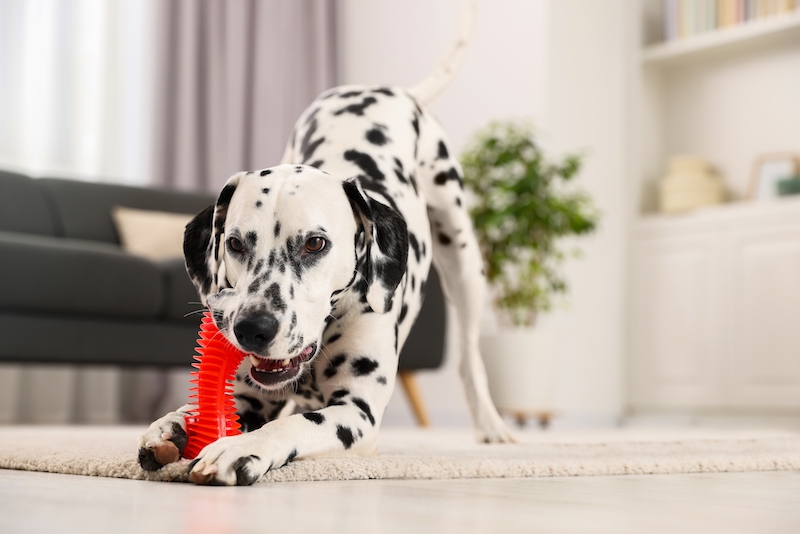
Fetch is not just entertainment. It is rehearsal. Squeaky toys resemble the high- pitched distress sounds of prey. The vigorous side-to-side shaking mirrors the efficient neck motion wild canines use to dispatch animals quickly. Tearing into plush stuffing may look chaotic, but it completes a deeply ingrained pattern. Even proudly parading a toy across the living room has roots in prey transport. In the wild, animals were often carried back to a den site. Today your dog may drop that slobbery prize at your feet, waiting for approval rather than pack acknowledgment. What looks like play is actually a preserved hunting sequence, softened by domestication but still deeply satisfying to the brain that evolved for it.
The world, written in scent
To a dog, the Lowcountry is less a landscape and more a library. Every marsh trail, palmetto trunk, driftwood-strewn beach access and fire hydrant is layered with information. With noses far more powerful than ours, dogs can tell who passed by, when and in what condition. That is why beach walks often involve more stopping than strolling.
Sniffing other dogs, especially rear ends, is not rude. It is efficient communication. Scent glands provide rapid data about age, sex and social status. Marking behavior adds to the conversation. Lifting a leg sends scent higher and farther. Kicking dirt after defecating releases pheromones from glands in the paws, layering additional signals into the message.
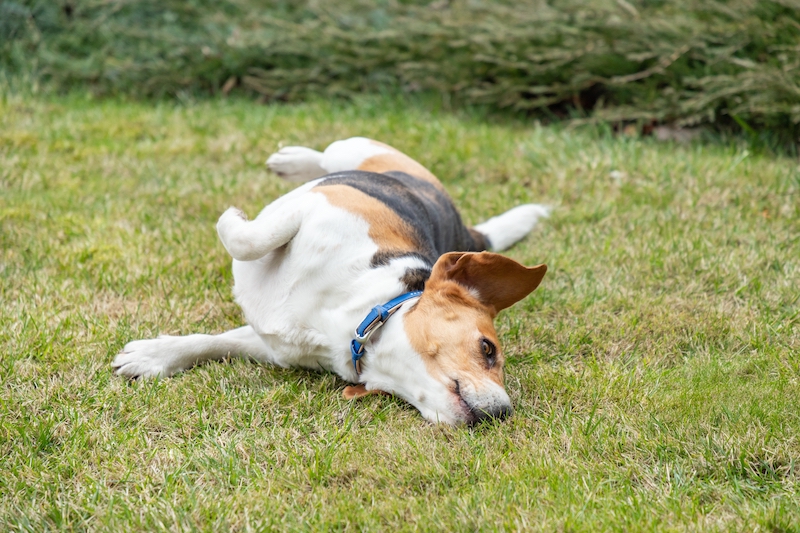
Even the dreaded roll in something foul serves a purpose. Wild canines used scent rolling to mask their odor during hunts or to carry information back to the pack. What makes you reach for shampoo makes perfect sense to them. The smells that wrinkle your nose are chapters in a story your dog instinctively understands.
Follow the leader
Dogs are social animals. In your home, you are the pack. That drive shapes everything from their shadow-like loyalty to their anxiety when left alone. In the wild, separation meant vulnerability. Staying close meant safety. So when your dog follows you from kitchen to porch to bathroom, it is not clinginess. It is cohesion.
Protective behaviors stem from this group dynamic as well. Guarding toys, food or even favorite humans is rooted in defending shared resources. Herding behaviors, such as circling children at the beach or nudging guests into orderly lines, reflect the same organizing principle. Keep everyone together. Maintain structure. Reduce risk.
Even licking faces carries ancestral meaning. Today it often functions as affection or appeasement, reinforcing connection and hierarchy within the household group.
Making a den
Before settling down, many dogs spin in circles, paw at blankets or scratch their beds. It may look fussy. It is adaptive. Wild canines trampled grass and leaves to create a smooth, secure resting place while scanning for hidden threats. The circling and rearranging were safety checks.
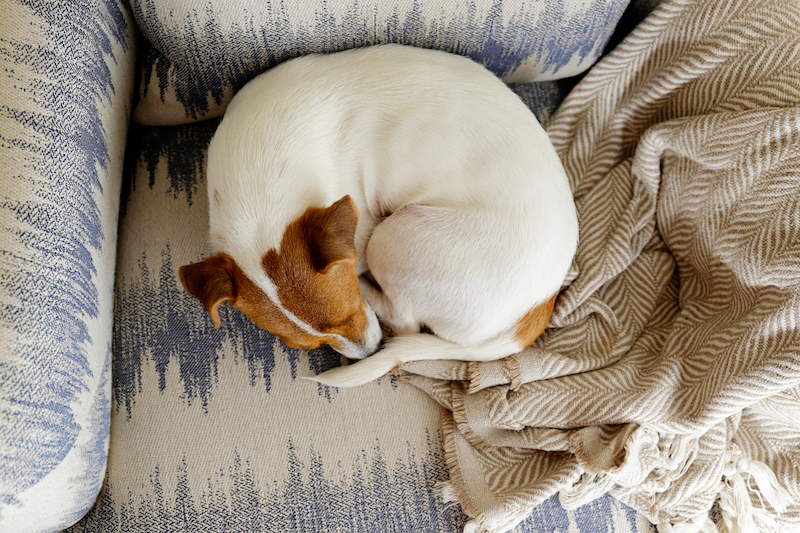
Curling tightly against you, tucking tails over noses or pressing close for warmth reflect denning behavior carried forward through generations. In the wild, huddling conserved heat and reinforced bonds. Security came from proximity. So when your dog claims the corner of the couch or your side of the bed, they are not simply seeking comfort. They are recreating a den. And in their mind, you are part of it.