Tour Old Town Bluffton’s Most Historic Homes
From Civil War-era carriage houses to family homes, explore the historic residences that capture the spirit, history and evolving identity of Old Town Bluffton.
Story by Belle Whitfield
The first thing visitors notice inside Bluffton’s historic homes is often the sound. Floorboards groan softly beneath each step. Old doors settle into their frames with a tired creak. Even the air feels still, as though the rooms are holding their breath around the lives once lived there. Homes such as the Squire Pope Carriage House and the Garvin-Garvey House are reminders of Bluffton’s past, but the town’s heritage survives in more than weathered wood and aging brick. It lives through the people who fought to protect these places and those who continue sharing their meaning with each new visitor who walks through the door.
One of the people helping bring Bluffton’s past to life is Ross Patterson, a docent whose passion for local heritage transforms the way visitors experience these homes. “I immersed myself in the history of Bluffton so I could better understand what happened,” he explains. Through years of study and leading walking tours, Patterson has developed a story-telling style that feels less like a lecture and more like stepping into another time. Under his guidance, these homes become more than preserved structures. They become places where Bluffton’s past feels immediate and personal. His ability to speak with both knowledge and reverence ensures the lives connected to these walls are not forgotten.
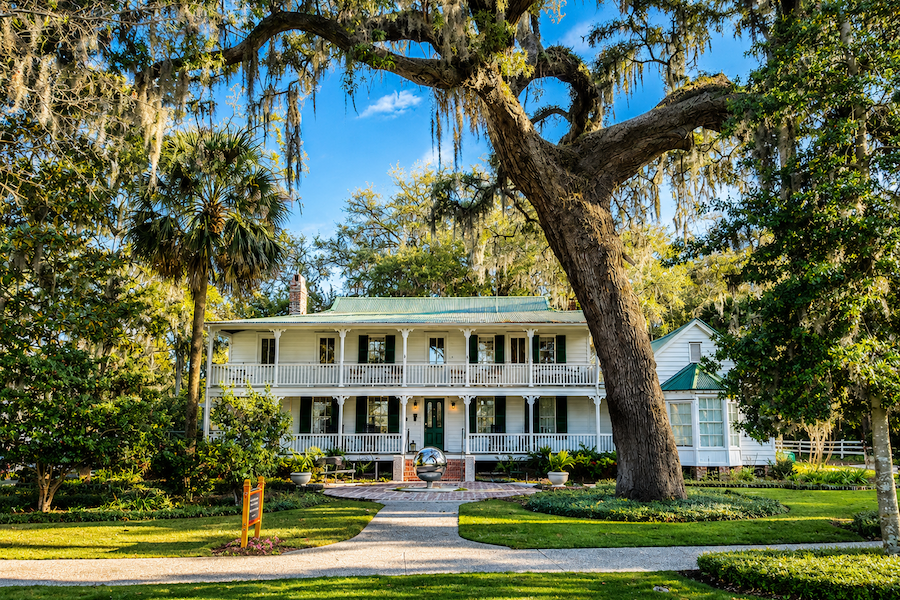
At the Squire Pope Carriage House, that legacy begins long before the building became Bluffton’s welcome center. Constructed in the 1840s as slave quarters, the structure looked very different from what stands today. Over time, rooms were added upstairs and downstairs to accommodate a growing family, while porches, a summer kitchen and additional living spaces transformed the once modest outbuilding into a full family home.
“That house was about a fourth the size that it currently is,” Patterson notes, emphasizing how dramatically it evolved over the years. The transformation of the building is directly tied to the Burning of Bluffton, when Union forces destroyed much of the town during the Civil War. When the Pope family returned after the war, the small outbuilding was the only structure left standing on the property. Rather than abandon the site, Sarah Pope adapted. What had once served as slave quarters slowly expanded into a home capable of sheltering multiple generations beneath its roof.
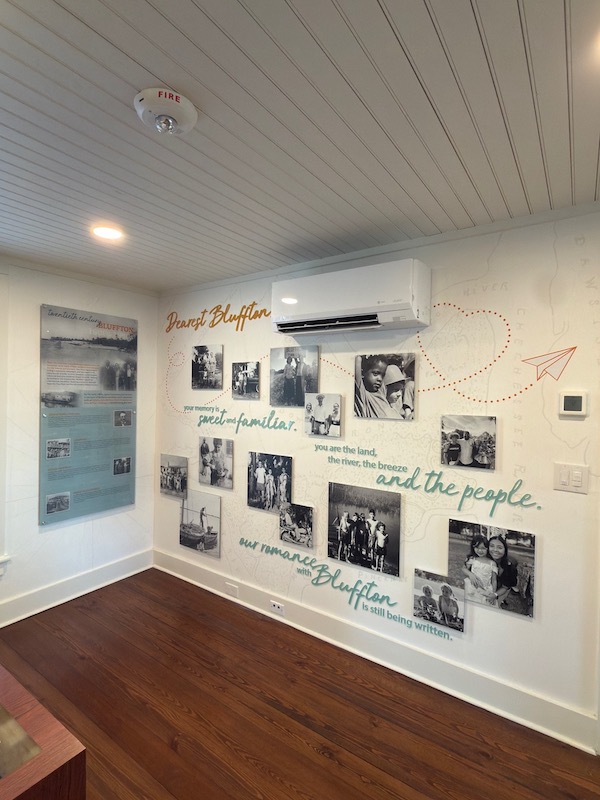
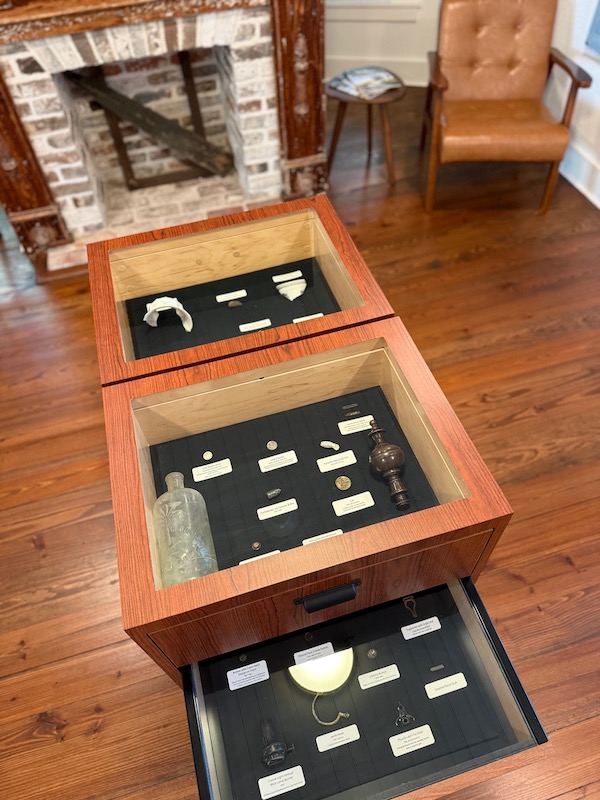
Visitors today can still spot uneven floorboards worn smooth with age, narrow stairways and low ceilings that hint at the building’s modest beginnings. Sunlight pours through the old windows, illuminating exhibits that connect Bluffton’s present to its earliest days along the May River.
Today the building welcomes visitors as Bluffton’s official welcome center, offering exhibits that explore the town’s layered past. Just steps away, however, another home reveals a very different chapter from that same period in history.
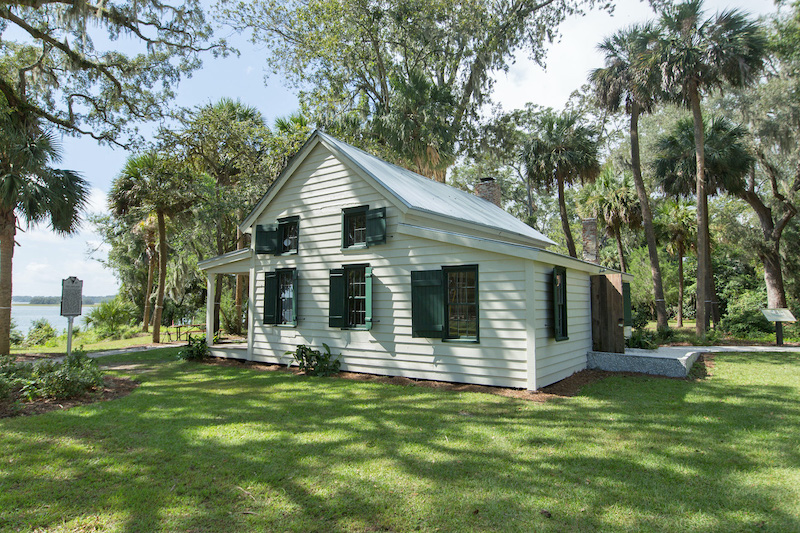
More than a home
The Garvin-Garvey House stands as one of Bluffton’s most powerful symbols of life in the post-Civil War South. Built in 1865 by Cyrus Garvin, a formerly enslaved man, the home represents a rare example of prosperity during a period when many freedmen struggled simply to survive. As Patterson explains, “Cyrus was uncharacteristically prosperous compared to his contemporaries. Most freed slaves were extremely lost after the war, but Cyrus knew how to plant, grow and harvest.” Those skills allowed Garvin to establish himself within Bluffton’s community and create a future for his family.
The land itself still carries traces of war. After the Burning of Bluffton destroyed the original home, the lot remained vacant, creating an opportunity for Garvin to build there. What emerged became more than a residence. It became a reflection of resilience and renewal. Constructed from salvaged materials gathered from damaged and abandoned buildings, the house quite literally became a patchwork
of Bluffton’s recovery. Inside, differences in wood grain, mismatched boards and uneven craftsmanship still reveal that layered history. The home remains a physical reminder of a town rebuilding itself piece by piece through the hands of people determined to move forward. As Patterson puts it, “It is the story of a transition of a slave from slavery into being a free man.”
Over time, the Garvin family’s journey evolved. With limited opportunities in the Lowcountry, later generations moved north in search of work, leaving the home behind. For years, it sat neglected, used primarily for storage while slowly falling into disrepair. Its survival, much like its origin, depended on intervention and a commitment to preservation. Patterson emphasizes how easily Bluffton could have lost places like this amid rapid modern development. “It is so easy to take a bulldozer and push it over,” he says. “If the Beaufort Land Trust had not come in here, it would have fallen down, and there would be a big mansion here.”
Together, these homes reveal two sides of Bluffton’s Civil War-era experience. One reflects adaptation after devastating loss, while the other symbolizes perseverance and opportunity after emancipation. Preserving them means safeguarding more than architecture. It means protecting the lives, struggles and triumphs woven into Bluffton’s history. And long after the footsteps fade and the doors close for the evening, these homes remain beneath the oaks, carrying forward the voices of the people who shaped the town into what it is today.
Take a self-guided tour of Old Town’s most storied homes and landmarks
Begin your walking tour at the Heyward House, one of the town’s best- known historic landmarks. From there, the route winds beneath moss-draped oaks, past church steeples, quiet cottages and sweeping May River views that reveal the charm and history woven throughout Old Town Bluffton.
- The Heyward House, 70 Boundary St.
- Church of the Cross, 110 Calhoun St.
- Squire Pope Carriage House, 111 Calhoun St.
- The Fripp House, 48 Bridge St.
- The Card House, 34 Bridge St.
- Pritchard House, 131 Pritchard St.
- The Bluff, 130 Pritchard St.
- Pine House, 95 Boundary St.
- Huger-Gordon House, 9 Water St.
- Allen-Lockwood House, 94 Calhoun St.
- Seven Oaks, 82 Calhoun St.
- Graves House, 207 Calhoun St.
- Fripp-Lowden House, 102 Calhoun St.
- Colcock-Teel House, 125 Calhoun St.
- Cedar Bluff, 170 Calhoun St.
- Garvin-Garvey House, 81 Boundary St.
- Orange Cottage, 70 Calhoun St.
- Peeples Store, 125 Lawrence St.
- John A. Seabrook House, 47 Lawrence St.
- Carson Cottage, 63 Lawrence St.
- Daniel H. Heyward Sr. House, 70 Oak St.
- Patz Brothers’ House, 141 Bridge St.
- Planters’ Mercantile, 2 Calhoun St.
- Bruin House, 16 Wharf St.
- Campbell Chapel AME Church, 23 Boundary St.
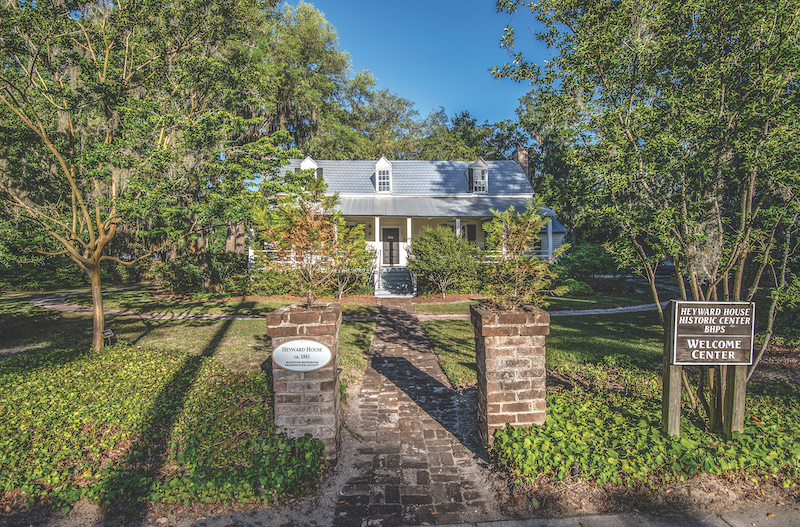 The Heyward House ©MIKE RITTERBECK
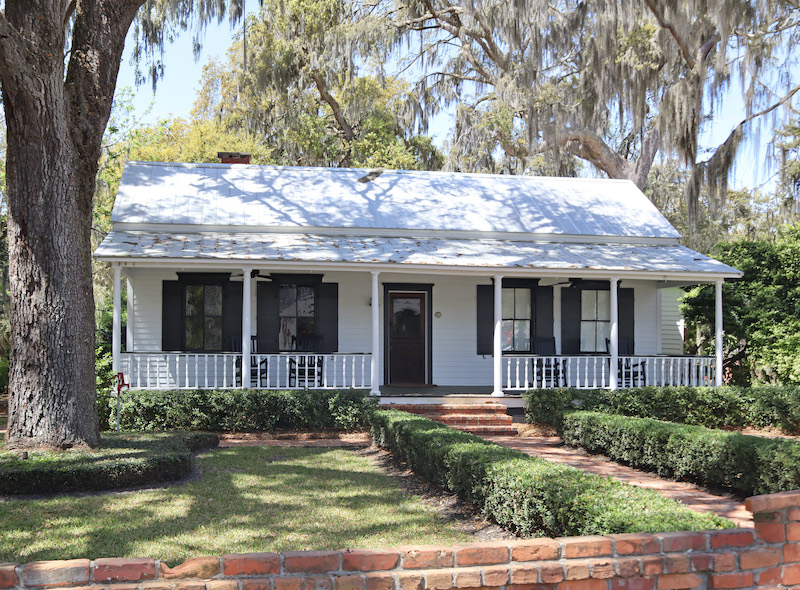 The Fripp House ©MIKE RITTERBECK
While the tour itself covers roughly a mile, Bluffton rewards wandering. Pause to admire tabby foundations, weathered shutters, hand-built details and wide porches that have watched generations pass by. Along the way, visitors will discover local boutiques, galleries and cafés that make Old Town one of the Lowcountry’s most inviting places to explore on foot