


The Untouched Georgia Island Rich in History and Donkeys
Discover Ossabaw Island, a rare outdoor escape just beyond Beaufort County.
Story by Carolyn Males
Photo by Steve Bransford, Emory University
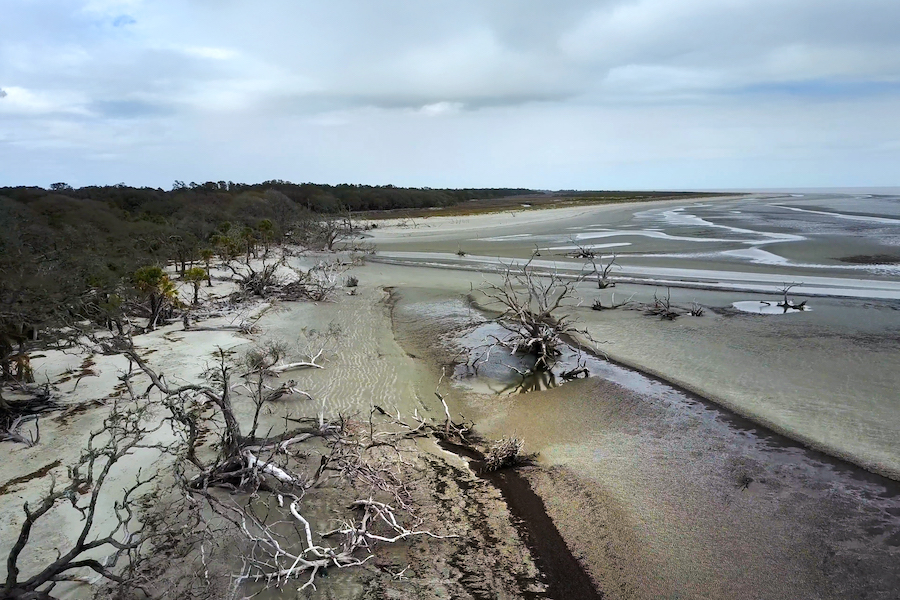
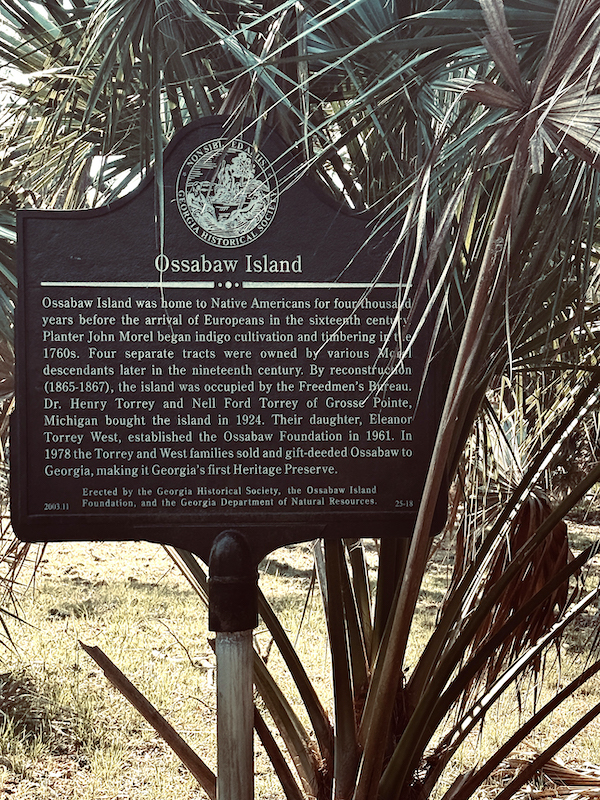
As a small group of us shuffle along the sandy path edged with palms and cordgrass, I’m thinking about all the feet that over the centuries have ventured onto f this large barrier island off the coast of Georgia. In recent years, however, fewer have trod this path on Ossabaw Island’s wild expanse where donkeys and pigs roam, and untamed nature sprawls over mudflats, marshes, tidal pools and patches of high ground. In 1978 Georgia designated Ossabaw as its first Heritage Preserve, closing off its 26,000 acres to tourism and development, thus conserving the island’s biodiverse habitats and protecting its archaeological and historic landmarks. Today the island serves as a “living laboratory” for scientists, historians and students, and as a retreat for artists and creative thinkers to immerse themselves in nature, inspiring fresh approaches to their craft.
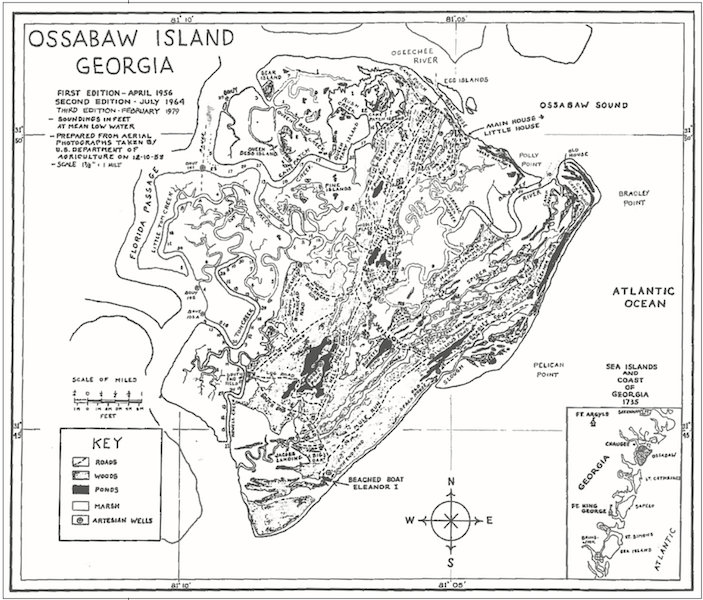
Boats are the only way to get to this heart-shaped island, 20 miles south of Savannah. There are no bridges, nor are there any paved roads. Access is tightly controlled. You can’t just sail in and wander around its maritime forests and cultural sites. The Ossabaw Island Foundation, which jointly manages the island with the Georgia Department of Resources, oversees educational and research programs here. However, for those interested in short visits, the foundation offers guided tours several times a year. I signed up.
 Accessible only by boat, Ossabaw Island is a 26,000-acre undeveloped barrier island off the Georgia coast in Chatham County. Designated as Georgia’s first Heritage Preserve, the island is protected for natural, scientific and cultural research, as well as the long-term preservation and conservation of its remarkably wild ecosystem. ©STEVE BRANSFORD
 ©CAROLYN MALES
Exploring
My daytrip had begun an hour earlier when we’d boarded a pontoon boat from Butterbean Beach and wound our way around islands, keys and waterways. During the first part of our cruise, as we motored past navigation markers topped with anhingas drying their wings, we’d spotted modest houses and mansions. But as we neared Ossabaw, the scenery gave way to deserted boneyard beaches and pockets of land, dense with cabbage palms, loblolly and slash pines, before the Torrey Landing dock came into view.
Only 9,000 acres, or 35 percent of Ossabaw is high ground, and this morning my fellow visitors and I had been given the opportunity to set foot down on one of its dusty lanes, thanks to the legacy of Eleanor “Sandy” West, a gutsy visionary who, despite her small stature, left a lasting imprint here. As main heir to the island, she had been the driving force behind preserving its untamed state, fending off developers like Charles Fraser and wealthy jet setters like Aristotle and Jackie Onassis. Now, after tracing the path of her footsteps, we would come to appreciate her desire to protect this unspoiled ecosystem and its story.
Back story
The Guale and the Muscogee tribes left the first footprints here centuries ago. The latter, historians believe, “imprinted” the island with its name, a nod to its thick growths of wild yaupon (Ossabaw) holly. By the 1500s Spanish explorers had stepped ashore, followed by the British who, upon taking control, signed treaties with the native communities for its use as tribal hunting and fishing grounds. The era of private ownership began in 1747, when Mary Musgrove, a Creek-British woman who had served as interpreter for General Oglethorpe and Tomochichi, and her husband were granted its title. But 16 years later it would be Ossabaw’s newest owner, Savannah merchant John Morel, who transformed the land, clearing its rugged interior and importing enslaved Africans to work his indigo, timber and shipbuilding operations. Upon his death, those holdings would be divided by his sons and then broken up into small farms following the Civil War.
But fierce hurricanes in the 1890s delivered a fatal blow to its economy, sending its Gullah farmers fleeing to the mainland. Vines thickened as Mother Nature took over.
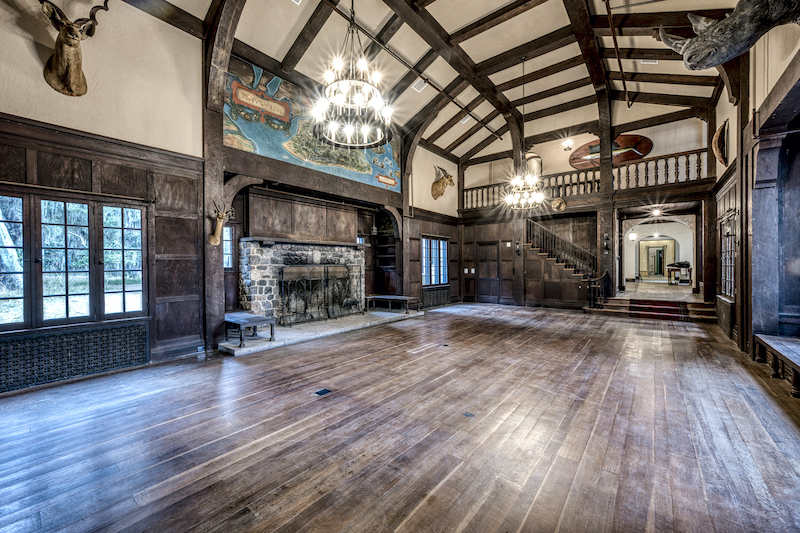
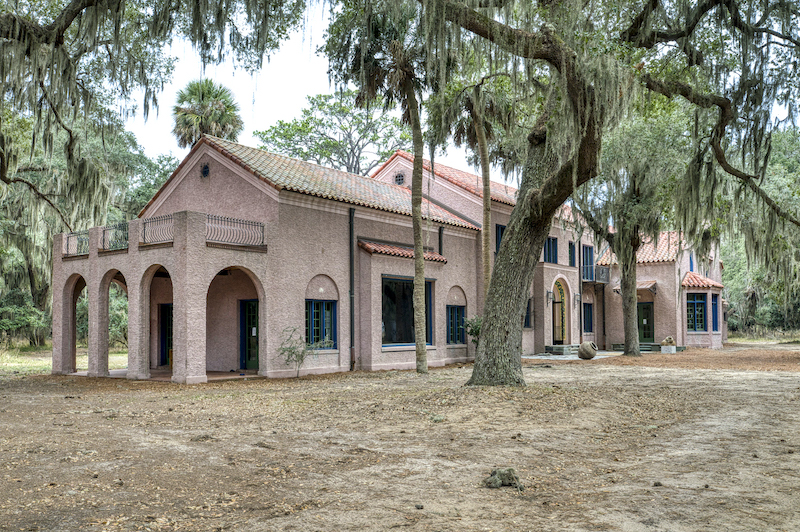 Built in the 1920s, the Torrey-West house became the heart of the Ossabaw Island Project, a celebrated artists’ retreat where writers, musicians and thinkers gathered to create far from the distractions of modern life. ©BRYAN STOVALL
 ©BRYAN STOVALL
With the new century came Northern and Midwestern industrialists who eyed the Georgia Sea Islands as perfect spots to build winter retreats and hunting lodges. By 1924 Ossabaw had new owners: Dr. Henry Torrey and Nell Ford Torrey, heir to the Pittsburgh Plate Glass Company. The Detroit couple erected a large Spanish-style mansion, gardens and a beach house connected by dirt roads. Despite its remote location, it was a house built for entertaining, and titans of industry like Henry Ford, who wintered in Richmond Hill, came to visit during the Torreys’ cold-weather stays.
The North End
Today our explorations take us to the North End of Ossabaw, where the century-old Torrey home sits. Once ashore, our guide Robin Gunn leads us down that sandy trail to a clearing revealing the clubhouse, a two-story 1887 former hunting lodge. This would be our necessity spot for the day, a place to eat the sack lunches we’d brought. From there, it’s a mile-long hike to the main house along another dusty road lined by vistas of marsh and forest.
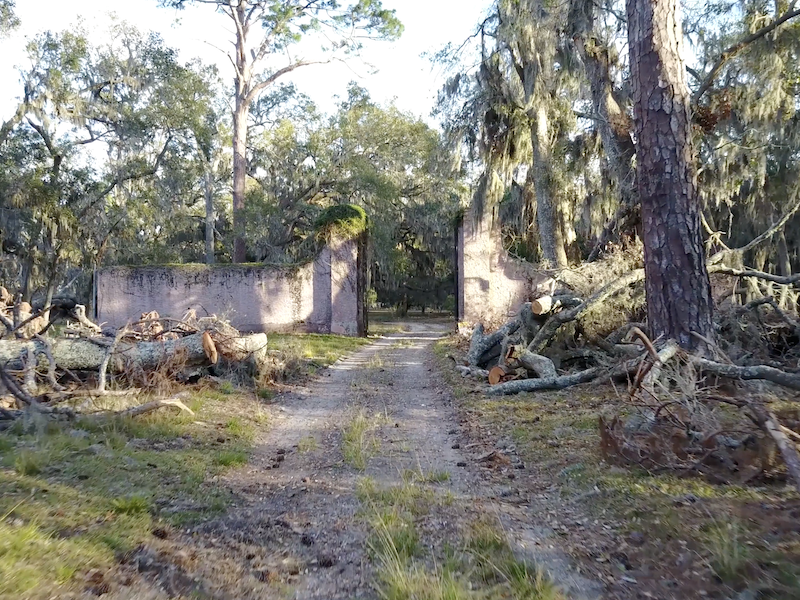
Tall stucco walls with iron gates greet us at trail’s end, and the land opens up to a view of the Ossabaw Sound fronting the sprawling terra-cotta-roofed home. In 1961 the Torreys’ daughter, Sandy, and her husband, filmmaker and artist Clifford B. West, who had taken up residence in the house, launched The Ossabaw Island Project, a residency program for artists and other innovative thinkers to come, stay and create, free from the distractions of the outside world.
Now, stepping inside the house’s paneled great room, I feel as if I’ve been dropped into that bygone era. Heads of rhinos, hartebeest and other trophies from Dr. Torrey’s African safaris look down as if listening for echoes of past conversational gems from guests like writer Annie Dillard and composer Samuel Barber or Gullah stories told by island workers. From there we’re on our own, exploring the house’s 20,000 square feet of dining areas, kitchens, laundry rooms, bedrooms and baths for glimpses of the simple but comfortable accommodations of yesteryear.
Donkeys!
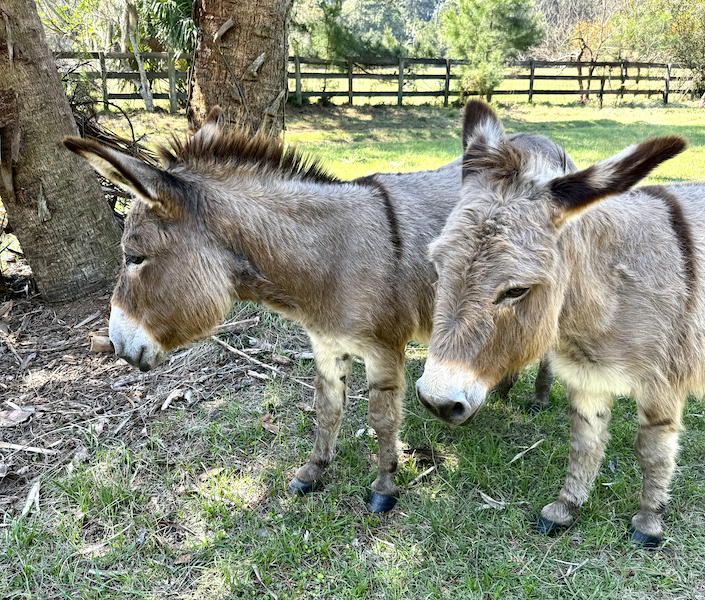
After a quick lunch at the clubhouse and a short walk, we’re standing in front of a plantation-era tabby workshop when a trio of Sicilian donkeys amble up. Had they smelled the carrots we were about to bestow upon them? Small, with black cross markings on their backs, the herd had been a birthday present for the Wests’ then-10-year-old son.
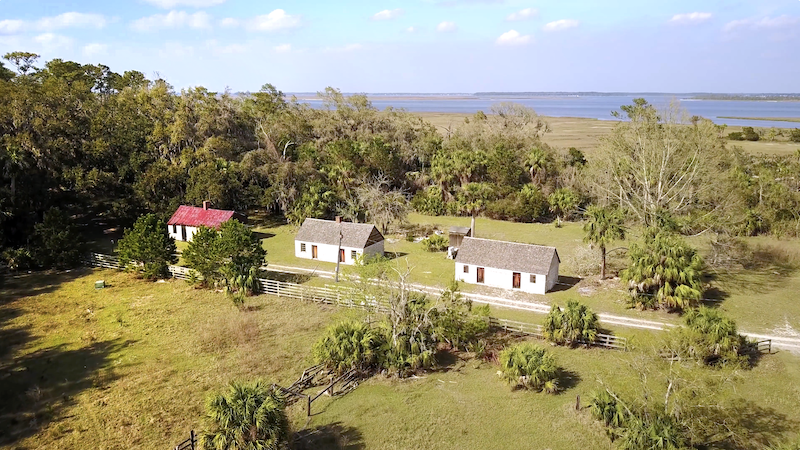
We catch a view of the island’s troubled history at its three remaining tabby duplex houses, built by enslaved laborers who mixed burned and broken oyster shells, sand and water to construct their walls. They and postwar contract workers had lived in these rustic cabins, sometimes seven to a room, with the main floor serving as a living area and the loft above for sleeping. From there we’re free to roam, and a few lucky ones catch sight of the island’s feral pigs, descendants of small hogs brought by Spanish explorers.
Our trip back takes 15 minutes longer, thanks to a low tide that called for trickier navigation. At 4:30, when I step onto terra firma, the chuff-chuff-chuff of boat motors, chirping cell phones and cars rumbling across pavement jar me back into the real world. Already I’m missing Ossabaw.
How to visit Ossabaw Island
All visits to Ossabaw must be hosted; free-range visits are prohibited. The Ossabaw Island Foundation runs several themed daytrips a year. Overnight retreats for groups and other research stays are also available upon approval. To apply, visit Ossabawisland.org, email info@Ossabawisland.org or call 912-344-3900.
Upcoming tour
- What: Lift Every Voice: Ossabaw/Pin Point African-American History Tour
- When: 8 a.m.-3:30 p.m., Saturday, June 6
- Where: Ossabaw Island, North End
- Details: This guided experience explores the connections between Ossabaw Island and the historic Pin Point community.
The day begins with a boat tour through the Moon River District, highlighting the region’s African American history and coastal culture. Guests on Ossabaw will tour the North End plantation site, including restored tabby cabins built by enslaved Africans, while learning about generations of families connected to the island from the 1770s through emancipation and beyond. The afternoon continues at the Pin Point Heritage Museum with exhibits and stories focused on the community’s rich crabbing and oystering traditions. Guides include Pin Point descendants Hanif Haynes and Gail Smith, who share personal family connections to Ossabaw and the founding of Pin Point. Cost is $61 plus a $50 transportation fee and a $5 museum donation. For information, email robin@ossabawisland.org.


