How Noise at Home Affects Focus, Sleep and Hearing Health
Dr. Debi Lynes is the founder of Freudian Slipcovers on Hilton Head Island and a licensed therapist and interior designer focused on creating spaces that support the way people live.
Key Points
● Hard surfaces can reflect sound, while rugs, curtains and upholstered furnishings help soften room acoustics.
● Persistent background noise, including a television left on, can interfere with rest and make conversation more difficult.
● A quieter corner without screens can offer a place to step away from constant stimulation.
● Repeated exposure to sufficiently loud sound can damage hearing, making volume awareness an important part of a healthier home.
You know the restaurant. The one where you’re leaning across the table, reading lips more than hearing words, and you leave with a headache you can’t quite explain. Competing sounds force your brain to work harder to follow conversation and filter out distractions. Your home can create a milder version of that same experience every day. The way a room sounds can help you focus, rest and connect, or add another layer of stress.
Helping you focus
Hard surfaces like tile, glass and bare walls reflect sound rather than absorb it, which is one reason open kitchens and great rooms can feel loud. Rugs, curtains, upholstered furniture and bookshelves help soften those reflections. Acoustic artwork and sound-absorbing wall panels can help, too.
Helping you rest and reset
The television humming in the background is one of the most common yet overlooked sound habits in a home. When background noise continues into bedtime, it can disrupt sleep. Creating a quiet space, even a small corner with a comfortable chair and no screen, gives you somewhere to step away from constant stimulation. Think of it as a reset space. Where do you reset?

Helping you connect
Background noise also makes conversation more work. Families may routinely raise their voices over a television, appliance or noisy exhaust fan without noticing. Lowering the baseline noise in shared spaces can make it easier to hear and listen to each other. A fan or white-noise machine can mask sudden sounds, which some people find helpful at bedtime, but it isn’t a universal solution. The goal isn’t to eliminate every sound. It’s to notice which sounds help and which simply add noise.
Helping you hear
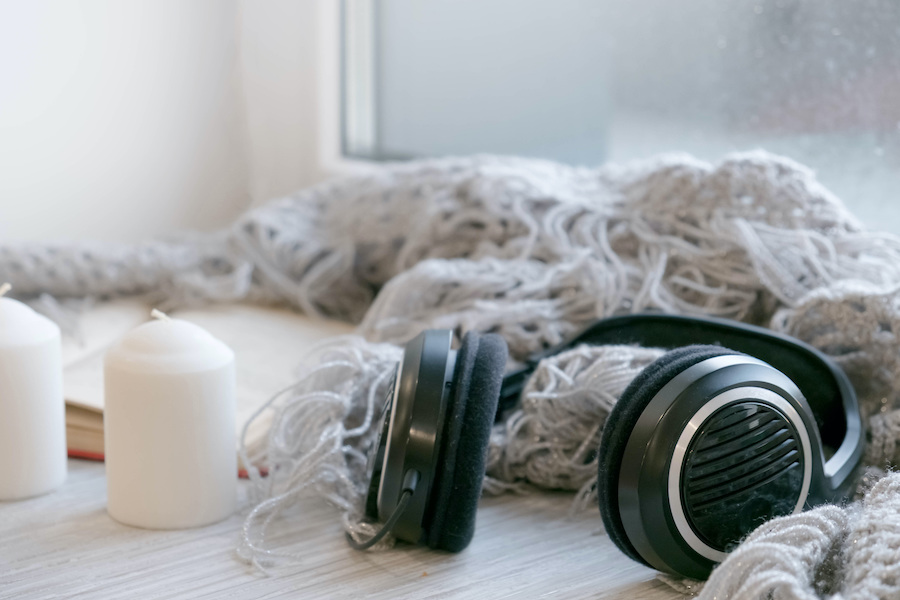
There’s a difference between distracting sound and sound loud enough to damage your hearing. Long or repeated exposure to sounds at or above about 85 decibels can contribute to permanent hearing loss, and louder sounds can cause damage more quickly. Think leaf blowers, power tools, loud entertainment venues and headphones turned up to compete with surrounding noise. If you have to raise your voice to be heard by someone an arm’s length away, the environment may be too loud.
Give Your Home a Sound Checkup
- Is the TV on when no one is watching?
- Does a room feel loud even when relatively quiet?
- Do you raise your voice in your own kitchen?
- Is there a quiet place where you can retreat?
- Do you turn up your headphones instead of turning down surrounding noise?
Sit in your favorite room tonight and listen. What do you hear? An appliance humming? Traffic outside? A television no one is watching? Or perhaps something close to quiet? Your home has been sounding off all along. A healthier home isn’t only about what you see. Sometimes it’s also about what you don’t hear.