Kohlrabi in Season: Recipes, Health Benefits & How to Cook It
Kohlrabi may look alien, but its crisp bite and mild sweetness make it a cool-weather treasure
Story By Bailey Gilliam
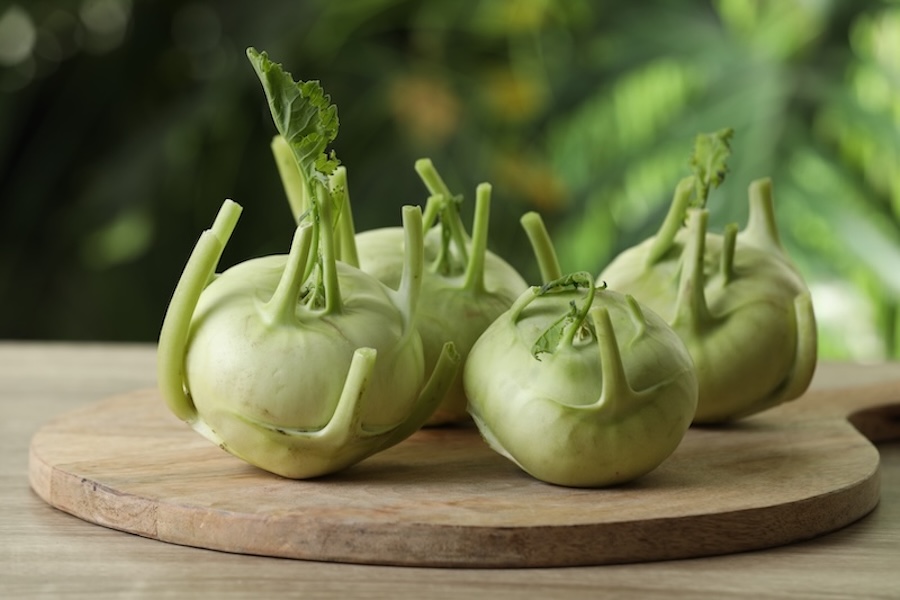
With its bulbous body and spindly stems, kohlrabi looks more like a tiny UFO than something destined for your plate. But beneath that sci-fi exterior is a crisp, mildly sweet vegetable at its best in March, whether pulled straight from the garden or spotted at a local farmers market. Just as happy shaved raw into slaws as it is roasted, sautéed or baked, kohlrabi rewards anyone willing to look past its oddball appearance with real versatility and flavor. It is an easy win for late winter and early spring cooking.
What Is Kohlrabi? A Guide to Cooking This Spring Vegetable

Roots that run deep
A member of the brassica family alongside cabbage, kale and broccoli, kohlrabi traces its roots to northern Europe, where it likely developed from marrow cabbage, a wild coastal plant with a thick stem. First documented in 1554 by botanist Matthiolus, it spread across Germany, England, Italy and the Mediterranean before arriving in America around 1800. While strongly associated with European cooking, kohlrabi also appears in Asian cuisines, from Indian curries to Korean kimchi.
Bulbous benefits
Low in calories and high in fiber, kohlrabi supports digestion and helps promote satiety. It’s rich in vitamin C and potassium for immune and heart health, while antioxidants common to cruciferous vegetables help protect cells from damage. With just 36 calories per cup and a satisfying crunch, it’s an easy way to add nutrition without sacrificing flavor.
From seed to sphere
Kohlrabi is one of the easiest cool-season vegetables to grow, maturing in as little as six weeks. Plant it in full sun with well-draining soil and keep moisture consistent. According to the Clemson Cooperative Extension, harvest when swollen stems reach 2 to 3 inches in diameter, before they turn tough and woody. Cut just above the soil line, trim the tops and refrigerate for up to two weeks. Look for small, firm kohlrabi with crisp, vibrant leaves if attached. Smaller bulbs tend to be sweeter and less woody than oversized ones. Once home, remove the leaves and store them separately, keeping the bulbs in the produce drawer until ready to use.
Peel & prep
Kohlrabi is easy to prep once you know the steps. Cut off the stems and leaves, trim the top and bottom to create flat sides, then peel away the tough outer skin with a vegetable peeler or paring knife. Slice into thick discs, trimming any fibrous edges if needed, then cut into matchsticks, cubes, fries or shreds. Once peeled, kohlrabi reveals a crisp, mildly sweet interior with a light peppery bite.
A versatile veggie
Kohlrabi shines both raw and cooked. Thinly sliced, it adds crunch to salads and slaws, holding its texture beautifully.
“I like to use it in crunchy vegetable slaws,” says Hampton Hall Club Chef John Huffenberger. “I really like to use it that way on fish tacos. It has a flavor and texture like broccoli stems.”
Light roasting, steaming or adding kohlrabi at the end of a stir-fry keeps it tender, while the edible leaves can be sautéed just like collards or mustard greens, making the most of the whole plant.

Love at first slice
Bluffton resident Ken Roberts remembers the first time kohlrabi caught his eye at a farmers market and it hasn’t left his kitchen since.
“My curiosity made me buy some. I tend to be that way with anything new and unique I see at a farmers market,” he says. Part of the appeal, he adds, is the reaction it gets. “I like to make sure guests see the bulbs before they’re prepared. They’re so unusual looking that even kids are intrigued.”
Most guests, Roberts notes, have never tried kohlrabi before and are “pleasantly surprised by the taste and texture,” as well as the fact that green and purple bulbs taste the same. For Roberts, that element of surprise is part of the fun.
“Bottom line, it leads to some interesting conversations,” he says.
After sampling a crisp, refreshing slice offered by a farmer, which he describes as tasting a bit like cabbage with the texture of a turnip, Roberts discovered that the simplest preparation is often the best.
“They usually roast or sauté it and finish it with Parmesan,” he says. “That’s been my go-to.”

Kohlrabi fries
Ingredients
- 1 large kohlrabi peeled and cut into fries
- 2 tablespoons olive oil
- 1/2 teaspoon chili powder
- 1/2 teaspoon smoked paprika
- 1/2 teaspoon garlic powder
- 1/2 teaspoon onion powder
- Salt to taste
Instructions
- Heat oven to 400 degrees. In a large bowl, combine olive oil, spices and salt. Add kohlrabi sticks and toss until well coated.
- Spread fries on a baking sheet lined with parchment paper and bake 20 to 25 minutes, flipping halfway through, until golden brown.

Roasted kohlrabi
Ingredients
- 4 kohlrabi stems removed and bulbs peeled
- 1 tablespoon olive oil
- 1 garlic clove finely minced
- Salt and pepper to taste
- 1/3 cup freshly grated Parmigiano-Reggiano
- 1 to 2 tablespoons fresh parsley finely minced (optional)
Instructions
- Heat oven to 450 degrees. Cut kohlrabi into 1/4-inch-thick slices, then cut in half to form half-moon slices.
- Combine oil, garlic, salt and pepper in a bowl. Add kohlrabi and toss to coat both sides. Spread kohlrabi in a single layer on a baking sheet lightly brushed with olive oil.
- Bake until lightly browned, about 15 minutes.
- Sprinkle cheese over the kohlrabi (top side only), return to the oven and bake about 5 minutes, or until the cheese has lightly browned.
- If using parsley, sprinkle lightly over the kohlrabi before serving.