Local Shrimp Guide: What Bluffton Fishmonger Charles Russo III Wants You to Know
Third-generation fishmonger Charles Russo III shares what every shrimp lover should know
Story by Bailey Gilliam + Photography by Lisa Staff
Meet Third-Generation Fishmonger Charles Russo III
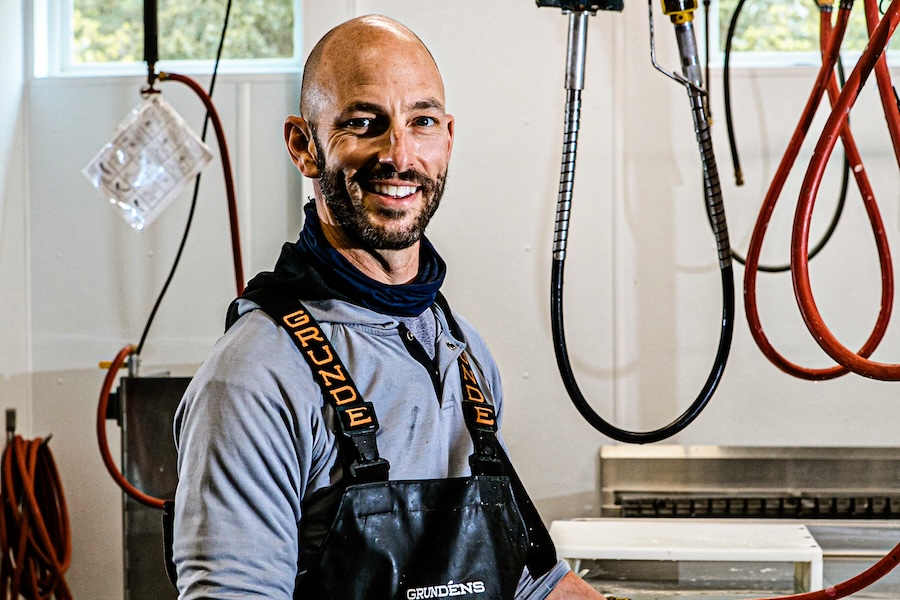
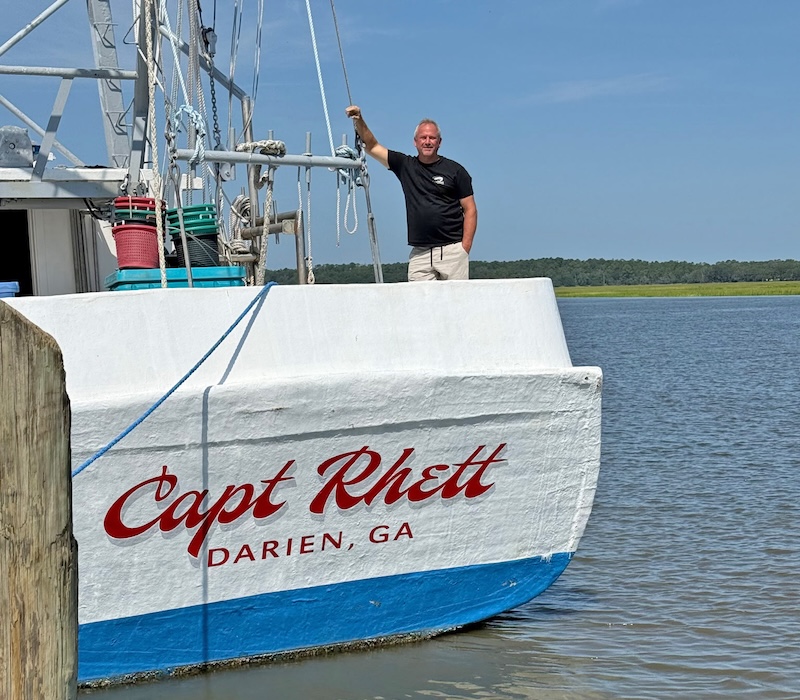
Charles Russo III has been around seafood long enough that what requires an explanation for most people is simply second nature to him. He grew up tagging along with his grandfather to fish houses and shrimp docks, meeting captains and watching seafood move from the water into the hands of people who knew exactly what to do with it. Today many of those relationships are part of the foundation of his own business, Russo’s Fresh Seafood in Bluffton.
“I’m a third-generation fishmonger,” Russo said. “The ocean runs through my veins.”
The Russo family’s seafood story began in 1946, when Charles and Antoinette Russo established Russo’s Seafood in Savannah. Nearly 80 years later, Charles’s father still operates Charles J. Russo Seafood in Savannah, while Charles carries the family name and his grandfather’s old-school principles into his separate Bluffton operation, which he opened in 2018 after spending years in the family business. Freshness, cleanliness and quality remain paramount, as do the relationships behind the seafood.
When Charles opened his own company, he set out to reconnect with captains, boat owners and fish houses he remembered visiting with his grandfather. When it comes to shrimp, those relationships stay close to home. Most of Russo’s shrimp comes from Georgia and South Carolina waters, with much of it sourced through Sapelo Shrimp Company in Townsend, Georgia.
Here, the third-generation fishmonger breaks down what makes local shrimp special, how it gets from the boat to Bluffton and what you should know before bringing home a few pounds of your own.
How Local Shrimp Gets From the Boat to Bluffton
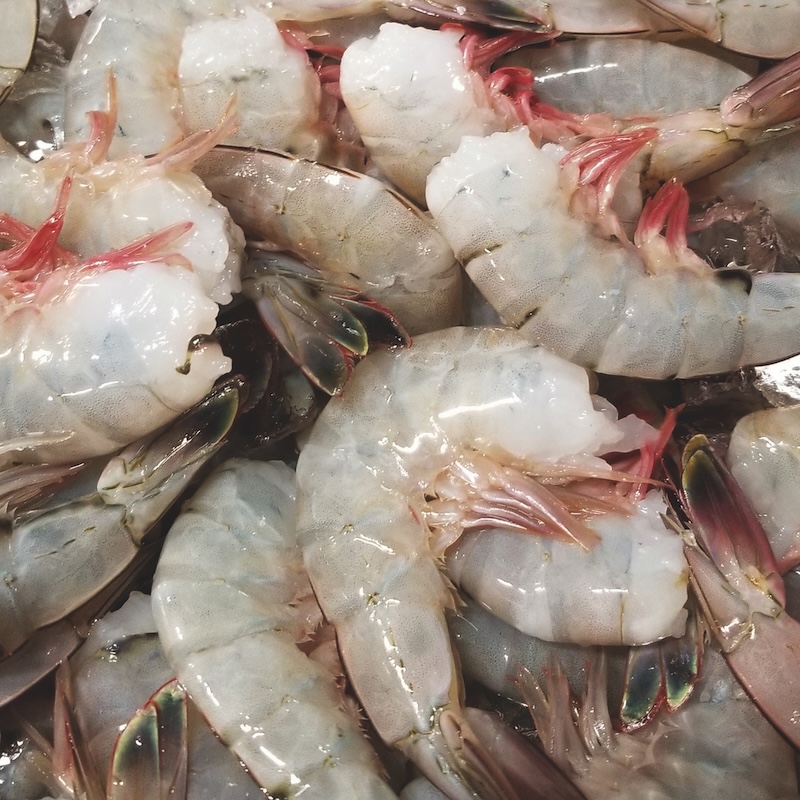
[LOCAL Life] What happens between a shrimp boat coming in and those shrimp appearing in your case? [Charles Russo III] I have my main guys that I use, and I’ll call and say, “Hey, I need 3,000, 4,000 or 5,000 pounds,” whatever it may be. They take them off the boat and put them on my truck. There’s no freight truck involved. They come into my facility, and we peel our own shrimp in-house. Everything else we block freeze. Nobody else ever touches it, and there are never any chemicals put on it. From the dock I normally use, it takes about two hours to get to my shop.
What Does “Local Shrimp” Actually Mean?
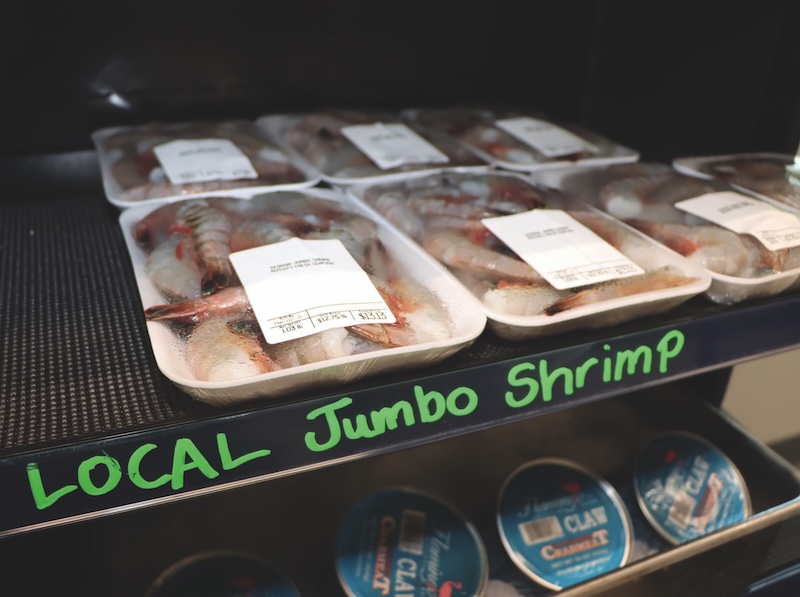
[LL] Where does most of your shrimp come from? [CR3] I’d say the majority comes out of Townsend, Georgia, and I have a cousin who owns docks over in Savannah. When we say local, we’re literally talking about 30 miles. I don’t want people to think that because we’re in South Carolina, it has to be caught in South Carolina to be local. Most of the time, we’re shrimping in Georgia and South Carolina waters.
What Makes Georgia & South Carolina Shrimp Different?
[LL] What makes Georgia and South Carolina shrimp different from shrimp from other areas? [CR3] Georgia white shrimp are a very sweet product. They’re succulent and juicy. South Carolina and Georgia white shrimp are very similar. When you get into some other shrimp, in my opinion, they can have a little more of an iodine taste. Of all the shrimp I’ve tasted in my lifetime, they’re way beyond the others. That’s why you hear people talk about Georgia sweet shrimp or South Carolina sweet shrimp. It’s just a really good taste.
White, Brown & Pink Shrimp: What’s Caught Locally?
[LL] What kinds of shrimp are we primarily catching here? [CR3] We really concentrate on white shrimp. There are brown shrimp too, and they’re actually sweeter and a wonderful product, but we primarily focus on white shrimp. Pink shrimp are more associated with Florida and deeper waters. Georgia and South Carolina are really our areas.
When Is Local Shrimp Season?
[LL] What does the local shrimp season look like? [CR3] The season changes as different shrimp move through our waters and grow. We start with roe shrimp season in May or June, when you’ll see larger female white shrimp carrying orange-colored roe. Those are mature females carrying eggs. Later in the year we start seeing another strong part of the white shrimp season. October, November and December are big months, and in a really good year the season can carry into January or February. Natural resource officials monitor shrimp populations and determine when certain areas open and close for harvesting.
What Do Shrimp Sizes Like 21/25 & 26/30 Mean?
[LL] Shrimp are sold by numbers like 21/25 or 26/30. What does that mean? [CR3] They count shrimp by how many there are in a pound and give you a range. A 16/20 is a very big shrimp. We catch a lot of 21/25s and 26/30s. If you have 21/25 shrimp, that means there are between 21 and 25 shrimp in each pound. It helps you gauge how much you need when you’re feeding people.
How Local Shrimp Stays Available Year-Round
[LL] If shrimp are seasonal, how do you keep local shrimp available beyond the season? [CR3] We buy enough shrimp during each season to last us the whole year. Say we need 6,000 or 8,000 pounds for our own needs. We might buy 15,000 so we have it when they run out. We block freeze them, basically encasing the shrimp in water. That lets us use those same local shrimp throughout the downtime.
Is Frozen Shrimp Inferior to Fresh Shrimp?
[LL] So frozen doesn’t necessarily mean someone is getting an inferior shrimp? [CR3] No. It’s about how you handle it. If we don’t have sales for shrimp within about eight to 10 hours of them being in my facility, they get frozen in water. It’s just like freezing something in an ice cube. The shrimp is encased in clean water, and it can last for months that way.
How to Keep Freshly Caught Shrimp Fresh
[LL] What is the best way to keep freshly caught shrimp fresh? [CR3] Ice, right off the bat. You want to take the heads off and ice them down. Some people put them in a saltwater brine with ice. An ice-and-water slush is about as good as you can get. As soon as they come out of the water, you want to get them cold and keep them cold.
Why Clean Water Matters to the Local Seafood Industry
[LL] When your livelihood depends on local waters, how important is protecting them? [CR3] It’s hugely important. I’m a huge advocate for clean waters. This industry depends on healthy waterways and healthy populations of seafood, so we have to be conscious of what we’re putting into those waters, especially plastics. Microplastics are a real concern for the seafood industry. We’re seeing them in fish in our rivers, and once plastic gets into the water and begins breaking down, it doesn’t just disappear. Clean water and healthy fisheries allow us to keep doing this. Protecting them helps make sure the seafood we’ve enjoyed here for generations is still here for generations to come.