Meet the Lowcountry Shrimpers Keeping a Coastal Tradition Alive
For these local shrimpers, long days on the water are about more than bringing home a catch. They’re about preserving a way of life rooted in family and tradition.
Story by Barry Kaufman
Photography by Michael Hrizuk
It’s a mantra that every local has adopted by now — “Friends don’t let friends eat imported shrimp.” And if they haven’t, they should. Because shrimp are more than just an ingredient around here. They’re a way of life. Before golf courses, condos and restaurants lined the shore, these waters belonged to the shrimpers.
The march of modernity made it harder for these shrimpers to get out on the water, while the threat of imports made it more difficult for them to turn a profit. And yet, our local shrimpers persist, because to them, this is far more than a way to make a living. It is a tradition worth fighting for.
There are rays of hope, of course. More and more people are becoming aware of the vital role these shrimpers play in keeping the Lowcountry connected to its roots and of the hidden costs of cheap imported shrimp. On the following pages, you’ll meet three locals who are riding that hope to a brighter horizon for the shrimping industry.
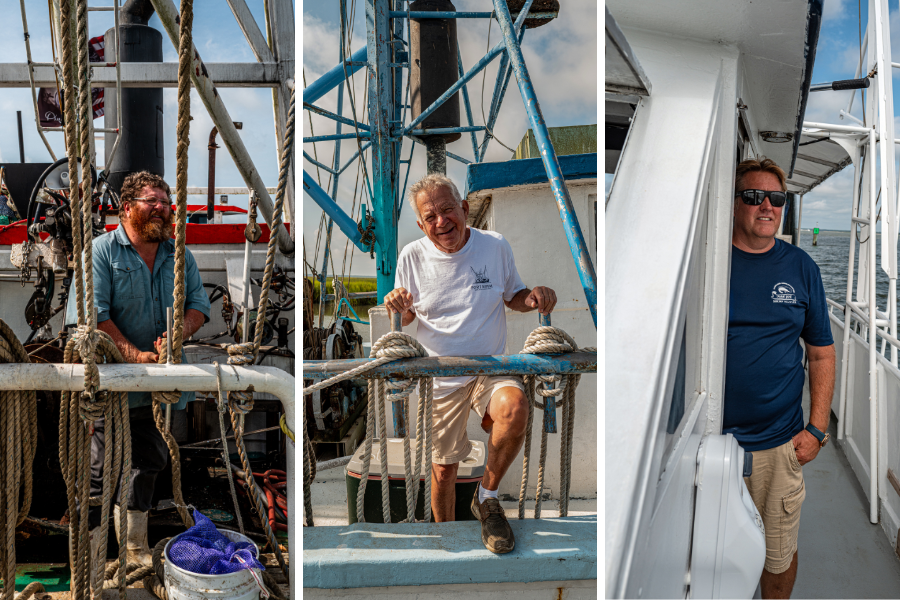
Craig Reaves
Keeping the tradition alive.
To say that shrimping is in Craig Reaves’ blood might be a bit of an understatement. Farming and fishing run through generations on both sides of his family, though for some, including his maternal grandfather, fishing was more pastime than profession. His father turned it into a livelihood.
After working summers as a shrimp-boat deckhand as a teenager and serving in the Army after high school, he returned home, married his high school sweetheart and bought a shrimp boat and shrimp dock at Holden Beach, North Carolina. It was the beginning of a commercial fishing career that would span more than 50 years, with the trade eventually passed down to Reaves, his cousin and his younger brother.
“I remember as a child trawling in the waterways with little skiffs and small nets. My granddad would go out and drag a little 30-foot net and catch a five-gallon bucket of shrimp,” he said. “It was just his way to be out on the water. Our family would love to go and catch clams and pick oysters. It was a way to make a living, but also a way to literally feed our family.”
By age 16 he was shrimping on his own at the helm of The Boy Shrimper, a boat his father bought for him. “We didn’t even name it that,” he said with a laugh. “We bought it that way, but it was kind of appropriate.” Although he would tell you that he “definitely wasn’t prepared at the time” to be a shrimp boat captain, he took to it with gusto and with patient support from his family.
By the time he sailed into Beaufort in 1992, he was a young man with more experience behind the helm than most. He was arriving at a time when the shrimping industry had yet to be pressured by waning infrastructure and foreign competition but was still experiencing the threat of development. He diversified from shrimping into oysters and other catches, building on each success until he took over Sea Eagle Market in 2007. In the years since, he’s built Sea Eagle into a landmark force in local seafood, with catches from his boats, Gracie Belle and Lydia Leigh, filling walk-in refrigerators at area restaurants and fueling brisk mail-order sales nationwide.
“With working waterfronts and the infrastructure being in such decline, it takes a lot of effort to reestablish that… And so we bought our own working waterfront out on St. Helena,” he said. “That was a piece that we needed. Instead of leasing or renting space, we purchased Sea Eagle Market at Village Creek in 2016. We’ve seen things vanishing, so the only way we felt like we were going to have longevity was to vertically integrate and fill in some of those blanks ourselves.”
Perhaps most importantly, he’s built on his success at Sea Eagle to serve as an advocate for the entire industry, appearing on national media and serving on boards from the South Carolina Seafood Alliance to the Southern Shrimp Alliance.
“I’ve seen our industry dying around us, so the question has become, ‘What can I do and what can my family do to try to keep our industry alive?’ We’re just passionate about the traditions of the old ways and trying to keep something that is unique and very special to the Lowcountry from becoming a museum piece.”
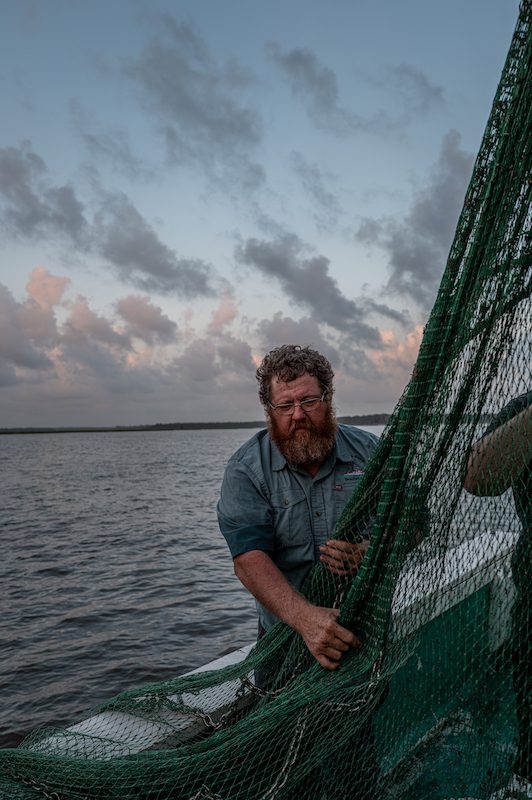
The future of shrimping
When Craig Reaves talks about the future of shrimping, he speaks from decades of experience. At a time when the industry has been steadily receding, Sea Eagle Market has not only weathered the storm but continued to expand. Reaves also has become one of the industry’s most visible advocates, serving as a board member of the Southern Shrimp Alliance representing commercial shrimpers in national media.
“We definitely do our best to educate our customers that there is a huge difference between wild-caught American seafood and imported aquaculture products, especially in shrimp. And it’s worse than we can even describe sometimes. Obviously this past year we’ve seen radioactive shrimp, which I couldn’t have even imagined, but even before that we’ve found hormones and antibiotics in these shrimp,” he said. “But then there are things like forced labor, inhumane working conditions and huge environmental impacts that most people don’t know about.”
So what will it take to turn the ship around? It turns out, the person who can do the most is you.
“Ninety-four percent of what’s being consumed in the United States is produced in conditions we would never allow to happen in the United States,” he said. “But because people don’t know, they just go in the grocery store and buy a bag of frozen shrimp. It never crosses their mind it could have adverse health effects and has such a high human and environmental cost.”
Jim Buchanan
Retirement can wait
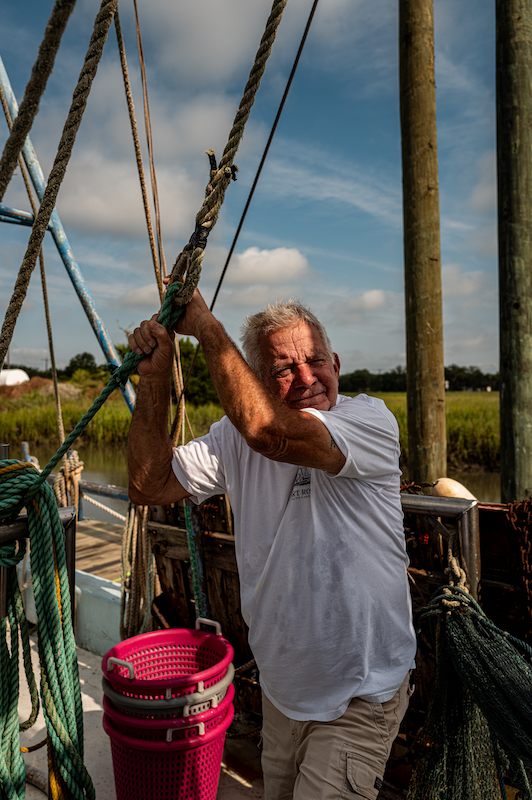
Stepping aboard the Mrs. B, the nearly 60-year-old shrimp boat piloted by Jim Buchanan, you might assume he’s been on this ship his entire life. Seeing him in the pilothouse, his youthful frame and smile not giving so much as a hint of his 83 years, you’d think he was the kind of old salt who had been shrimping these waters like his ancestors before him.
Then you hear the unmistakable Great Lakes accent of his Chicago upbringing, and you realize that Jim Buchanan is not your typical shrimper.
“All these young kids will come up to me and say, ‘You sound like one of them Yankees,’” he said. “But I’ve been down here 55 years.”
He was first drawn south from Chicago by the call of the U.S. Marine Corps, serving during the Vietnam War and eventually earning his billet to fly helicopters. When he lost that billet, he opted to end his enlistment and see what the next day might bring. It turned out, he didn’t need to wait even that long.
“It was somewhere around 8:00 in the morning when I went to dispersing and cashed out. By 11:00 I had left base, gone over to the yacht basin and got on a shrimp boat,” he said. “We were doing good back then. I was fat and happy. I’d come back home with scales all over me and the girls would go, ‘Yeesh,’ but it was good.”
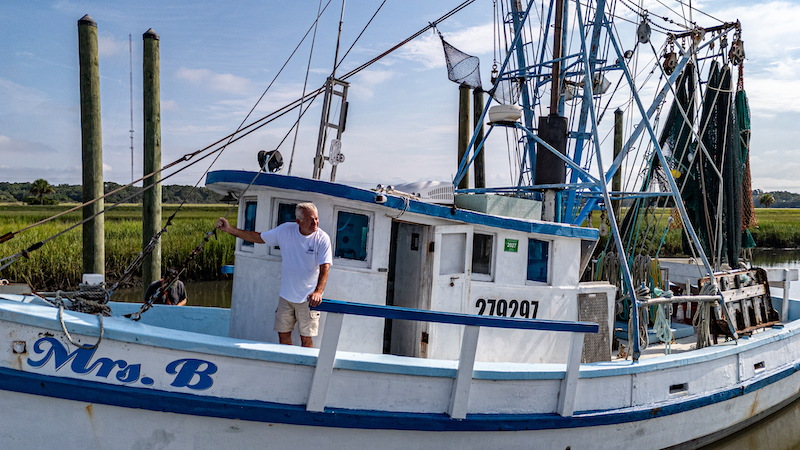
His initial love affair with shrimping, it turned out, was short-lived. A three-month shrimping trip to Key West proved to be his breaking point. “I didn’t come back for three months, and that was only because I jumped ship in Key West,” he said. “It was three days on a Greyhound back to Chicago, and it was five below zero when I got back. It took me about a month to recover, and I came down here and never left.”
Rather than give shrimping another go, he took to the skies as an ariline pilot for Midway Airlines until they “threw him out,” as he says, at 62. He spent another 10 years as a corporate pilot.
“The only thing between the airlines and corporate was I’m flying someone’s toy. Well, really, they wanted it to be called a business tool,” he said.
Retirement hardly suited him, so 11 years ago at the age of 72 he found himself drawn back to the water.
“I’d walked the beach enough and got to thinking that shrimping wasn’t all that bad. And sure enough, I got back into it. When you take off in the morning and it’s still a little dark, you look around and you just say, ‘Wow, this is pretty nice.’ But then you have to put the outriggers down and get the doors out.”
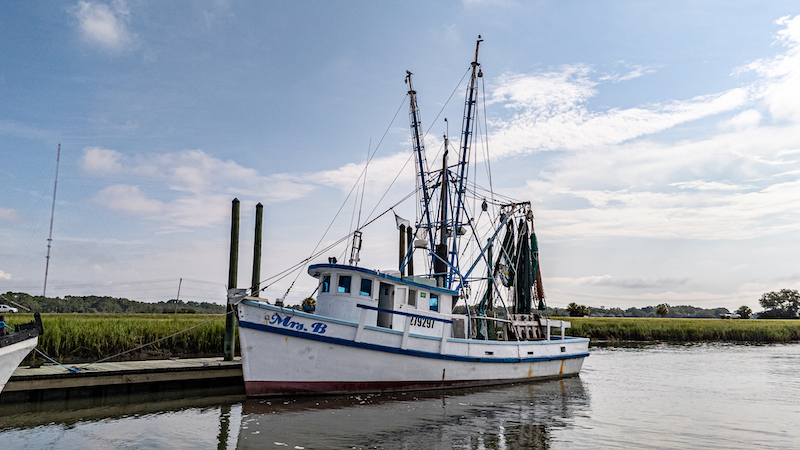
A fresh perspective
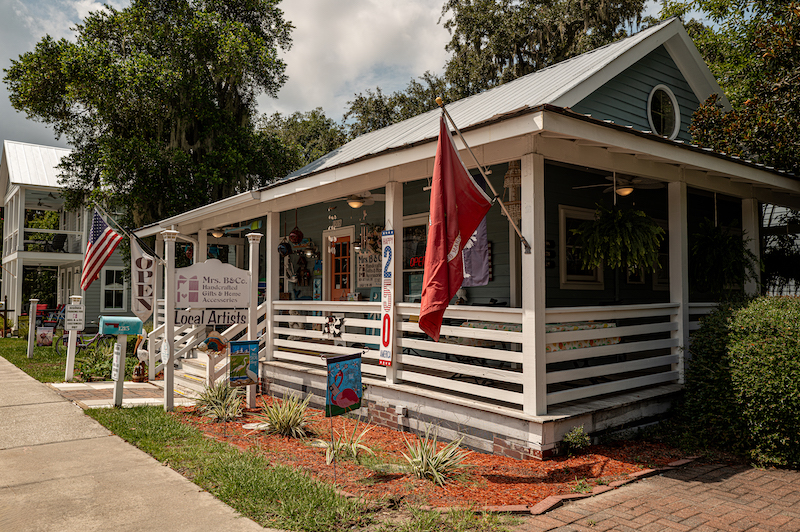
The shrimp boat Jim Buchanan pilots bears the name Mrs. B, a reference to his wife’s Port Royal boutique, Mrs. B & Company. Although he has owned the boat for only 11 years, it represents his deep passion for shrimping and for the people carrying on the tradition.
“I’ve been down here 55 years so I knew all these guys long before I started shrimping again. Especially the Gay family. My first partner in the boat was Robert Gay, who passed last year,” he said. “The guy on the next boat over, he and his wife came here from Cambodia. The wife’s whole family got wiped out in the killing fields.”
He understands that his situation is different from that of many shrimpers. But he also knows the people around him are facing mounting pressures, and he understands just how much help the industry needs.
“No support from the government. Nancy Mace got close; she wanted to start something similar to the farm bureau but for fishermen. We don’t want a handout, just give us interest-free loans,” he said. “At one time there were 200 shrimp boats here. We’re down to 12. The people have been great, though. They’ve been buying as much as we can get.”
John Gerdes
Lessons from the water
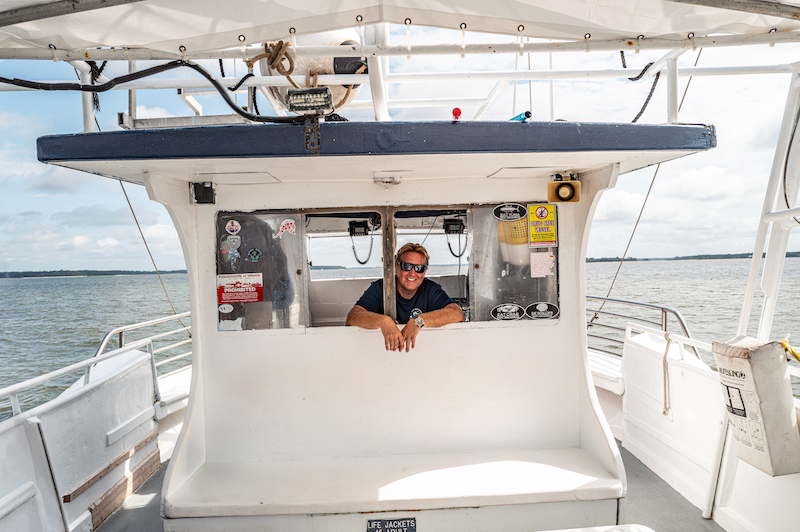
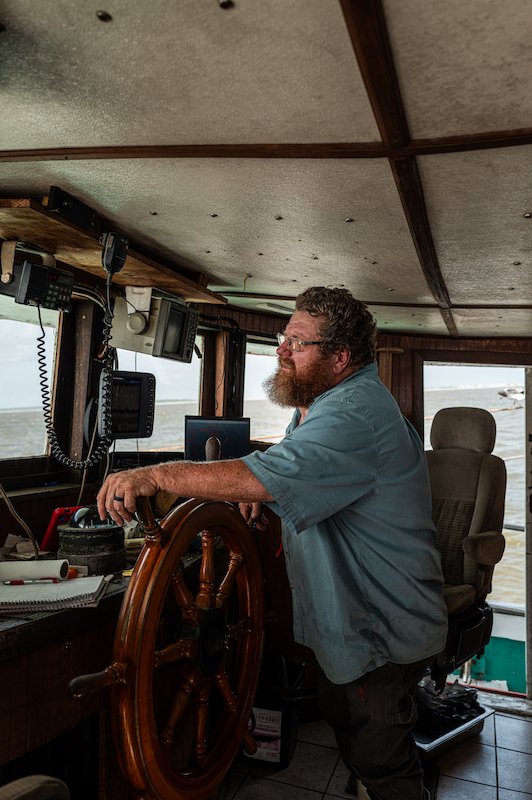
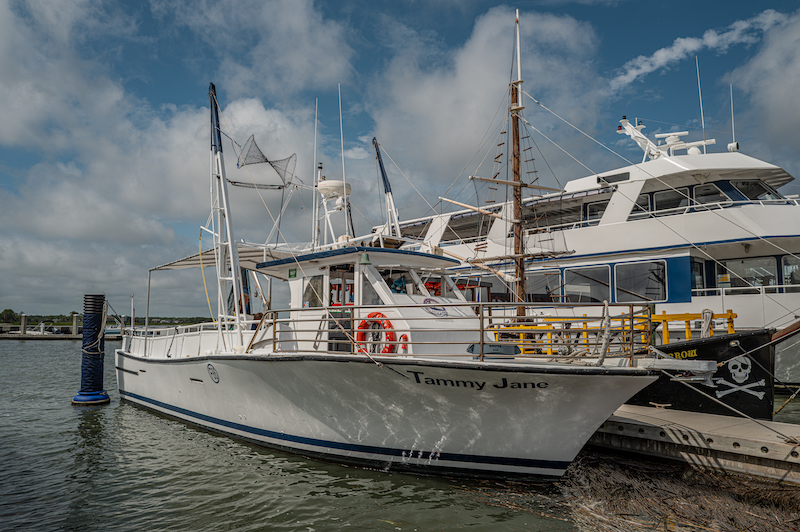
The Tammy Jane is not your typical shrimp boat, and her captain John Gerdes is not your typical shrimper. On the surface, all of the elements are there. With its winches, boom, net and pilothouse, the Tammy Jane trawls the waters of Calibogue Sound just like any other shrimp boat, and Gerdes awaits the results of each trawl with hope that the sea will be generous.
But the catch the Tammy Jane pulls in on each voyage is far less important to Gerdes than the experience and the lessons it teaches.
“I really enjoy it because I get to take what I’m passionate about and teach it to the people I take out. Not everybody understands the shrimping industry, so I get to show them how it’s done and a little bit about the ecology of the water here and the rules of shrimping,” he said. “So they get a little information to help them understand the price they pay at the grocery store, because friends don’t let friends eat imported shrimp.”
Part of Vagabond Cruise’s fleet of experiences, a trip on the Tammy Jane gives passengers a chance to see how a real shrimp boat operates. Cruising out of Harbour Town, she trawls the waters of Calibogue Sound on a two-hour trip that blends an entertaining lesson about the Lowcountry and the shrimping industry, with a chance to see and feel how the catch is pulled in.
“They get to see the sea monsters that come up out of the water and feed the birds, and it’s a very hands-on trip. We’ve found that even when the catch is not that great, people have fun because they get to see so many different things.”
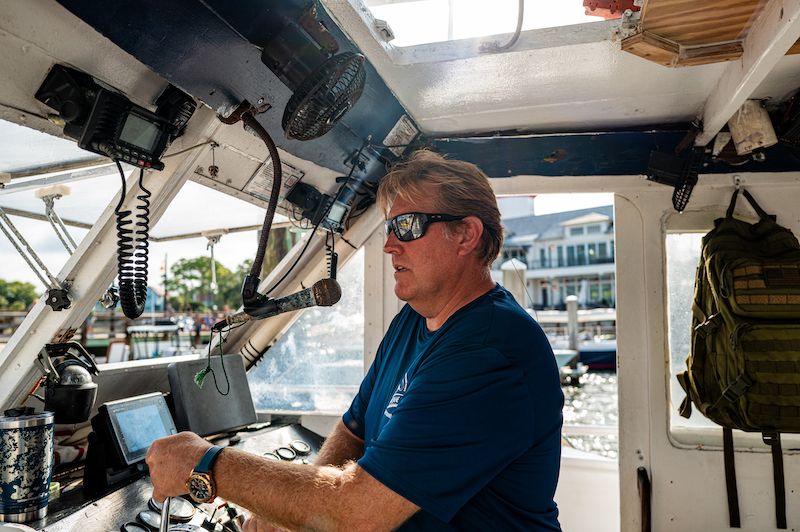
Gerdes’ journey to the pilothouse of the Tammy Jane began in Ohio, where he’d worked in manufacturing and held a captain’s license. When corporate furloughs freed up his summers, he started coming down to Hilton Head to run ferry boats, dolphin tours or whatever trip was hiring a seasonal captain.
“I’d been coming down every year running boats, and about 15 years ago I just decided not to go back,” he said. He spent 10 years with Sea Tow as a responder for people who needed help on the water before landing at Vagabond Cruise five years ago. He now runs several vessels in the fleet, including the Spirit of Harbour Town, The Vagabond, The Solaris and the Prestige, but his heart lies with the Tammy Jane.
“It’s kind of an old-school, down-to- the-roots fiberglass and wood boat. And unlike a dinner cruise or dolphin tour, here you never know what’s going to happen while you’re dragging,” he said. “I do enjoy the challenge of trying to put some meat on the deck… I gave up working in the manufacturing industry to be down here on the water because I love my office window. No matter what the weather, I look out, and it’s always beautiful for me.”
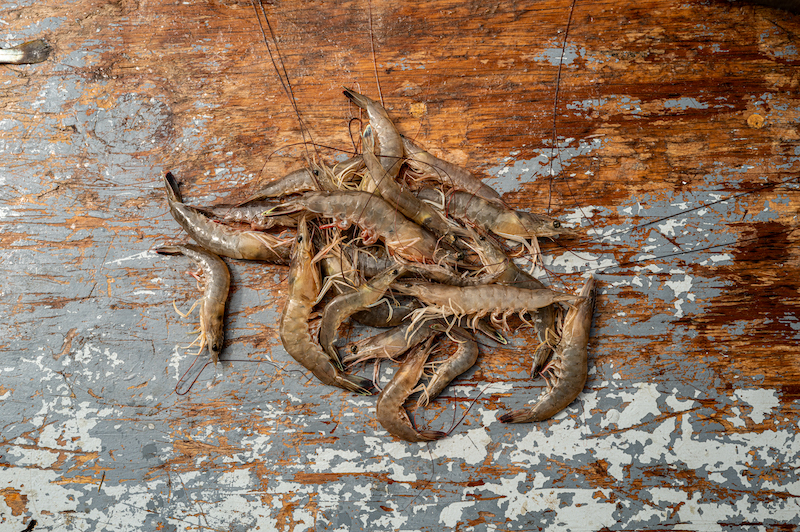
Not all shrimp are created equal
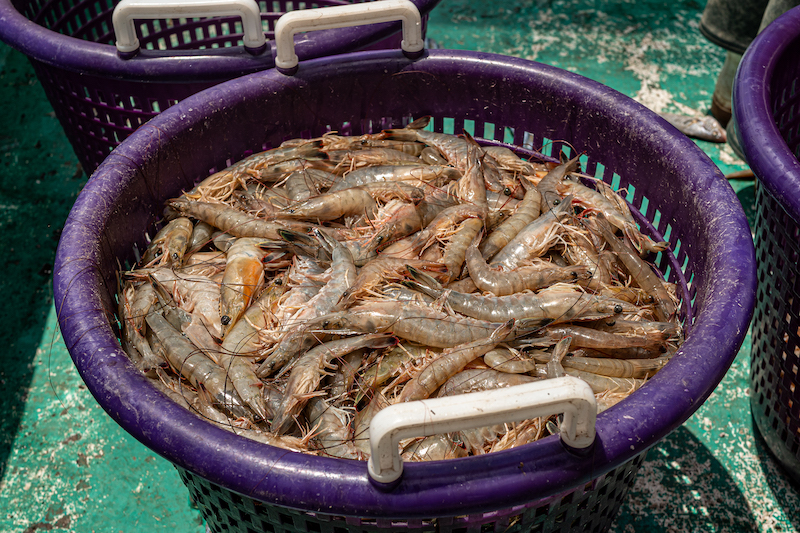
Part of the thrill John Gerdes feels from running charters out on the Tammy Jane is the element of the unexpected that accompanies each trip. First of all, there’s the catch. There have been trips when the nets of the Tammy Jane came up to the surface with more shrimp than the boom could handle, forcing the crew to cut it loose and lose the entire trawl. There have been trips when the nets dumped more jellyfish and tiny drum than shrimp.
On one particular trip, it pulled up a small octopus that Gerdes was able to hold in his hand and show to his guests before throwing it back in. But one catch was unusual enough to get the attention of state wildlife officials.
“Probably the rarest thing I pulled up was an 11-inch tiger shrimp. That’s an invasive species,” he said.
Growing faster and larger than native shrimp, Asian tiger shrimp have been documented in Southeastern waters for years. Researchers have monitored the non-native species to better understand how it arrived and what impact, if any, it could have on native shrimp populations. One theory is that tiger shrimp reached U.S. waters through ballast water discharged by ships. Despite their presence, local shrimpers say encounters remain relatively uncommon.
“I thought I might be able to try and eat it, because I wanted to see what it tasted like,” Gerdes said with a laugh. “I called up DNR and they said absolutely don’t do that. They actually showed up at my house to pick the thing up.”
The warning wasn’t because tiger shrimp are inedible. At the time, the unusual catch was of interest to researchers trying to understand why a species native to Asia was appearing in local waters, so DNR wanted the specimen for testing. Years later, tiger shrimp remain an occasional catch rather than an everyday sight in Lowcountry nets.”