Spilling the differences between the most popular types of tea
Here’s the tea
Story by Sheila Paz
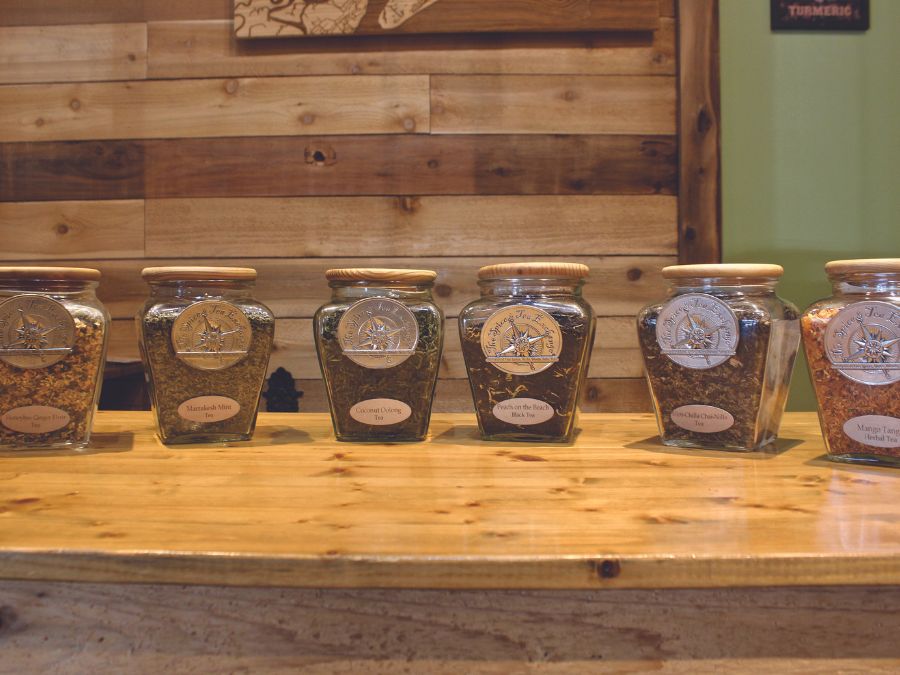
Tea, a timeless elixir, has captivated hearts and palates across civilizations, outdating coffee and wine. From alleviating sore throats to inducing tranquility and providing a gentle caffeine boost, tea wears many hats. Yet with such a variety of types, what sets each apart? The connoisseurs at The Tea and Spice Exchange of Hilton Head Island share their expertise, guiding us through a tour of their cherished teas and how to brew them to perfection.

White tea
Characterized by its minimal oxidation, white tea offers a delicate dance of sweet and fruity notes, captivating those who seek subtlety in their cup. This tea’s magic lies in its light touch, preserving the tea leaves’ inherent flavors.
Brewing Instructions:
- Preheat your teapot or cup by swirling in some hot water and then discarding it.
- Add about 1-2 teaspoons of white tea leaves per cup.
- Use water just shy of boiling, around 175 degrees, to avoid scalding the leaves.
- Let it steep for 3-5 minutes, depending on your taste preference.
- Strain and savor the delicate infusion.
Green tea
A step above in oxidation, green tea is celebrated for its health benefits and distinct grassy, earthy character. It stands as a testament to the art of balance, offering wellness and flavor in each sip.
Brewing Instructions:
- Use fresh, cold water, and heat it to just before boiling, around 175 degrees.
- Place 1 teaspoon of green tea leaves per cup into your teapot or infuser.
- Pour the hot water over the leaves, and let it steep for 1-3 minutes.
- Adjust the steeping time according to your taste preference: shorter for a lighter brew, longer for a more robust flavor.
- Strain and enjoy immediately.
Oolong tea
Oolong, the chameleon of teas, varies from light and aromatic to dark and robust, thanks to its unique semi-oxidation process. A favorite for those seeking depth without the jitters, oolong offers a moderate caffeine kick.
Brewing instructions:
- Rinse the oolong tea leaves quickly with hot water, and then drain.
- For every cup use about 1 teaspoon of tea leaves.
- Heat water to around 185 degrees and pour it over the leaves.
- Steep for 3-5 minutes, tasting at intervals to find your perfect brew.
- Strain and indulge in the complex symphony of flavors.
Black tea
As the most oxidized variant, black tea stands proud with its full-bodied character, ranging from malty richness to sweet subtleties. Revered globally, it’s the Library of Congress’s pick as the world’s most sipped tea, packing a potent caffeine punch.
Brewing instructions:
- Add 1 teaspoon of black tea leaves per cup to your teapot or infuser.
- Bring water to a rolling boil, around 212 degrees.
- Pour the boiling water over the tea leaves, and let them steep for 3-5 minutes.
- Adjust the steeping time to suit your taste, keeping in mind that longer steeping yields a stronger tea.
- Strain, pour, and relish the robust flavors.
Pu’erh tea
Pu’erh (pronounced Pu-AR) is a tea like no other, undergoing a unique fermentation process that imbues it with a bold, fruity and earthy allure. For those in pursuit of a smooth, aged taste, pu’erh is the tea of choice.
Brewing instructions:
- Begin by rinsing the pu’erh tea leaves with boiling water, then drain immediately.
- Use about 1 teaspoon of pu’erh leaves per cup.
- Fill with boiling water, around 212 degrees.
- Allow the tea to steep for 2-5 minutes, depending on your taste preference.
- Strain, and dive into the deep, intriguing world of pu’erh.
Herbal tea
Despite its name, herbal tea isn’t technically tea but a harmonious infusion of leaves, fruits, bark, roots or flowers. Each blend, from chamomile and hibiscus to peppermint and ginger, tells its own story and offers a unique bouquet of benefits.
Brewing instructions:
- Use fresh water and bring it to a near-boil, around 212 degrees.
- Add about 1-2 teaspoons of the herbal blend per cup into your teapot or infuser.
- Pour the hot water over the herbs, and let them steep for 5-7 minutes.
- Adjust the steeping time based on your desired intensity.
- Strain, pour, and partake in the herbal goodness.