How the Tammy Jane Is Training the Next Generation of Marine Scientists
Aboard the Tammy Jane, an internship program fuels the next generation of scientific exploration
Story by Barry Kaufman + Photography by Michael Hrizuk
How a Hilton Head Shrimp Boat Became a Floating Classroom
The Tammy Jane is no ordinary charter boat.
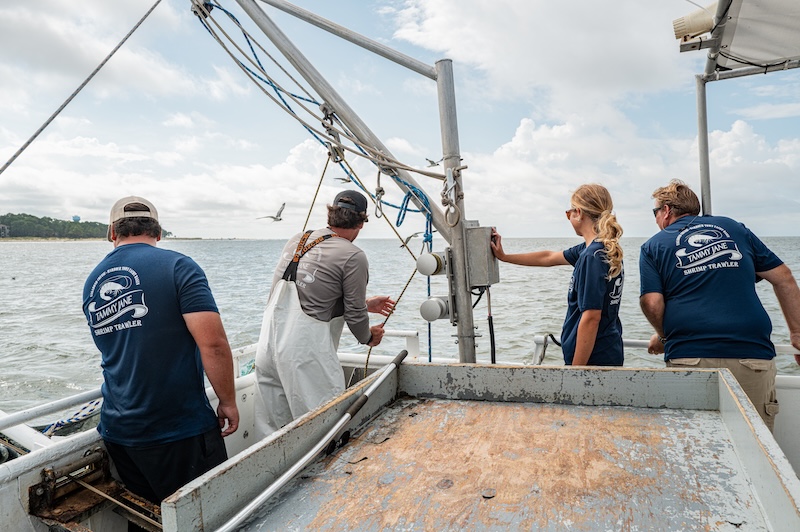
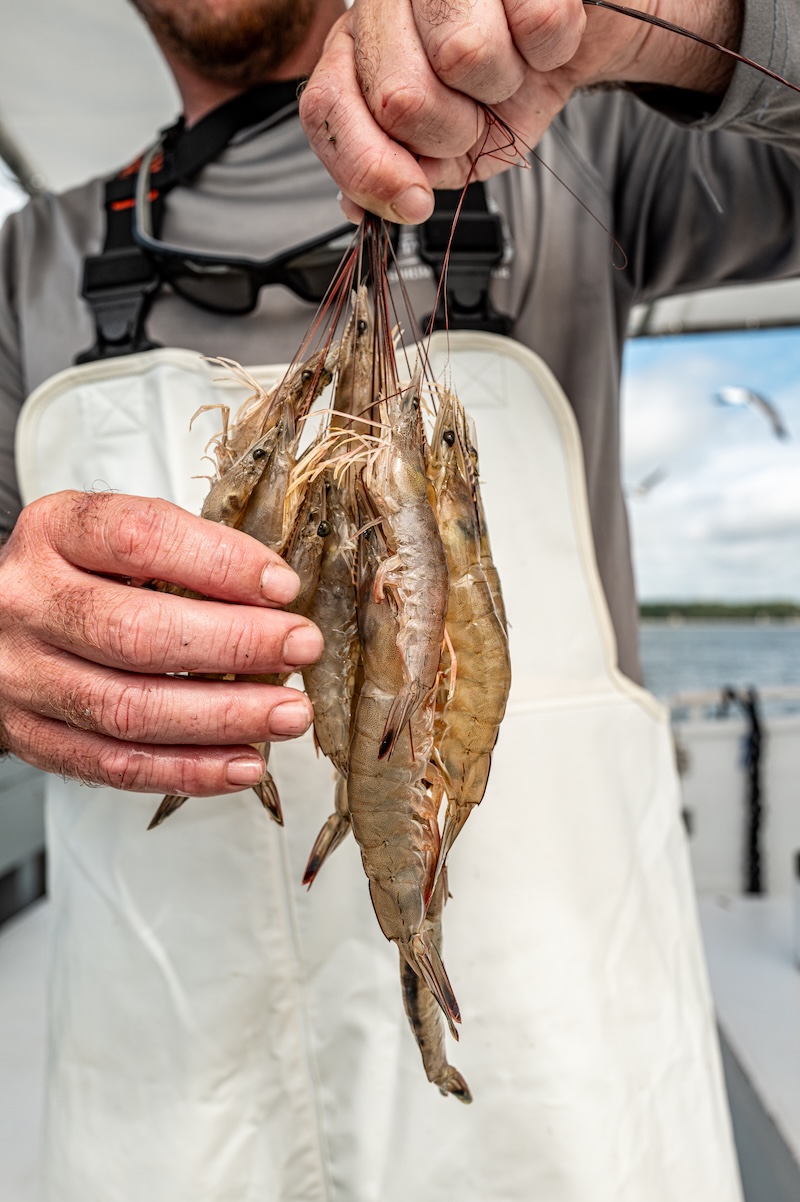
Far more than a standard dolphin-watching or eco-tour experience, it’s an opportunity for scientific exploration. A functioning shrimp trawler, it gives visitors a taste of what it’s like to comb the depths for one of the Lowcountry’s tastiest catches. But more than that, it serves as a floating classroom, because the Tammy Jane’s crew is no ordinary crew. Hand-picked from USCB and colleges around the country, its members represent the next generation of scientific research into our fascinating ecosystem.
“I went out and contacted Dr. Stephen Borgianini and Dr. Eric Montie at USCB after we got this boat because it just seemed like the perfect marine science lab,” said Keith Walston of Vagabond Cruise. “We wanted to create a partnership where we could provide a really good educational and interpretive experience and have students on board who are qualified to go through the catch and add to that experience.”
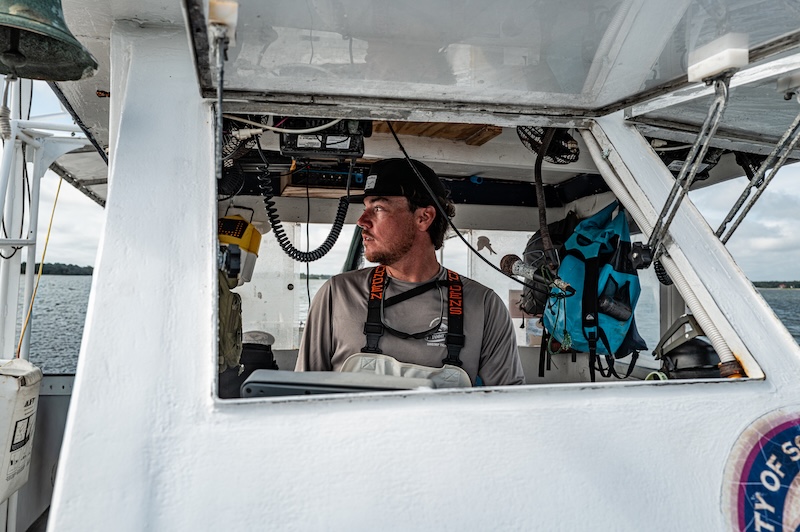
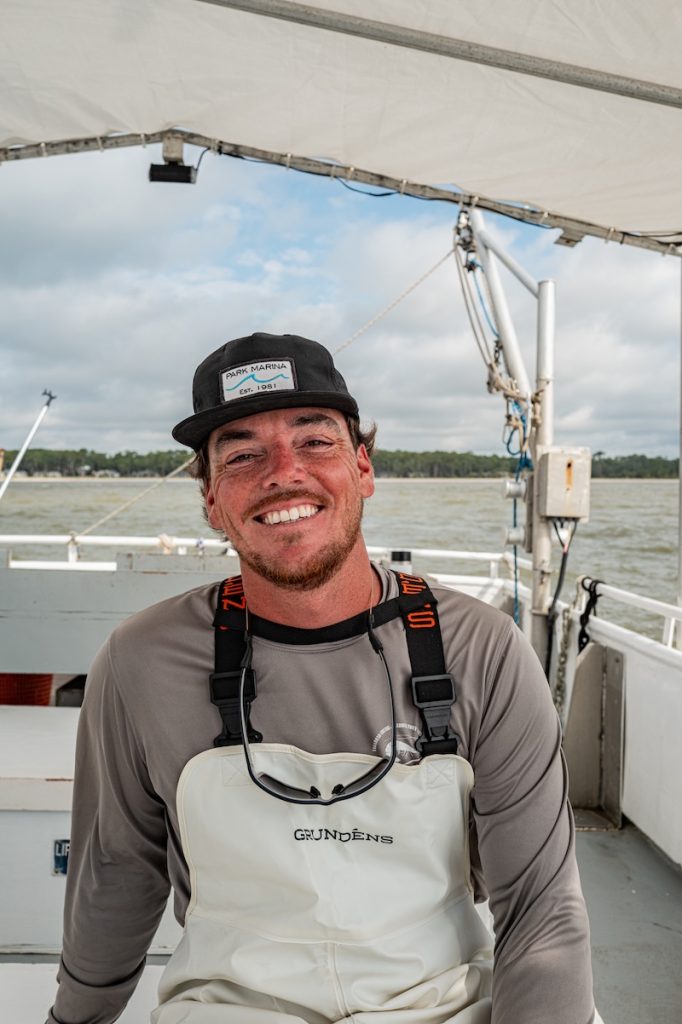
Hilton Head Island native Ian Deery turned a Vagabond Cruise internship into a career on the water. After earning his biology degree from USCB and gaining experience as a mate, Deery earned his U.S. Coast Guard master captain’s license. Aboard the Tammy Jane, his favorite vessel to operate, he shares his knowledge of shrimping, Lowcountry waters and local wildlife with guests.
A Classroom on the Water
The day LOCAL Life traveled on the Tammy Jane, she was crewed entirely by students who had gone through the internship program and were continuing to advance their research. Serving as first mate was biology major Ian Deery, whose academic pursuits have already led him to earn a U.S. Coast Guard captain’s license, with the ultimate goal of working on research vessels.
“I initially researched crabs, trying to look at their reproduction. We didn’t end up catching enough to get a big enough sample size to do much with the data, unfortunately, but it was still a fun project,” he said. More importantly, his time as an intern gave him sea hours toward earning his license. “It was a great opportunity for me as a gateway to working on boats and getting experience working on the water. The internship as a whole was rewarding in that you get to make memories and educate people on this boat, specifically about wildlife in the area where I grew up.”
How the Internship Prepares Future Marine Biologists
That educational aspect was key to drawing Ella Ridgeway to the Tammy Jane. A marine biology student at USCB who will soon move on to a master’s program in Clearwater, Florida, she hopes to study shark biology. She first interned a year ago, counting sharks that came in with the rest of the bycatch, and hopes to build on that work.
“One of my professors is studying the bacteria on sharks’ skin that helps them heal. They can handle getting hit by boats or being attacked by much bigger sharks, and you’ll see these massive wounds on sharks that have healed up. And this bacteria could potentially be used for human medication, so that’s what my professor is working on, and it’s always good to get more samples,” she said.
Once she gets her certification to swab sharks for that bacteria, she hopes to expand the research beyond the great whites currently being studied to include some of the other species found in the Lowcountry.
“The internship really gave me an opportunity to educate people about what I love and what I love to do, and it was a good segue to working on boats. Before this, I had no experience in boating whatsoever, and obviously working on boats is part of being a marine biologist,” she said.
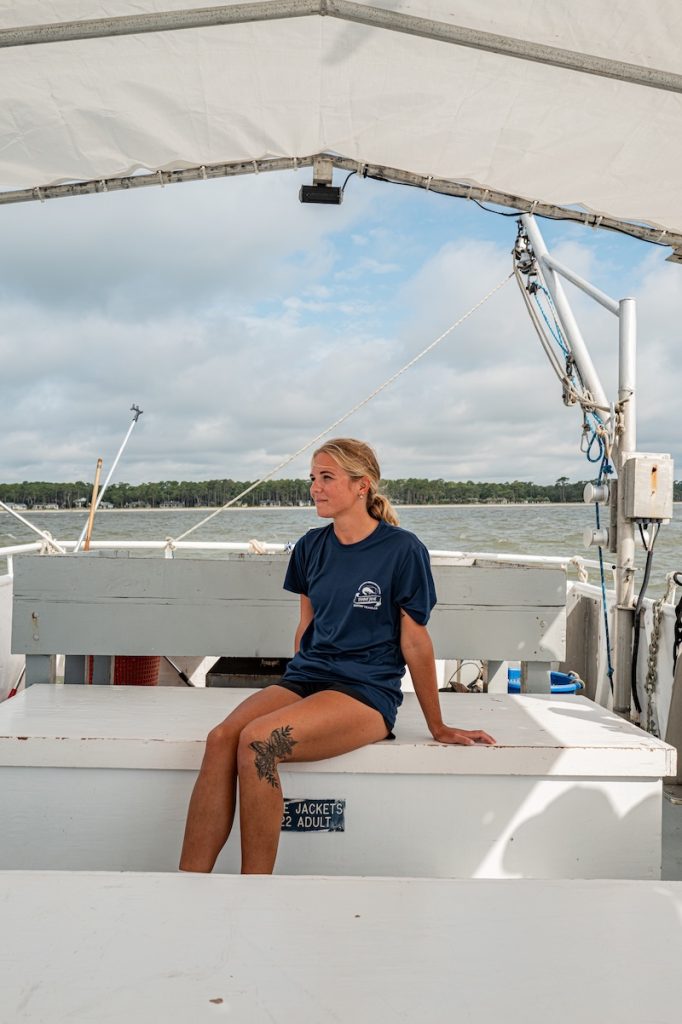
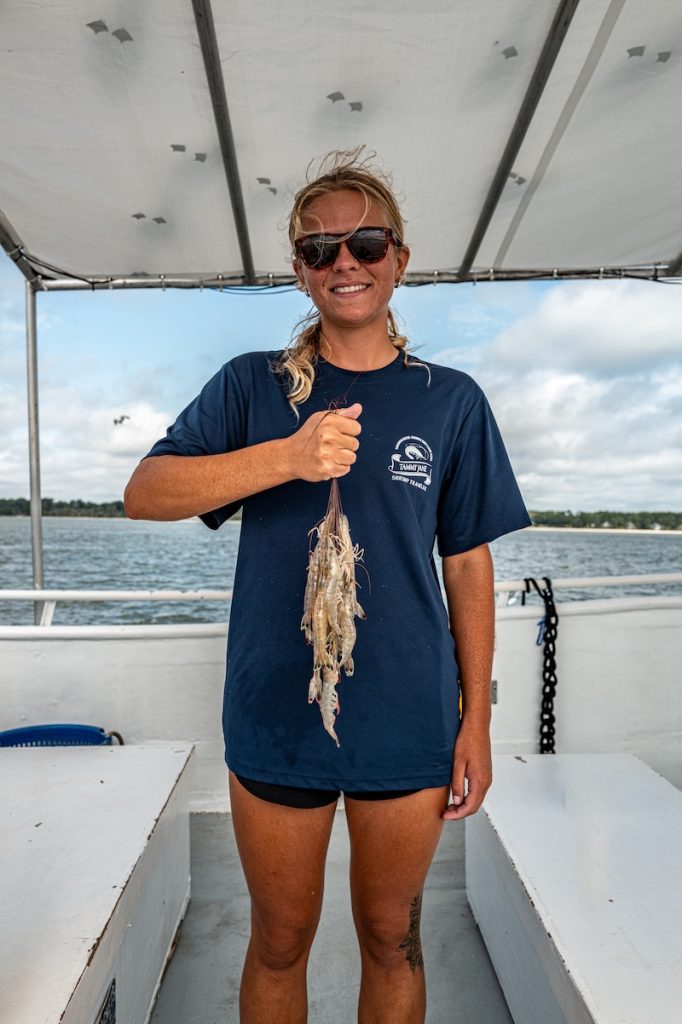
USCB marine biology student Ella Ridgeway brings her passion for marine life aboard the Tammy Jane as a first mate with Vagabond Cruise. Her experience includes water-quality monitoring in Port Royal Sound and shark and ray field research in the Gulf of Mexico, work that is helping prepare her for a future studying the creatures that inhabit our coastal waters.
Marine Research in Real Time
While the Tammy Jane might simply look like a shrimp boat, it’s the wealth of data the nets pull up alongside the shrimp that fuels the crew’s academic curiosity. On the day we went out, the bycatch included a host of jellyfish, much to the delight of crew member Jude Roman. He aspires to become a professor, but the smile on his face as he separated and counted jellyfish made it clear where his passions lie.
“After we’re done, I’m going to bag them up and take them to the lab to dissect them and do DNA extraction. The goal of the project is to find out when these jellyfish are blooming, what water quality and weather parameters are causing them to bloom, and how interrelated they are,” he said. “I really like the intersection between education and research that we do on this boat. I like being able to not only collect samples and real-time data but also to educate people about the beautiful environment we live in.”
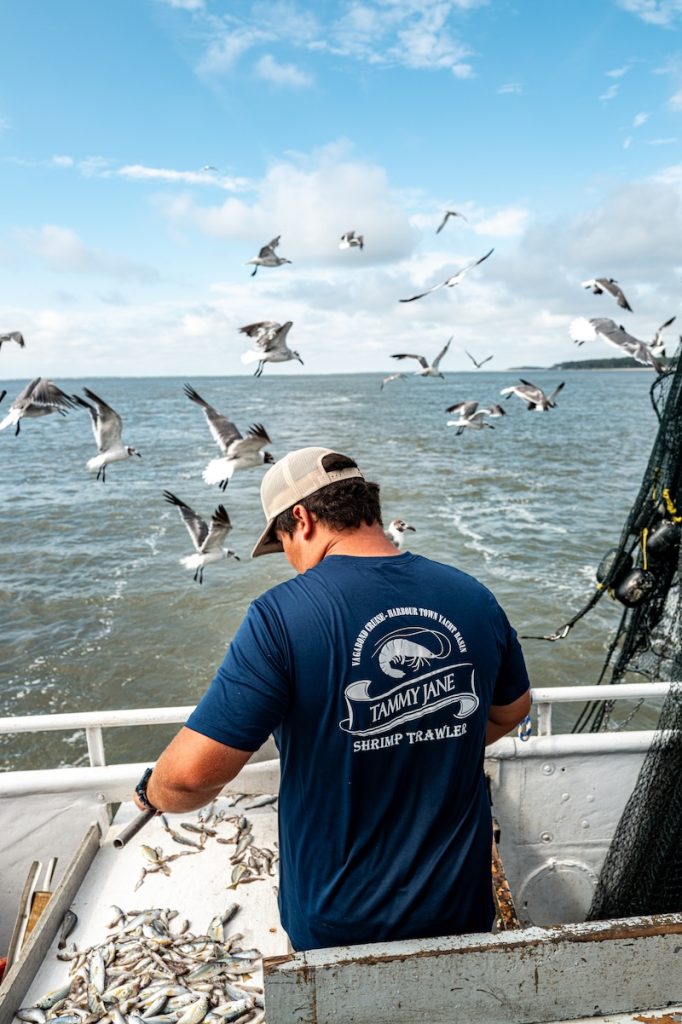
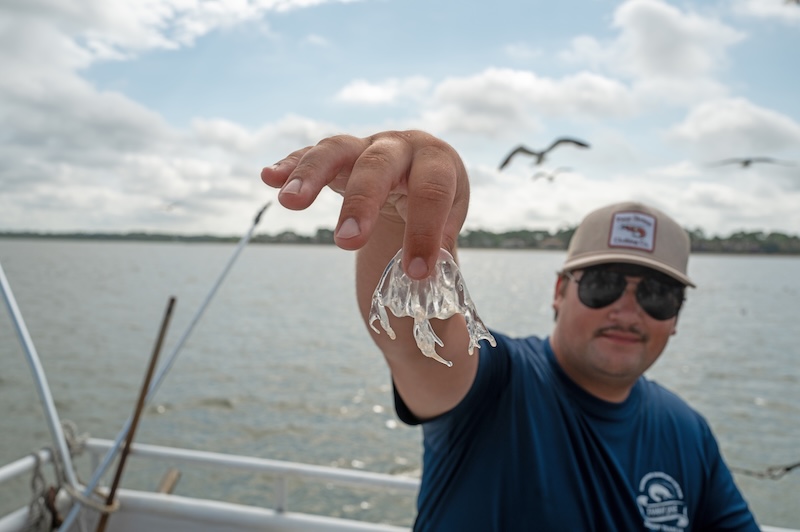
USCB marine biology student Jude Roman turns each trawl aboard the Tammy Jane into an opportunity for discovery. As a first mate with Vagabond Cruise, Roman helps lead educational ecotours while collecting cannonball and sea wasp jellyfish for research into their seasonal patterns and genetic diversity in Calibogue Sound.
Two Catches, One Purpose
Each trip the Tammy Jane takes yields two catches. The shrimp give visitors a greater appreciation for what it takes to fuel a vital Lowcountry industry. But everything else, in the capable hands of the crew, is creating new possibilities and expanding our understanding of the marine ecosystem all around us.