From Yellowstone to Jellystone: The History of View-Master
Before screens could transport us anywhere, a simple click brought distant landmarks and favorite characters into view. The story of View-Master reveals how a travel novelty became a childhood classic.
Story by Charles Grace
Growing up with View-Master, you probably remember the lever before the pictures. Pull it down, a new scene drops into place, and suddenly you’re standing inside Carlsbad Caverns or part of a Disney story with characters close enough to touch.
The View-Master descends from the stereoscope, invented in 1838 by Charles Wheatstone. The device shows each eye a slightly different image, allowing the brain to perceive depth.
How View-Master Began
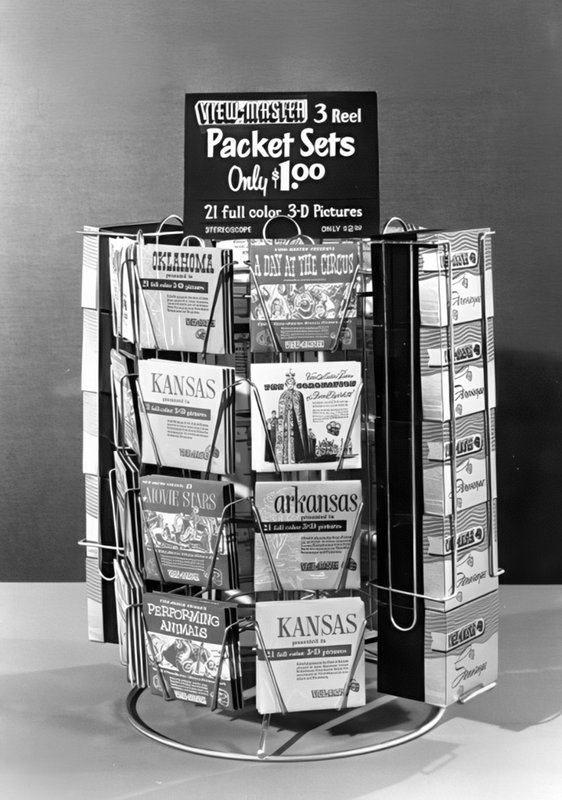
In 1919 Edwin Mayer, a Portland pharmacist returning from World War I, bought into Sawyer’s Photo Finishing Service. He paid with money borrowed from his dad, his fiancée, Eva, and her sister, Vi. By the 1920s Sawyer’s was the largest producer of scenic postcards in the country.
In 1938 Mayer met William Gruber, a German-born player-piano technician and avid photographer who had mounted two Kodak cameras side by side on a tripod to shoot in 3D. Gruber wanted to update the old parlor stereoscope using Kodachrome, the new color film.
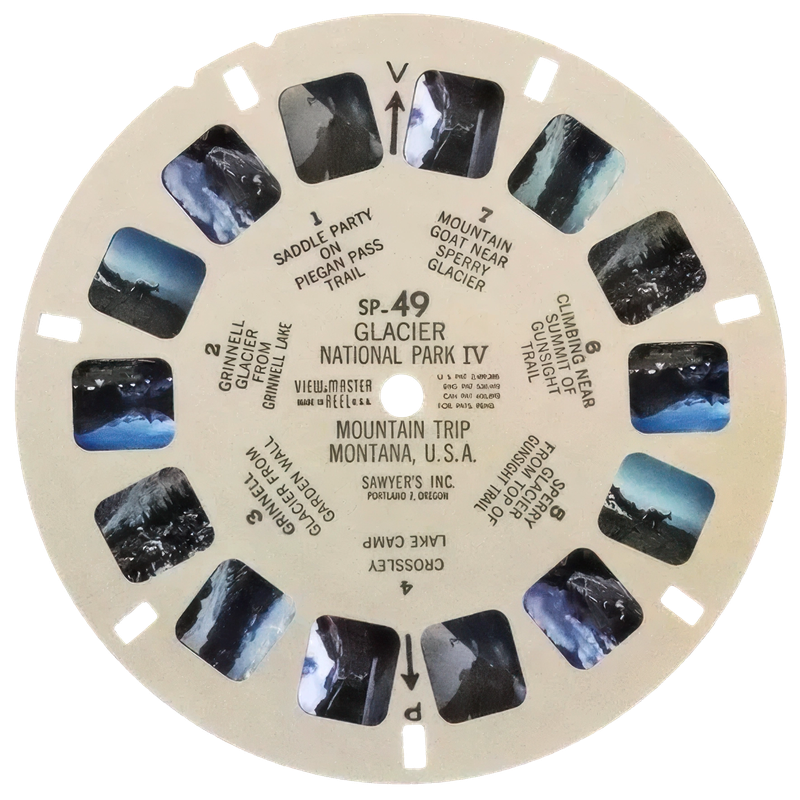
He mounted tiny squares of film in disks cut from the heavy paper used for piano rolls. Each reel held 14 frames arranged in seven pairs, one image for each eye.
Nobody at Sawyer’s could settle on a name until View-Master stuck. Gruber hated it. He thought it sounded like a kitchen gadget. He lost that fight, and the name eventually became familiar to generations around the world.
From Scenic Postcards to a 1939 World’s Fair Debut
The View-Master debuted at the 1939 New York World’s Fair as a high-tech alternative to the scenic postcard. Sold in camera shops and gift shops, it featured reels of Carlsbad Caverns and the Grand Canyon. It caught on quickly, eventually pushing postcards out of Sawyer’s business entirely.
During World War II the U.S. military used View-Master viewers and reels for training, including lessons on identifying enemy planes and ships.
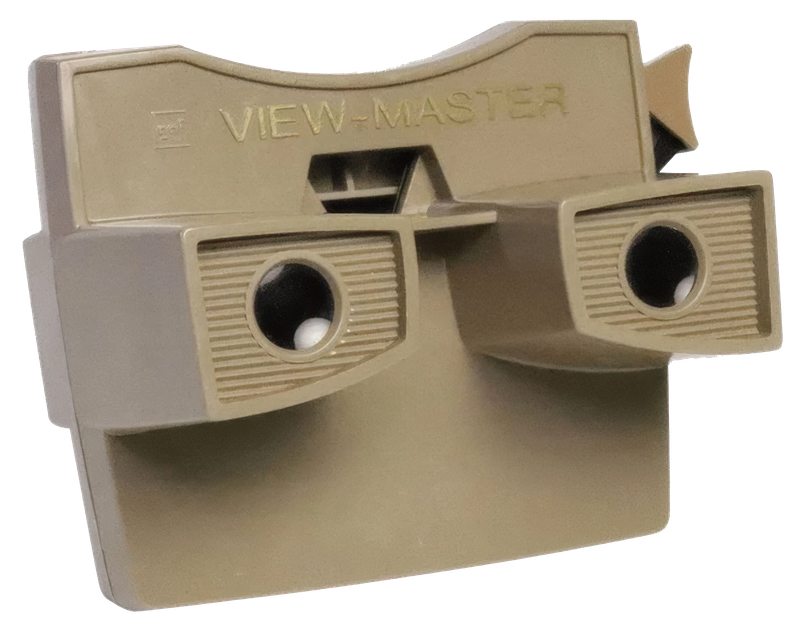 With 25 different viewer models, the basic design stayed the same. And every reel will work in every viewer.
In 1951 Sawyer’s bought its main rival, Tru-Vue, expanding its opportunities to produce reels featuring Disney characters. Disneyland’s 1955 opening helped make View-Master a popular 3D souvenir for families. GAF, which later became an official film and camera sponsor of Disneyland and Walt Disney World, sold reels and viewers in park gift shops.
The Artists Behind the Magic
The real magic came from the artists who turned a photographic tool into a storytelling machine.
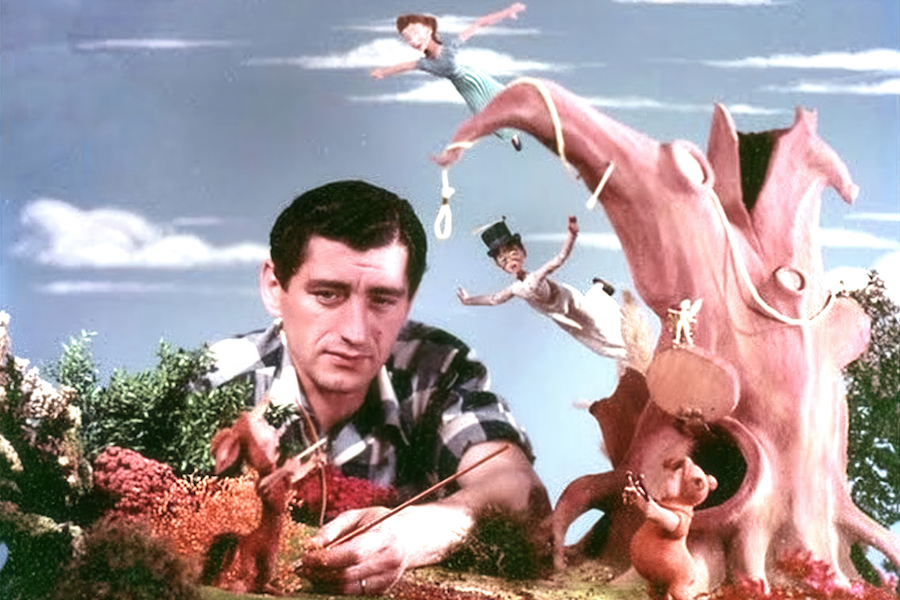
Joe Liptak, a longtime sculptor of View-Master’s Disney 3D story sets, was known for his exceptional artistry. Walt Disney Studios provided him with copies of production and story art, helping him maintain the characters’ original appearances. Liptak took pride in capturing each character’s distinctive look, reportedly producing sculptures that rarely required revisions.
Most View-Master sculptors were independent contractors whose work was uncredited and produced under the Sawyer’s/View-Master brand.
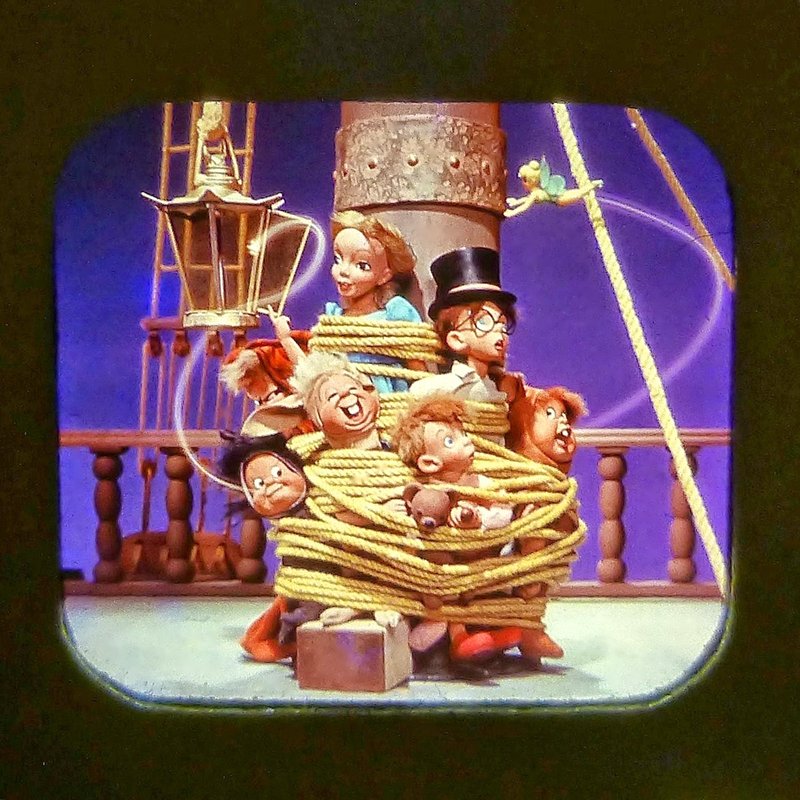
How View-Master Became a Pop Culture Favorite
After GAF took over in 1966, vacation scenery increasingly gave way to cartoons and television shows, including “Star Trek,” “The Beverly Hillbillies,” “Laugh-In” and “Doctor Who” for fans across the pond. Saturday morning favorites from Hanna-Barbera, including Yogi Bear and “The Jetsons,” and Warner Bros.’ Looney Tunes gradually edged out reels featuring state capitals and vacation destinations.
View-Master also found uses beyond childhood entertainment. Businesses commissioned custom reels to show products and services in 3D, while anatomist David Bassett collaborated with Gruber on an extensive 3D atlas of the human body. During the 1950s 3D-movie craze, theaters used reels to promote upcoming films. In the early 1990s Canadian restaurant chain East Side Mario’s even handed diners a View-Master as its dessert menu. What began as a travel souvenir had become a surprisingly versatile way to present visual information.
A Lasting Legacy in 3D Storytelling
The brand changed hands a few more times before landing at Mattel in 1997, where it became part of the Fisher-Price line. Production of traditional scenic reels eventually wound down, ending a tradition that stretched back to the World’s Fair.
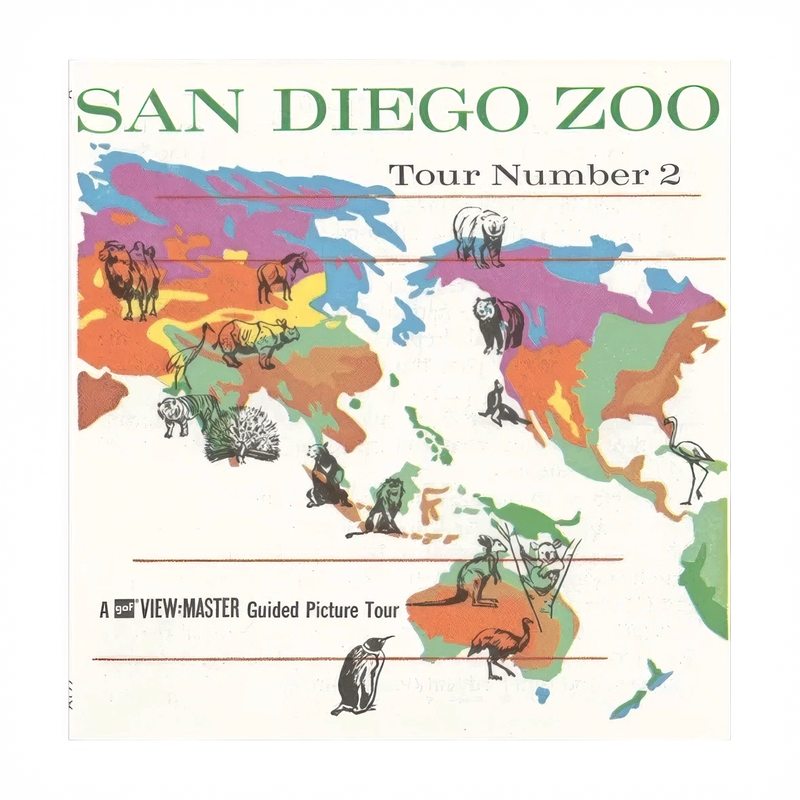
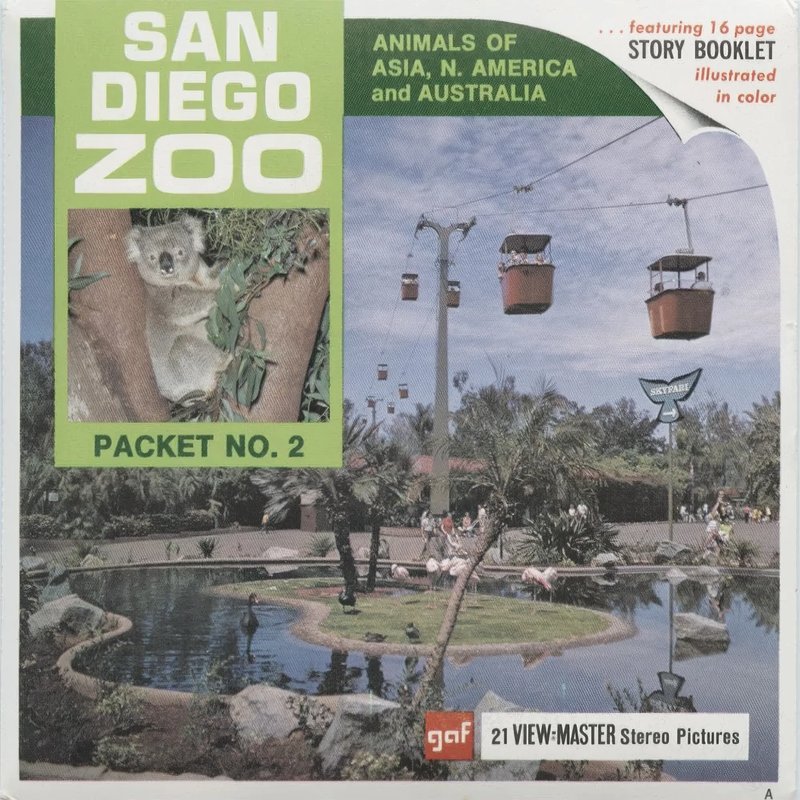 Many reels came with a small story booklet. Each one was matched to the reel, so every image had its own story scene or set of facts, which encouraged kids to read as well as look.
Over the decades View-Master produced approximately 25 viewer models and an estimated 1.5 billion reels. Traditional reels have remained remarkably compatible with generations of viewers. View-Master entered the National Toy Hall of Fame in 1999 and its designs have earned recognition for their contributions to popular culture and industrial design.
Originally developed as a scenic and educational alternative to postcards for adults, View-Master became a childhood favorite, introducing generations to the magic of 3D storytelling.
No Wi-Fi needed.