More Than a Pet: Meet the Lowcountry’s Most Extraordinary Dogs
Meet a few of the Lowcountry’s most unusual four-legged residents and the humans they call their own.
Story by Barry Kaufman & Photography by Michael Hrizuk
One of the most reductive ways to refer to a dog is as a pet. They are so much more than that. A dog can read your moods and act accordingly to bring you comfort. In their eagerness to please, they can be trained for a wealth of occupations, from sniffing out contraband to brightening a person’s darkest days. Even without that training, they’ll still be content simply being your companion through life.
The luckiest among us get to measure life in dogs, looking back at the furry friends who walked beside us through it all. They become woven into our family’s story, faithful companions through every chapter.
Pets? Hardly. Dogs are so much more than that, and these local pooches (speaking to LOCAL Life through their people) more than prove it.
Sarah and Toby (and Mikel Peeler)
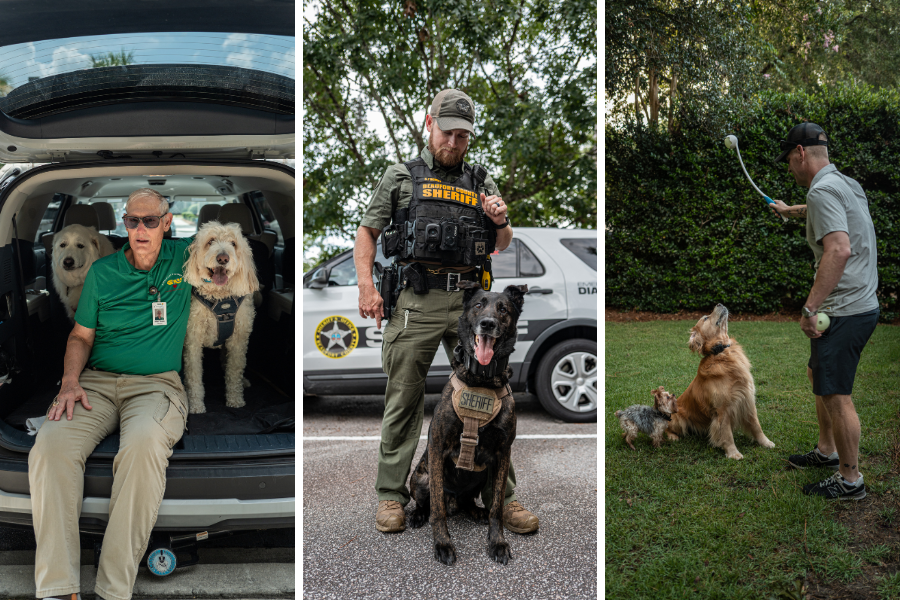
These certified therapy dogs brighten hospitals, schools and hearts across the Lowcountry
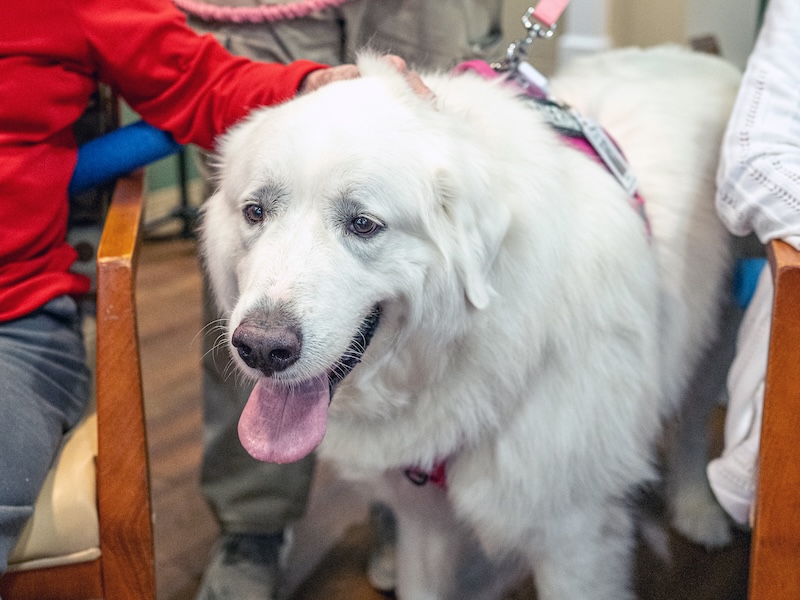
There are few days so miserable that they can’t immediately be improved by the presence of a dog. Even if you’re not a “dog person” (nobody’s perfect), the sight of a wagging tail, a lolling tongue and a snout pulled into what looks like a permanent smile can lift even the weariest spirit. And getting that reaction — that moment when you scratch behind an ear or under a collar and watch a dog melt into complete contentment — is the kind of salve that eases almost any stress.
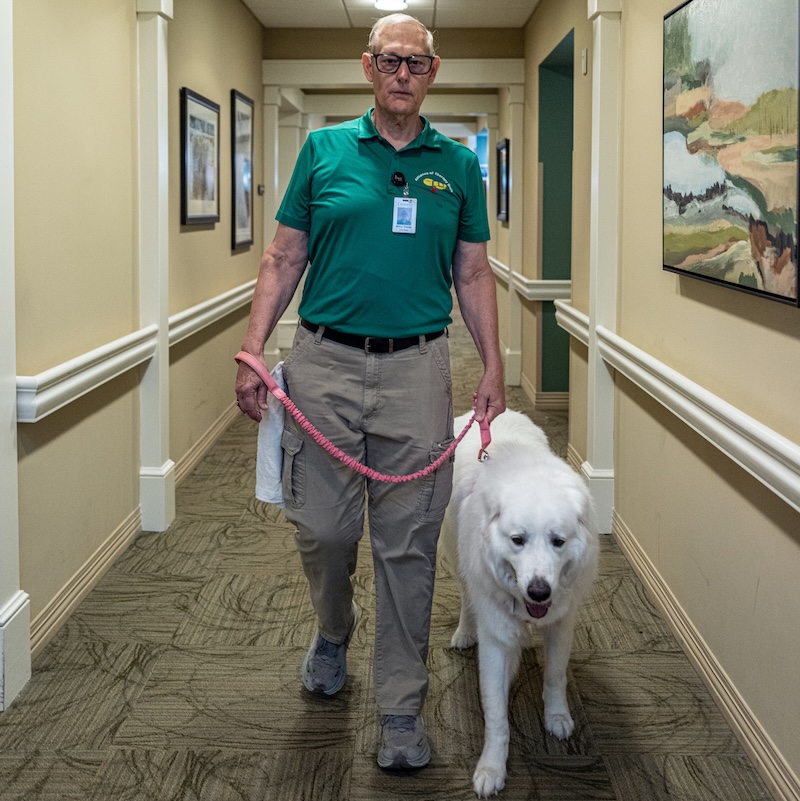
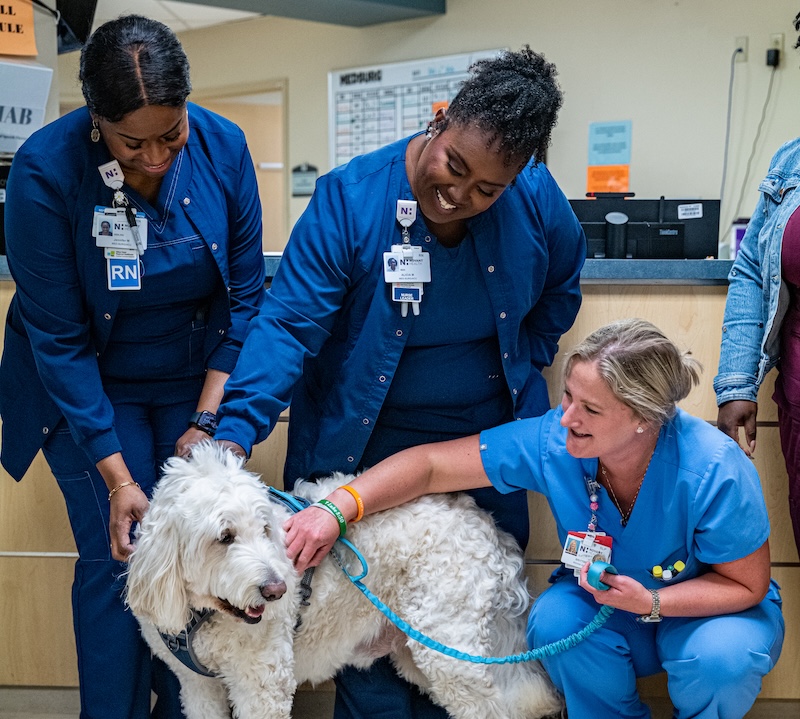
It’s something Mikel Peeler has witnessed time and time again while bringing his dogs to hospitals, nursing homes, schools and other locations throughout the Lowcountry. Whenever he arrives with Sarah, an alabaster-white Great Pyrenees, and Toby, a shaggy goldendoodle, he sees firsthand the difference they make.
“The dogs don’t do a lot, other than show up. But showing up is a big deal,” said Peeler. “We walk in, and everyone wants to come pet the dogs. When you see the look on people’s faces, it’s sort of my new ministry. I used to foster, and now I’m working with the dogs.”
Every day brings a new adventure for Sarah and Toby. Some days they’re visiting medical facilities, such as Hilton Head Medical Center, Coastal Carolina Hospital or Encompass Health, where they’re as much a comfort to the staff as they are to the patients.
“A lot of times we stand in the center of the hallway, and everybody comes out — staff, nurses, doctors — and it all takes maybe 10 minutes, but it gives them a break from the stress of the job,” he said.
Although Peeler primarily visits hospitals to support healthcare workers, patients often benefit just as much.
“Surprisingly, at the hospital the person who gets the most out of it is not the guy lying in the bed,” he said. “It’s the guy sitting in the chair across from the patient.”
While both Sarah and Toby have been extensively trained for their roles as therapy dogs, they approach the job very differently.
“When that vest goes on, Sarah’s personality changes,” Peeler said. “She knows she’s working, so she is totally stoic.”
Toby’s more exuberant personality — a trait that comes naturally from the golden retriever side of his pedigree — made certification a little more challenging.
“It took me until Toby was 4 to get him certified because he just wouldn’t calm down,” Peeler said with a laugh. “Even now, people will go in for hugs, which is a big no-no, but Toby gets excited about it.”
Despite their very different personalities, both dogs bring extensive training and Alliance of Therapy Dogs certification to their work. But what they really offer can’t be taught or certified. They bring the unconditional love that dogs seem incapable of withholding.
“Everyone knows and loves these dogs when we walk in,” Peeler said. “I’m just the guy walking around on the other end of the leash.”
Think your dog has what it takes?
Mikel Peeler didn’t simply walk into a hospital one day with his dogs and hope people would enjoy meeting them. Becoming a certified therapy dog is a structured process that builds trust between handler and dog while reinforcing calm, predictable behavior and discouraging natural impulses like jumping up or giving enthusiastic “kisses.”
“They know that when that vest goes on, they have to be calm and can’t jump on people,” Peeler said. “They’re also very well controlled because you have to be able to control the dog.”
Peeler’s interest in therapy work began years ago after learning that his English mastiff’s aunt had served as a therapy dog at the Medical University of South Carolina.
“She was always in the paper from MUSC,” he said. “It’s something I always wanted to do, but the work schedule is hard. You just can’t go somewhere during the day for two or three hours, so I had to wait until I retired to do this.”
Think your dog might have what it takes? With patience, consistent training and the right temperament, your four-legged friend could brighten someone’s day. Visit therapydogs.com to learn more about certification requirements and opportunities to volunteer.
K-9 Niko (and Sgt. Sean Toomey)
Eight years of trust, training and teamwork made this K-9 team one of the Beaufort County Sheriff’s Office’s best
NOTE: After LOCAL Life went to press, we were saddened to learn that Niko had passed away following unexpected medical complications. He had only just retired from active service with the Beaufort County Sheriff’s Office, where his heroism and valor had made him a point of pride among their distinguished officers. We present the following as our way of honoring his service.
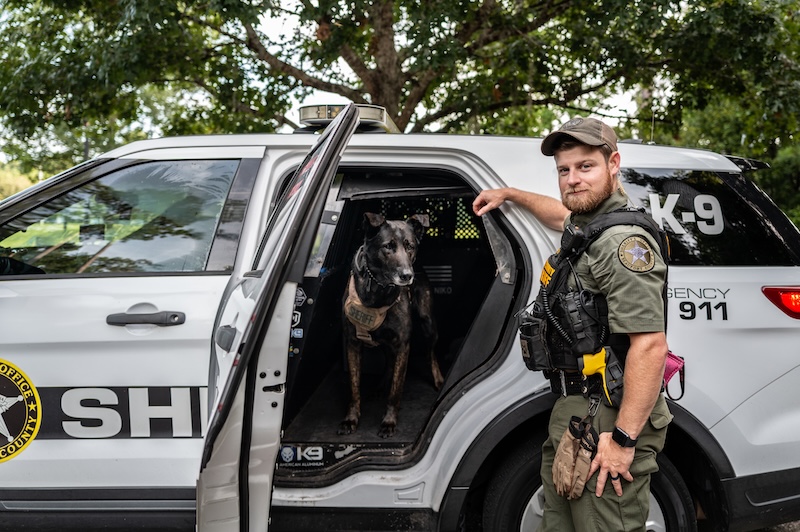
By the time you read this, the Beaufort County Sheriff’s Office will have officially sent one of its most courageous officers into retirement. A seasoned veteran of eight years on the force, this particular hero plans to spend his retirement surrounded by his loving family, which includes a Doberman named Jedi, his longtime handler Sgt. Sean Toomey and Sean’s wife and dog mom, Miranda.
“That’s what I was told by the FBI’s Hostage Rescue Team — you’re just a glorified chauffeur because you could literally hand that dog off to anybody on the team, and it will listen to them,” Toomey said.
He’s joking, of course. The relationship between the two isn’t built simply on mutual respect and treats, but on the countless hours of training it takes to transform an ordinary Dutch shepherd into an elite K-9 partner.
“This is the job I always wanted when I got into law enforcement. And having that partner with you — I know it’s technically a dog in my car, but I’ll call him my partner all day — that’s what makes my job a whole lot better,” Toomey said.
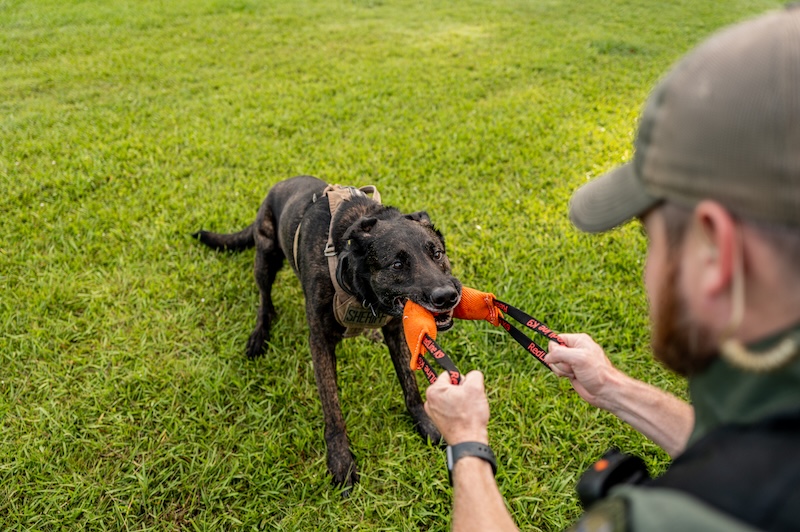
The pair came together in 2018 after each had completed extensive training — Toomey through the Beaufort County Sheriff’s Office Bloodhound Tracking Team and Niko through the American Society of Canine Training International. But their real education began once they started working side by side.
“I had a staff sergeant who was in charge of our unit at the time tell me, ‘Just because you have the dog doesn’t mean you’re ready yet.’ There was a six-month probation period that was just training, training, training, whether it was tracking people or sniffing out narcotics,” Toomey said. “Through all of it, you and your dog become so bonded from working together that you can read him.”
That bond produced remarkable results. Niko became one of the department’s most accomplished tracking dogs, recording 79 career tracks and helping capture 35 suspects. One of their proudest moments came after four suspects fled from a crashed stolen vehicle on Hilton Head Island.
“We ended up tracking them throughout Wexford,” Toomey said. “We were jumping a lot of fences, and they were all pretty tall. I’m not that tall, plus I was carrying an 85-pound dog over each fence.”
Their relentless teamwork that night helped take four suspects into custody while recovering an AK-47 the group had discarded during the chase.
“Niko wound up getting a great reputation because, in the K-9 world, if your dog doesn’t find anyone, no one knows them. But if they find a lot of people, other officers will make sure that dog is coming with them,” Toomey said. “He definitely helped me build a great reputation too.”
So how will this decorated K-9 spend his retirement? Toomey already has the first celebration planned.
“I plan on grilling him a nice steak and cutting it up for him,” he said. “You have to. He’s earned it.”
Training the next hero
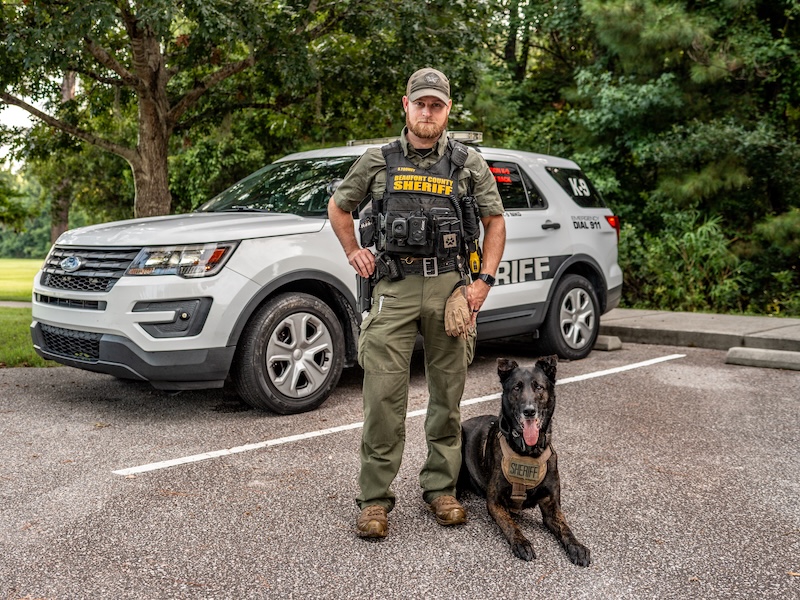
With Niko turning in his K-9 badge and enjoying a well-earned retirement, he still has one important assignment ahead of him: sharing his home with his replacement.
“The hardest thing is going to be getting their attention because he’s Niko, and my new dog is going to be Nikon,” said Sgt. Sean Toomey, who worked alongside Niko for the past eight years. “It’s an interesting transition because I know Niko so well, and now I have to hit the reset button. Talking to other K-9 handlers, they all told me you can’t compare your old dog to your new one because they’re not the same.”
While Niko now enjoys his favorite spot on the couch, Nikon will begin his career much the way Niko did: living in the outdoor kennel until Toomey is confident he’s ready to graduate to life inside the house.
“That’s always the interesting dynamic — seeing how they’ll interact through the kennel,” Toomey said. “Niko and my Doberman, Jedi, butted heads for a while at first, so we’ll just have to wait and see. They might not interact much at all because they’re both alphas.”
Still, if Niko’s friendship with Jedi is any indication, the transition should go smoothly.
“Jedi used to greet me at the door. Now he greets Niko, and they run off and start doing their thing,” Toomey said. “They’re like four-legged kids, so you always have to watch what they’re up to.”
Bear and Coco (and Drew Kaufman)
A lifelong fascination with canine behavior became a career built on trust, patience and understanding
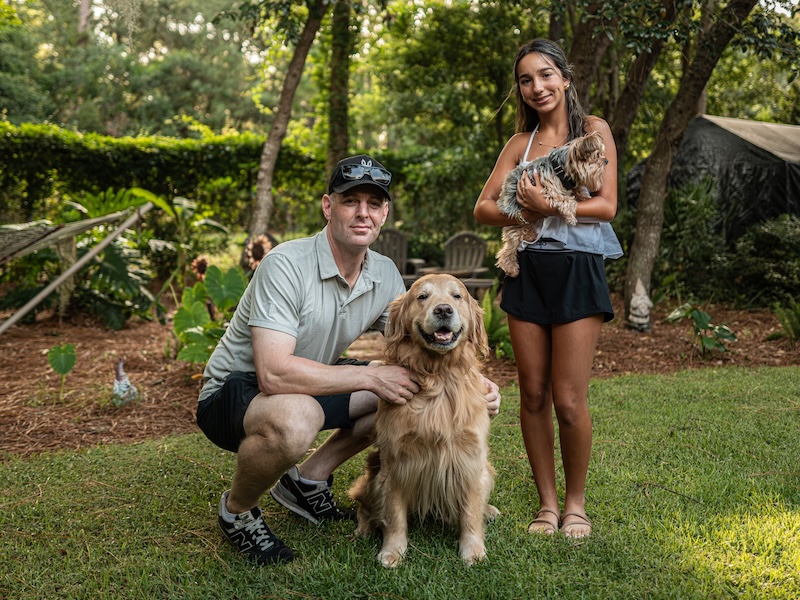
Growing up around dogs can be one of the greatest educations we receive in understanding these remarkable animals. You learn how they react, how they view not only their relationship with you but also the world around them, and over time you begin to see things from their perspective.
For most of us, that’s where the education ends. For Drew Kaufman, however, a childhood spent around dogs became the foundation for a career. Today through his company, A Walk in the Park, he helps train dogs and their owners throughout Beaufort County.
“Growing up, I had a Dalmatian named Macho who was incredibly energetic, affectionate and full of personality,” Kaufman said. “Looking back, he taught me a lot about patience and how every dog is an individual with unique needs and temperament.”
Long before he became a professional trainer, what struck Kaufman most was the remarkable loyalty dogs have toward their “pack.” One dog owned by family friends left a lasting impression, remaining devoted to his family despite receiving little affection in return.
“That kind of unconditional loyalty amazed me and made me want to better understand how dogs think and why they form such strong bonds with people,” he said. “Over time, that curiosity turned into a passion and, eventually, into a career.”
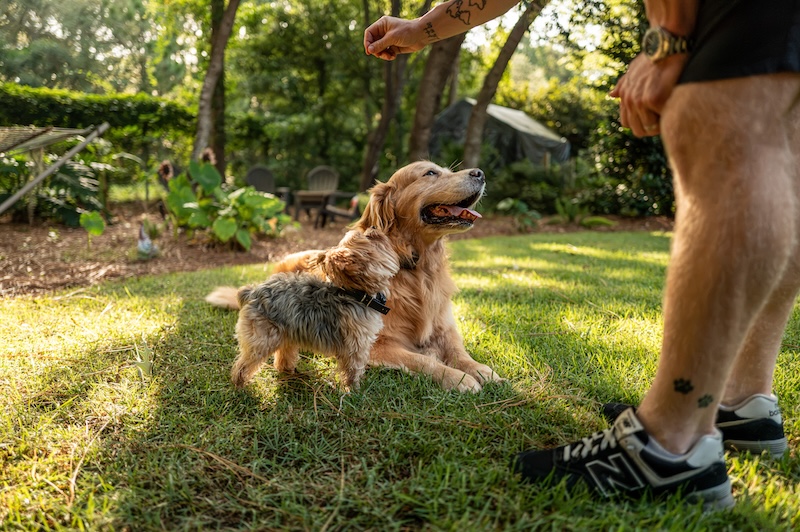
Kaufman pursued that career wholeheartedly, earning a certification from California’s Animal Behavior College, completing an externship at Jasper Animal Rescue Mission and taking nearly every canine training course offered through Leerburg Online University.
“Learning about dog behavior in a classroom is valuable, but actually training dogs is where the real education begins,” he said. “You can read every book and earn every certification, but nothing replaces hands-on experience with hundreds of different dogs, each with their own personality and challenges.”
While the countless dogs he’s trained over the years have continued his education, it’s his own dogs, Bear and Coco, who have taught him some of the most valuable lessons.
“Dogs don’t learn on our timeline — they learn through consistency, repetition and clear communication,” he said. “They’ve taught me that staying calm and patient almost always produces better results than frustration. That lesson has helped me not only as a trainer but in everyday life as well.”
Now, with 14 years of professional experience and two four-legged teachers at home, Kaufman continues to learn every day.
“Training has taught me to separate emotion from decision-making. I still love my dogs tremendously, but I don’t let my emotions dictate how I communicate with them,” he said. “Instead, I try to be clear, fair and consistent. Understanding how dogs actually learn allows me to build trust and respect without projecting human emotions onto their behavior.”
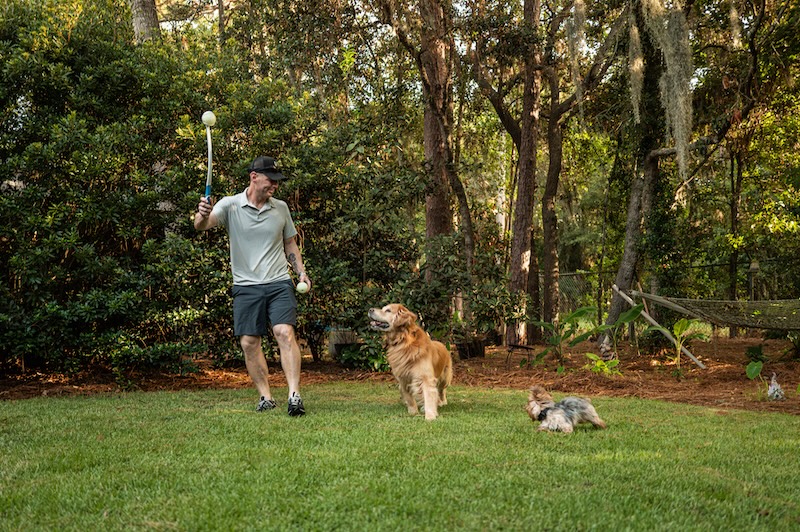
At home with Bear and Coco
You might assume someone who has devoted his career to understanding canine behavior would have perfectly behaved dogs all the time. And yes, Bear and Coco are exceptionally well trained. But even the best-trained dogs know how to keep life interesting.
“I’ve had Bear since he was 8 weeks old, and Coco turned 4 this past January. Their personalities couldn’t be more different,” Drew Kaufman said. “Coco is definitely the troublemaker—she’s energetic, mischievous and always finding new ways to keep life interesting. Bear is much more laid back and incredibly intuitive. He has an amazing ability to read people’s emotions and seems to know exactly when someone needs comfort or reassurance. They’re very different dogs, but they complement each other perfectly.”
Even if Coco occasionally goes a little rogue, both dogs thrive as beloved members of the family. At home, Kaufman says, the relationship is much different than the one he has with his clients’ dogs.
“It’s very different at home. When I’m training clients’ dogs, I have a specific goal and a structured plan,” Kaufman said. “At home Bear and Coco are simply part of the family. Of course, training is always happening in some way because consistency matters, but I also get to enjoy them just as companions. They aren’t ‘working’ all the time, and neither am I.”